
ASIATODAY.ID, JAKARTA — As global trade increasingly rewards low-carbon production and transparent supply chains, Indonesia is accelerating the development of a National Life Cycle Inventory (LCI) Database—a strategic scientific infrastructure designed to help domestic industries meet international sustainability standards and compete in the rapidly expanding green economy.
The initiative was showcased during the Asian Life Cycle Inventory Database Project 2nd Workshop in Putrajaya, where the National Research and Innovation Agency (BRIN) presented Indonesia’s latest progress while drawing on the experiences of Asian economies that have advanced national environmental inventory systems.
Rather than serving as a conventional repository of environmental information, the National LCI Database is being developed as a core component of Indonesia’s sustainable industrial transformation. The platform will provide scientifically verified datasets for Life Cycle Assessment (LCA), product carbon footprint calculations, Environmental Product Declarations (EPD), Scope 3 greenhouse gas emissions reporting, eco-label certification, and sustainability assessments that are becoming increasingly important for accessing international markets.
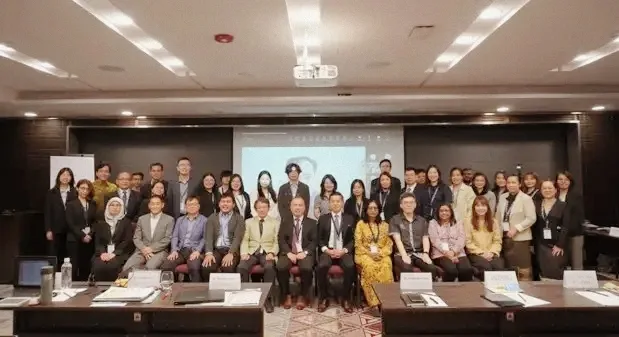
BRIN’s delegation, led by Nugroho Adi Sasongko, Head of the Sustainable Industrial Systems and Manufacturing Research Center (PRSIMB), outlined Indonesia’s roadmap for building an integrated LCI database that accurately reflects the country’s industrial landscape while remaining compatible with regional and international environmental data standards.
According to Nugroho, the long-term success of the initiative depends as much on governance and collaboration as on technological capability.
“Every country starts from a different baseline. The priority is to ensure that environmental data is scientifically robust, nationally representative, and continuously updated to meet evolving industrial and policy needs,” he said.
The workshop highlighted how Asian economies are pursuing different pathways toward a common objective: establishing trusted environmental datasets that support industrial decarbonization and sustainable economic growth.
Sri Lanka shared its experience in developing Life Cycle Inventory datasets for export-oriented commodities, while Singapore introduced its national emissions factor registry.
Philippines presented its national electricity inventory system, Vietnam demonstrated how Life Cycle Assessment supports regulatory compliance and export competitiveness, and Cambodia outlined its early efforts to develop environmental inventories covering agriculture, construction materials, and energy.
Experts from Japan, Thailand, Malaysia, and South Korea also exchanged expertise on database harmonization, electricity LCI development, interoperability, quality assurance, and internationally recognized methodologies.
A central conclusion of the forum was that successful national LCI systems require more than technical excellence. Participants emphasized the need for strong institutional leadership, sustainable funding, rigorous data validation, and close cooperation between government agencies, researchers, and industry to ensure long-term credibility and practical application.
For Indonesia, the National LCI Database is expected to become essential infrastructure supporting scientific research, industrial innovation, environmental policymaking, and compliance with global sustainability frameworks. The database is being developed across priority sectors including energy, minerals, agro-industry, bioenergy, and waste management, creating a stronger scientific foundation for Indonesia’s transition toward a low-carbon economy.
BRIN said knowledge gained through the regional collaboration will accelerate the expansion of Indonesia’s National LCI Database while improving data quality, interoperability, and alignment with international standards.
As carbon disclosure requirements tighten and multinational companies demand greater transparency throughout their supply chains, Indonesia’s investment in a national carbon data platform represents more than a research initiative. It signals a strategic effort to equip the country’s industries with the scientific infrastructure needed to remain competitive in an economy where environmental performance is becoming as critical as cost, quality, and innovation. (AT Network)
Follow Us at Google News, Instagram, WA Channel, and LinkedIn