
ASIATODAY.ID, JAKARTA — Indonesia is in deep mourning as massive floods and landslides sweep across Sumatra, marking one of the deadliest natural disasters in the past decade. Updated data from the National Disaster Management Agency (BNPB) confirms 604 fatalities, 464 people missing, 570,000 displaced, and 1.5 million affected.
This environmental catastrophe exposes the escalating risks facing the archipelago—where extreme rainfall collides with fragile land-use planning, vulnerable settlements, and inadequate disaster preparedness.
BNPB Update: Casualties Continue to Rise
BNPB’s Disaster Data Center Chief, Abdul Muhari, stated that all figures are updated in real time. As of Monday, December 1, 2025, 18:24 WIB, the agency reported:
604 deaths
464 missing
2,600 injured
570,000 displaced
1.5 million affected
Casualties by Province
Aceh: 156 dead, 181 missing, 1,800 injured
West Sumatra: 165 dead, 114 missing, 112 injured
North Sumatra: 283 dead, 169 missing, 613 injured
These numbers are expected to rise as emergency teams access previously isolated areas.
Infrastructure Devastation: Homes and Public Facilities Destroyed
The floods and landslides caused widespread physical destruction across the three provinces. BNPB recorded:
3,500 houses severely damaged
4,100 moderately damaged
20,500 slightly damaged
271 bridges affected
282 educational facilities damaged
The collapse of vital infrastructure has slowed aid distribution and cut off logistics routes, especially in remote districts now accessible only by air.
High-Risk Settlements Amplified the Disaster
During a hearing with Commission V of the House of Representatives, the Head of the National Search and Rescue Agency (Basarnas), Air Marshal Mohammad Syafii, explained why casualty numbers are so high: many communities are located in extremely hazardous zones.
“Most residents live along rivers or on roadside areas perched on ridge tops. These terrains are steep, and the soil is easily eroded by heavy rain,” Syafii said.
He added that many of the missing were likely swept away by flash floods or buried beneath landslides.
“We initially predicted nearly 800 potential victims. Around 400 have been found; the rest were likely swept away.”
His remarks highlight a structural issue: the recurring disaster trend in Sumatra is not only meteorological—it is rooted in weak spatial planning and insufficient early-warning dissemination.
Mitigation Appeal: Local Governments Urged to Act
Basarnas urged residents and local authorities to strengthen preparedness and ensure that weather warnings from the Meteorology, Climatology, and Geophysics Agency (BMKG) are properly communicated.
“BMKG warnings must reach communities so preventive action can be taken,” Syafii stressed.
President Prabowo Visits Affected Areas: “The State Stands with the People”
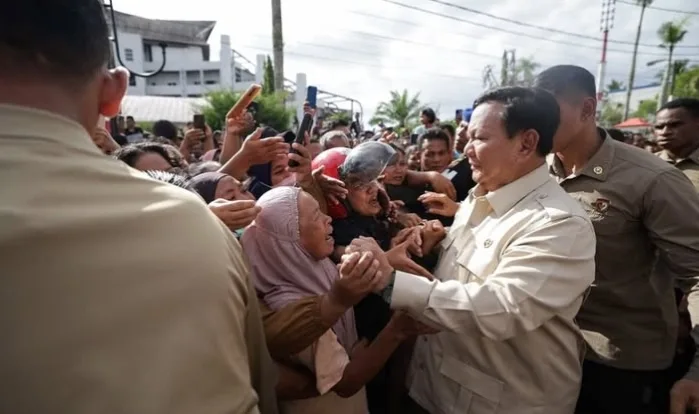
President Prabowo Subianto visited evacuation centers in Padang Pariaman, West Sumatra, to speak directly with affected residents, review local reports, and ensure that emergency aid is delivered efficiently.
“The weather has improved, and assistance is arriving,” the President told evacuees.
He highlighted key priorities during the emergency response phase: restoration of electricity, clean water supply, assessment of damaged bridges, documentation of destroyed homes.
Prabowo also reported that some districts in North Sumatra and Aceh remain difficult to reach by land but are accessible by helicopter and fixed-wing aircraft.
“This is a tragedy. Some areas remain isolated, but we are reaching them by air.”
The President expressed deep condolences and assured residents that no citizen will face this hardship alone.
“We are one big family. The state will not abandon you.”
A National Tragedy and a Wake-Up Call
The Sumatra floods and landslides are not merely a humanitarian disaster—they are a stark warning for Indonesia’s disaster management system.
The scale of casualties and infrastructure loss reveals: flawed land-use planning, settlements built directly in hazard zones, insufficient early-warning systems, inadequate climate adaptation policies, infrastructure unprepared for extreme weather.
With hundreds still missing and half a million displaced, Sumatra now confronts a long and difficult recovery. This tragedy underscores the urgent need for stronger disaster mitigation, climate resilience strategies, and community-level preparedness across Indonesia. (AT Network)
Follow Us at Google News and WA Channel