
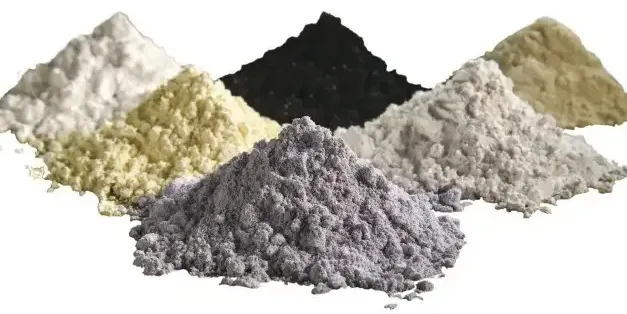
ASIATODAY.ID, JAKARTA – Indonesia is accelerating its bid to build a globally competitive rare earth industry by developing total extraction technology, a strategic breakthrough aimed at maximizing the value of critical minerals while strengthening the country’s position in global supply chains.
The initiative reflects Jakarta’s broader ambition to transform its vast mineral wealth into high-value industrial production amid intensifying global competition for critical resources.
The latest milestone comes through a strategic partnership between the National Research and Innovation Agency (BRIN) and state-owned mining company PT Perusahaan Mineral Nasional (PERMINAS). The two institutions have signed a research cooperation agreement at the Iskandar Zulkarnain Science and Technology Area in Lampung to jointly develop industrial-scale total extraction technology for rare earth elements (REE).
Unlike conventional processing methods that recover only selected minerals, total extraction technology is designed to extract nearly all economically valuable elements contained in mineral ores and mining residues. By maximizing resource utilization and minimizing waste, the technology is expected to increase efficiency, improve economic returns, and support more sustainable mineral processing.
For Indonesia, the development represents more than a scientific achievement. It is a strategic effort to build domestic technological capabilities in one of the world’s most important industrial sectors, reducing dependence on imported processing technologies while creating higher value from the country’s abundant mineral resources.
Head of BRIN’s Mineral Technology Research Center, Fajar Nurjaman, said the agency will leverage its research infrastructure and advanced laboratory facilities in Lampung to accelerate technology development toward commercial application.
He said BRIN is committed to providing scientific expertise and state-of-the-art research facilities to ensure the technology can be developed efficiently, transparently, and in line with industrial requirements.
PERMINAS Director of Technology and Business Development La Ode Tarfin Jaya described the collaboration as a major step toward strengthening Indonesia’s technological independence in strategic mineral processing.
He noted that rare earth elements have become indispensable to modern industries, serving as essential materials for permanent magnets, electric vehicle motors, wind turbines, semiconductors, advanced electronics, aerospace applications, robotics, and defense systems. As governments race to secure supplies of critical minerals, rare earths have emerged as one of the world’s most strategically important resources.
According to Tarfin, mastering total extraction technology will allow Indonesia to capture significantly greater value from its mineral resources while reinforcing the competitiveness of its domestic downstream industries.
The agreement builds on a broader memorandum of understanding signed in May 2026 covering research and innovation in rare earth elements, radioactive minerals, critical minerals, and other strategic resources as part of Indonesia’s long-term downstream industrialization strategy.
Building a Complete Rare Earth Value Chain
The BRIN–PERMINAS partnership forms part of Indonesia’s wider strategy to establish a fully integrated rare earth industry, spanning exploration, extraction, refining, advanced materials, and high-value manufacturing.
Earlier this month, Indonesia and India agreed to strengthen cooperation on rare earth separation and refining technologies, as well as permanent magnet manufacturing. The partnership involves India’s Non-Ferrous Materials Technology Development Centre (NFTDC), Midwest Ltd., and PERMINAS, with the agreement witnessed by President Prabowo Subianto and Indian Prime Minister Narendra Modi during their bilateral meeting in Jakarta.
Minister of Higher Education, Science and Technology Brian Yuliarto said the cooperation is expected to facilitate technology transfer while paving the way for the establishment of rare earth refining facilities and permanent magnet manufacturing plants in Indonesia.
The government’s long-term objective is to ensure that strategic minerals are increasingly processed domestically, creating higher-value industries, expanding skilled employment, and strengthening Indonesia’s position in global manufacturing supply chains.
As demand for critical minerals continues to rise alongside the rapid expansion of clean energy technologies, electric vehicles, artificial intelligence infrastructure, and digital industries, Indonesia is positioning rare earth elements alongside nickel, cobalt, copper, bauxite, tin, manganese, lithium, and silica as pillars of its industrial transformation.
With stronger domestic research capabilities, growing state-backed investment, and expanding international technology partnerships, Indonesia is steadily moving beyond its traditional role as a supplier of raw materials.
Instead, the country is laying the foundation to become a regional hub for advanced critical mineral processing—supporting long-term industrial competitiveness while playing a more influential role in the global supply chain for next-generation technologies. (AT Network)
Follow Us at Google News, Instagram and LinkedIn