
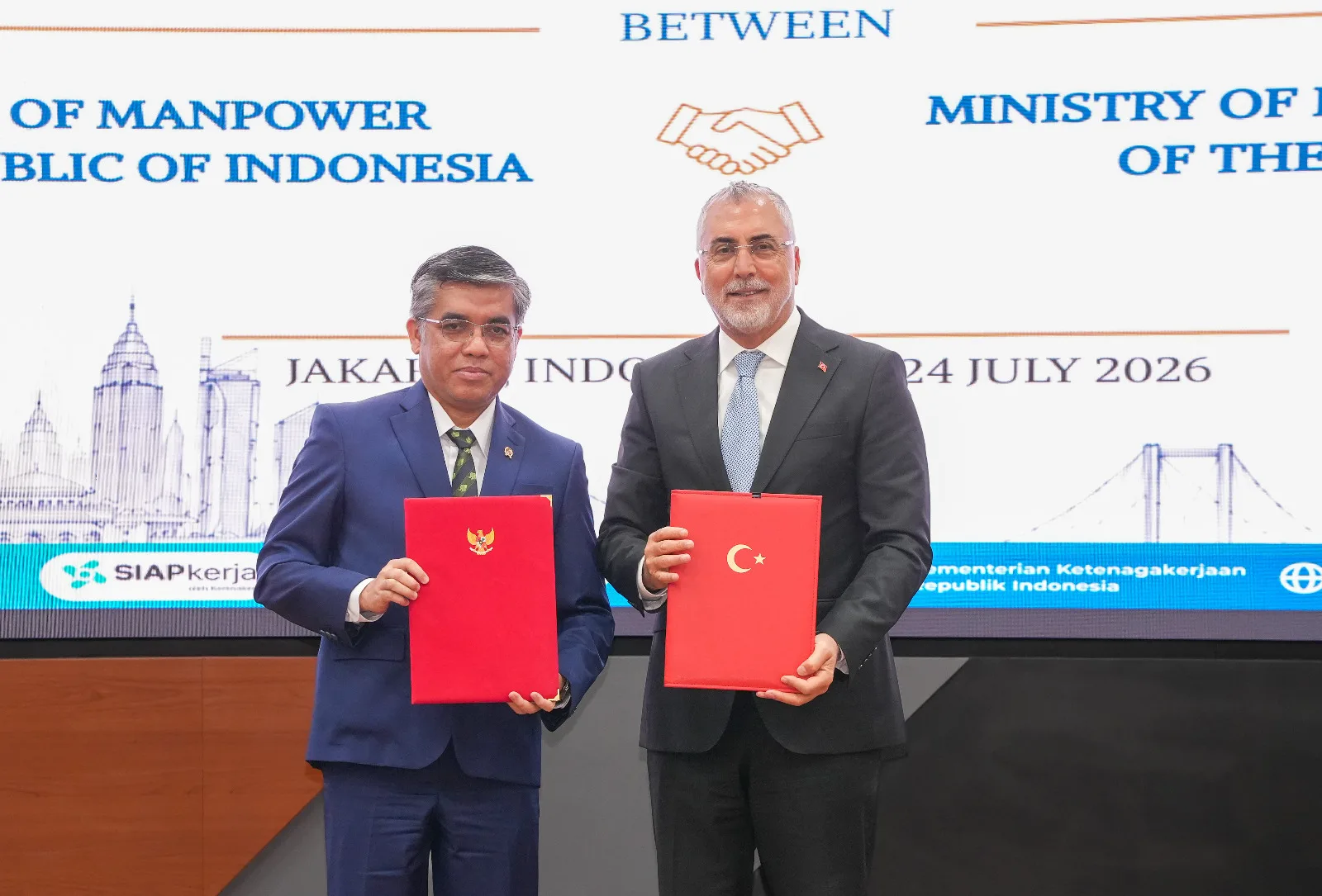
ASIATODAY.ID, JAKARTA — Indonesia and Türkiye have taken a significant step toward deepening their strategic partnership by launching a 2026–2027 Joint Action Plan aimed at modernizing labor policies, strengthening workforce skills, and fostering more inclusive labor markets amid rapid industrial and technological transformation.
The roadmap was adopted during the First Joint Working Commission (JWC) in Jakarta on Friday, where Indonesia’s Minister of Manpower Yassierli and Türkiye’s Minister of Labour and Social Security Vedat Işıkhan signed the Protocol of the First Joint Working Commission, formalizing a new phase of bilateral cooperation.
The agreement translates the Memorandum of Understanding on Cooperation in the Field of Labour, signed in Baku, Azerbaijan, in November 2023, into a concrete program of action for 2026–2027.
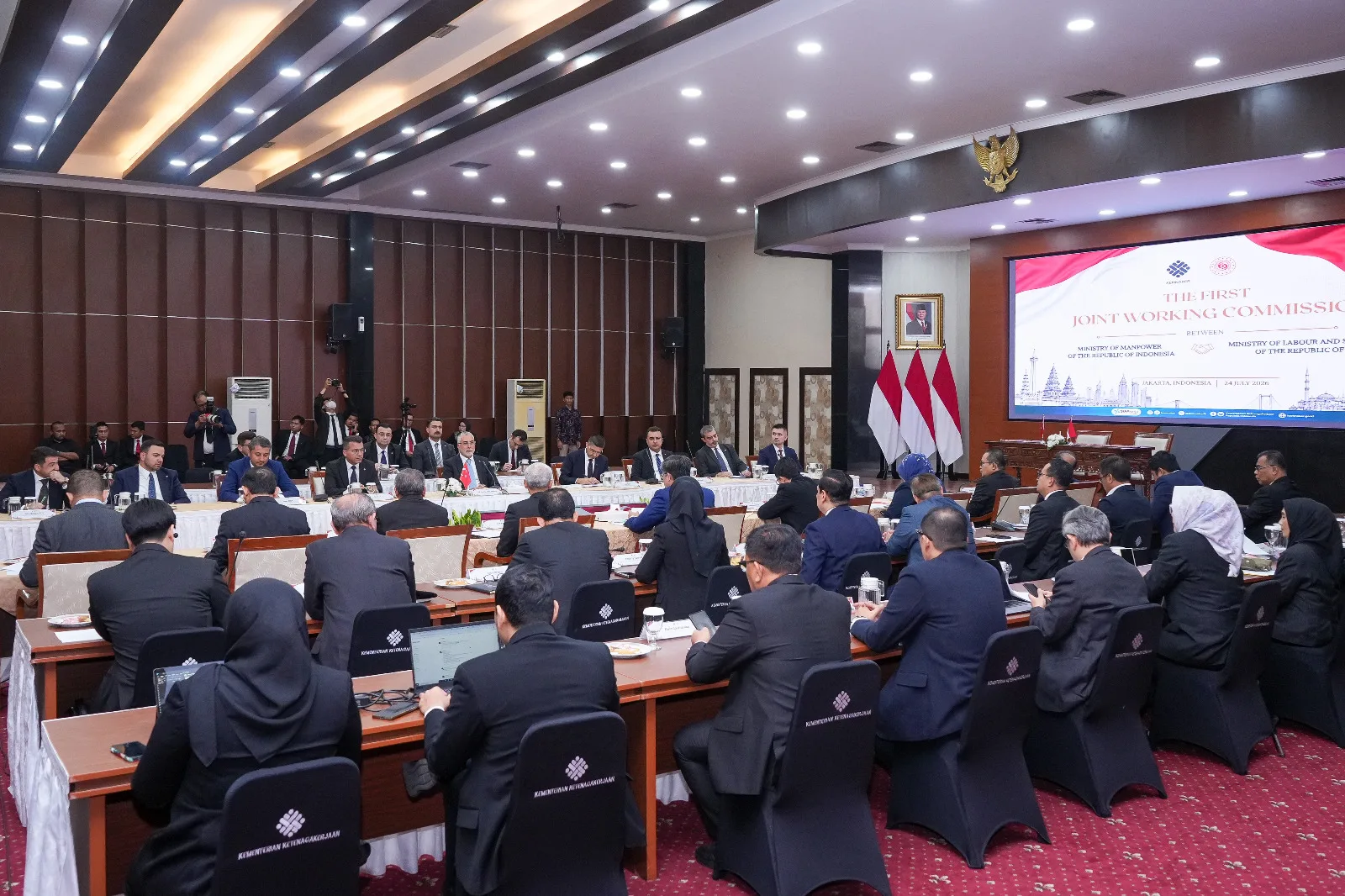
“Closer collaboration between Indonesia and Türkiye will not only benefit our two countries but also contribute to addressing global labor challenges by creating more inclusive, adaptive, and resilient labor markets that improve people’s welfare,” Yassierli said.
The Joint Action Plan encompasses cooperation across a broad range of priority areas, including labor market policy, digitalization of employment services, occupational safety and health, institutional capacity building, workforce development, and future international projects.
According to Yassierli, the success of the initiative will be measured not only by the implementation of its programs but also by their tangible impact on human capital development, institutional strengthening, and worker welfare in both countries.
One of the most notable outcomes of the meeting was Indonesia’s interest in adopting Türkiye’s Model Factory concept as part of its effort to transform vocational training centers into modern industry-oriented institutions.
The initiative attracted Indonesia’s attention after Türkiye presented the program during the Organization of Islamic Cooperation (OIC) conference in 2025. Unlike conventional training facilities, Model Factories function as integrated learning and consultancy centers where manufacturers—particularly small and medium-sized enterprises (SMEs)—receive practical guidance to improve productivity through lean manufacturing, operational excellence, and advanced production practices.
Indonesia has proposed expanding bilateral cooperation through technical exchanges, knowledge-sharing initiatives, and institutional partnerships to adapt the Model Factory approach within its national vocational education and training system.
“Türkiye’s successful Model Factory provides Indonesia with an opportunity to accelerate the transformation of our vocational training centers. We want these institutions to produce highly skilled workers while also serving as innovation hubs that help local SMEs improve efficiency, productivity, and global competitiveness,” Yassierli said.
The agreement reflects the increasingly close relationship between Indonesia and Türkiye as both nations strengthen cooperation beyond trade and investment into human capital development—an area regarded as critical for sustaining long-term economic growth and industrial competitiveness.
As Southeast Asia’s largest economy and one of the world’s biggest labor markets, Indonesia is seeking to equip its workforce with skills that match the demands of advanced manufacturing and the digital economy. Collaboration with Türkiye is expected to accelerate that transition while creating new opportunities for innovation, productivity, and sustainable economic development. (AT Network)
Follow Us at Google News, Instagram and LinkedIn