
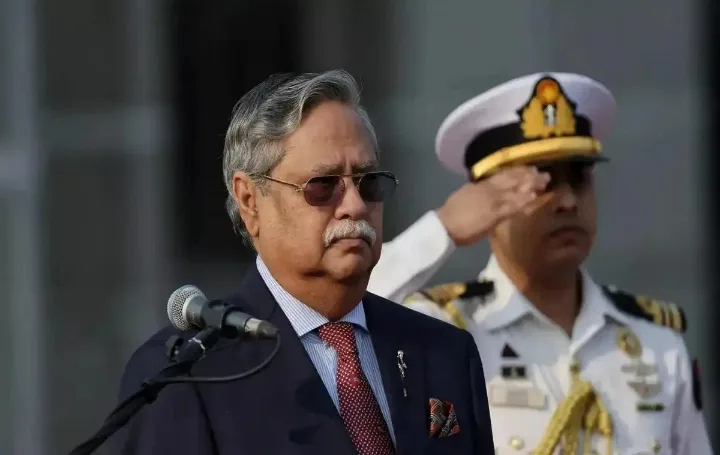
ASIATODAY.ID, DHAKA — Bangladesh President Mohammed Shahabuddin resigned on Friday, citing deteriorating health, nearly two years before the end of his term, marking a new development in the country’s ongoing political transition.
Parliament Speaker Hafiz Uddin Ahmad confirmed the resignation at a press briefing, announcing that he would assume the role of interim president until a successor is elected in accordance with Bangladesh’s constitutional process.
In his resignation letter, Shahabuddin said he had been diagnosed with autonomic neuropathy, a neurological disorder that affects the body’s automatic functions and can cause episodes of unconsciousness. The 76-year-old president said the condition had affected his ability to carry out official responsibilities.
Local media reported that Shahabuddin had received medical treatment at the Combined Military Hospital in Dhaka in recent days.
Although the presidency in Bangladesh is largely ceremonial, Shahabuddin’s departure carries political significance. He was elected unopposed in 2023 as the nominee of the Awami League and remained in office after former Prime Minister Sheikh Hasina was removed from power following mass protests in August 2024 and later left for India.
During the transition that followed, Shahabuddin oversaw the formation of an interim administration led by Nobel Peace Prize laureate Muhammad Yunus, which guided the country toward national elections.
The elections held earlier this year brought the Bangladesh Nationalist Party (BNP) to power under Prime Minister Tarique Rahman, while the Awami League, which has since been banned, was not allowed to participate.
The resignation comes at a politically sensitive moment as Sheikh Hasina has announced plans to return to Bangladesh later this year. In November 2025, a Bangladeshi court sentenced the former prime minister to death in absentia over her alleged role in the deadly crackdown on anti-government protesters that preceded her removal from office.
Shahabuddin’s resignation marks another turning point in Bangladesh’s post-2024 political transformation. The appointment of a new president will represent the next phase of the country’s transition as Bangladesh continues efforts to strengthen governance, political stability, and democratic institutions.(AT Network)
Follow Us at Google News, Instagram and LinkedIn