
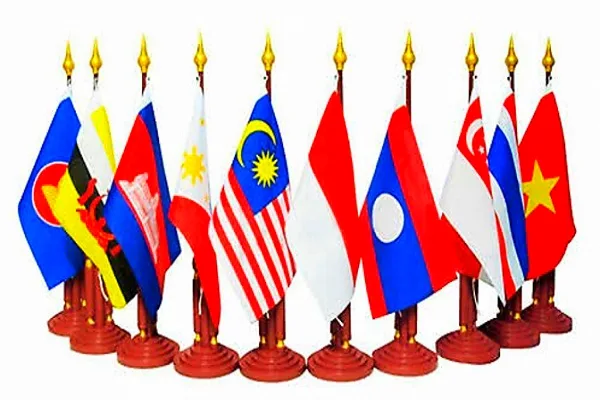
ASIATODAY.ID, JAKARTA – Indonesia is strengthening its role in advancing ASEAN cooperation through parliamentary diplomacy as it hosts the 17th Meeting of the ASEAN Inter-Parliamentary Assembly (AIPA) Caucus 2026, scheduled to take place virtually on 22 July 2026.
Under the theme “The Role of Parliament in Strengthening ASEAN Centrality in Navigating Complex Global Challenges,” the forum will serve as a strategic platform for ASEAN lawmakers to address regional stability, economic resilience, sustainable development, and collective responses to emerging global challenges.
Chairman of the Indonesian House of Representatives’ Inter-Parliamentary Cooperation Agency (BKSAP DPR RI) Syahrul Aidi Maazat, who will also chair the meeting as Chairperson of the 17th AIPA Caucus, said the forum reflects ASEAN’s commitment to maintaining its central role amid increasing geopolitical uncertainty.
“For Indonesia, the key issues discussed at the AIPA Caucus 2026 are closely aligned with our national interests in maintaining regional stability, strengthening economic resilience, promoting sustainable development, and ensuring ASEAN remains a peaceful, resilient, and competitive region,” Syahrul said.
He emphasized that the virtual format would not diminish the quality or substance of the discussions. Instead, the digital platform would allow broader, more inclusive participation from ASEAN member parliaments.
“AIPA Caucus is an important platform to strengthen coordination among ASEAN parliaments while aligning regional perspectives in responding to increasingly complex geopolitical, economic, and technological developments,” he added.
Two Strategic Agendas Shaping ASEAN’s Future
The AIPA Caucus 2026 will feature two major discussion sessions during the second plenary meeting: “AIPA Key Role in Promoting Inclusive Peace Governance” and “ASEAN and Climate Change: AIPA Contributions to Protect the Future of the People.”
The first session will focus on strengthening inclusive peace governance and exploring how parliaments can contribute to sustainable peace-building efforts across Southeast Asia.
The discussion will also highlight the implementation of the ASEAN Treaty of Amity and Cooperation (TAC), which marks its 50th anniversary in 2026, as well as the importance of empowering women and youth as key drivers of dialogue, reconciliation, and peace in the region.
Meanwhile, the second session will examine parliamentary contributions in addressing climate change challenges, including policy alignment with ASEAN climate agendas, the development of green and blue economies, and stronger regional climate governance.
The forum will bring together representatives from the AIPA Secretariat, ASEAN Institute for Peace and Reconciliation (ASEAN-IPR), Economic Research Institute for ASEAN and East Asia (ERIA), ISEAS–Yusof Ishak Institute, World Resources Institute (WRI) Indonesia, and Indonesia’s Ministry of Energy and Mineral Resources.
ASEAN’s Role Amid Global Geopolitical Shifts
Syahrul highlighted that ASEAN is facing a complex global environment marked by trade tensions, tariff disputes, maritime challenges, technological competition, and prolonged conflicts in various regions.
In this situation, he stressed that ASEAN must continue to serve as a credible platform for dialogue and cooperation.
“As global multilateralism faces growing challenges and major powers increasingly pursue unilateral interests, ASEAN must become more united and relevant,” he said.
According to Syahrul, parliamentary diplomacy plays an increasingly important role in building trust, strengthening consensus, and ensuring that ASEAN decisions translate into concrete actions.
Through AIPA Caucus, member parliaments will also review the implementation of resolutions adopted during the 46th AIPA General Assembly, allowing lawmakers to exchange experiences and best practices in advancing regional integration.
“The objective is to ensure that agreed recommendations do not remain merely as documents, but become practical measures that support ASEAN integration and development,” he said.
Timor-Leste Invited as Guest of Host
The forum will be attended by nine AIPA member parliaments, while Indonesia has also invited Timor-Leste’s parliament as the Guest of the Host, reflecting the country’s ongoing accession process toward full AIPA membership.
The meeting will conclude with the adoption of the 17th AIPA Caucus Report, the signing of the final document by delegates, and the handover of the hosting responsibility to Lao PDR for the next AIPA Caucus.
Alongside the main forum, the Indonesian Parliament and the AIPA Secretariat will organize an AIPA Roadshow involving university students and youth organizations to promote parliamentary diplomacy and enhance young people’s understanding of ASEAN cooperation.
Syahrul said Indonesia hopes the AIPA Caucus 2026 will deliver practical recommendations that strengthen ASEAN’s contribution to regional peace, stability, and prosperity.
“Strengthening ASEAN centrality through parliamentary diplomacy is a strategic necessity for the future of the region. AIPA provides an important platform to build consensus, enhance trust, and produce actionable recommendations for ASEAN,” he concluded. (AT Network)
Follow Us at Google News, Instagram and LinkedIn