
ASIATODAY.ID, JAKARTA — Indonesia is strengthening its position as the world’s leading palm oil producer as exports continue to grow while the government accelerates downstream processing and renewable energy development through palm-based innovations.
The palm oil industry contributed around 3.5% to Indonesia’s Gross Domestic Product (GDP) in 2025), reflecting its strategic role in the national economy. Data from the Palm Oil Plantation Fund Management Agency (BPDP) showed that Indonesia’s palm oil product exports reached US$30.87 billion in 2025, with export volume totaling 38.84 million tons, rising 11.05% year-on-year.
The government views research and innovation as a key driver to transform the palm oil sector into a more sustainable, high-value, and globally competitive industry.
Coordinating Minister for Economic Affairs Airlangga Hartarto said Indonesia must strengthen the connection between research, government policy, industry, and investment to unlock greater value from its palm oil resources.
“Research, policy, industry, and investment must work together to build a stronger and more sustainable palm oil ecosystem,” Airlangga said during the closing ceremony of the Indonesia Palm Oil Research Week (PERISAI) 2026 in Jakarta, Tuesday, July 21, 2026.
B50 Biodiesel Strengthens Energy Security
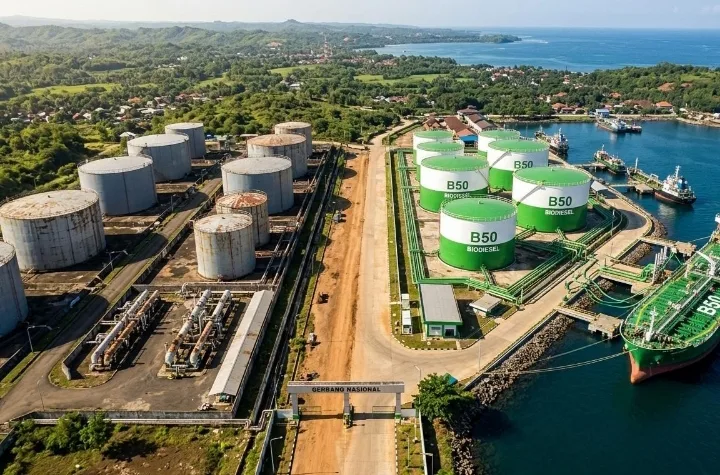
Indonesia has entered a new phase of palm oil utilization through the implementation of the B50 biodiesel program, which officially began on July 1, 2026, and was launched by President Prabowo Subianto on July 9, 2026.
The B50 program, which increases the mandatory palm-based biodiesel blend to 50%, is a major step in Indonesia’s strategy to achieve energy self-sufficiency, reduce fossil fuel dependence, and create greater domestic value from agricultural commodities.
“B50 is a concrete example of how research, policy, investment, and industrial capacity can be integrated to achieve national strategic goals,” Airlangga said.
The government is also preparing the next generation of palm oil-based industries, including green diesel, Sustainable Aviation Fuel (SAF) from Used Cooking Oil (UCO), and palm-based gasoline.
These future products are expected to generate higher economic value, expand investment opportunities, and strengthen Indonesia’s role in the global renewable energy transition.
From Commodity Exporter to Global Innovation Hub
Airlangga emphasized that Indonesia’s palm oil competitiveness must be supported by increased productivity, technological development, value-added production, and sustainable governance.
“Research and innovation must become an essential part of transforming Indonesia’s palm oil industry,” he said.
The PERISAI 2026 forum also highlighted the contribution of young researchers in developing future palm oil technologies. The student research competition involved participants from 40 universities across Indonesia, with three finalists receiving awards for innovative research projects.
Airlangga encouraged industries to adopt and commercialize research outcomes while ensuring intellectual property protection for innovators.
“As the world’s largest palm oil producer, Indonesia needs researchers from its best universities to continue creating innovations that strengthen the industry,” he said.
The government is also accelerating plantation rejuvenation programs for other strategic commodities, including cocoa and coconut, particularly for smallholder farmers, to improve productivity and community welfare.
With rising exports, stronger downstream industries, and renewable energy innovation, Indonesia aims to transform palm oil from a traditional commodity into a strategic pillar of the global green economy. (AT Network)
Follow Us at Google News, Instagram and LinkedIn