
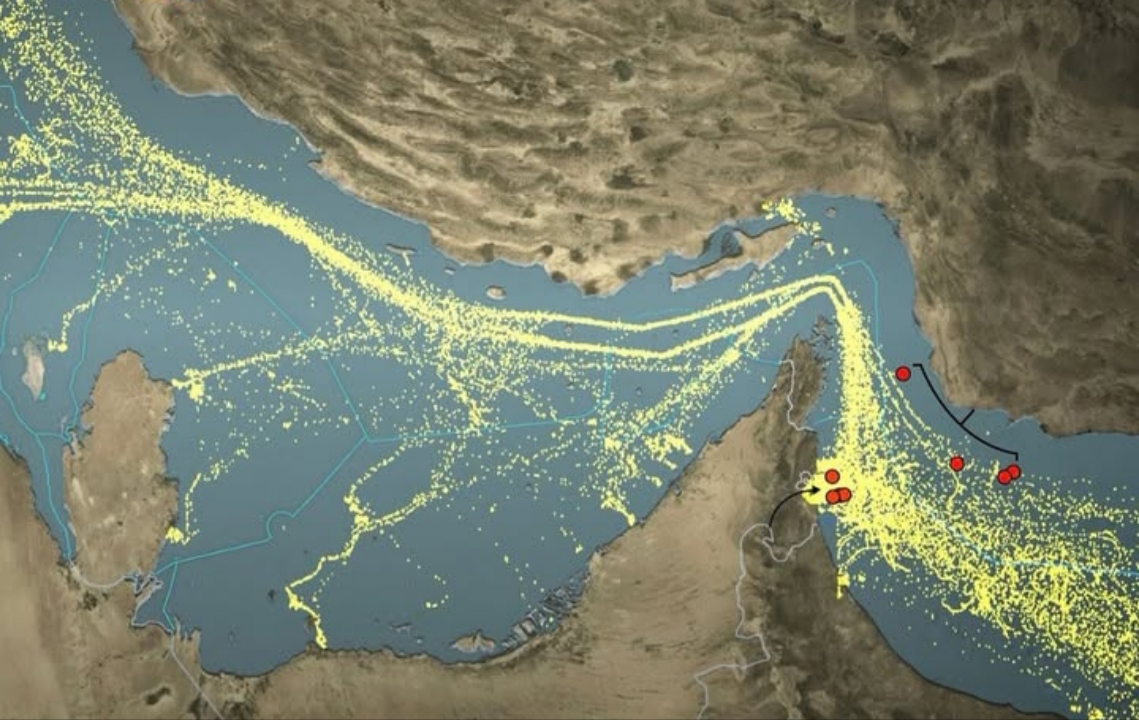
ASIATODAY.ID, TEHRAN – Tensions in the Middle East are escalating after the Iranian Parliament officially ordered the complete closure of the Strait of Hormuz, a critical maritime passage through which nearly 20 percent of the world’s daily oil supply is transported. The move is expected to send shockwaves through global energy markets and drive oil prices sharply upward.
According to The Guardian on Monday, June 23, 2025, this decision could block more than USD 1 billion worth of oil shipments per day, following a U.S. airstrike on Iran’s nuclear facilities.
However, the enforcement of this directive still hinges on a final decision from Iran’s Supreme National Security Council.
“The closure of the Strait of Hormuz now awaits final approval from the Supreme Council. The parliament has made its stance clear,” reported Press TV Iran on Sunday (June 22).
Iran has long used the threat of closing the Strait of Hormuz as a strategic countermeasure against Western pressure. This time, the decision follows a significant escalation — an Israeli military strike backed by the United States, targeting Iran’s key infrastructure.
Esmail Kosari, a member of the Parliament’s National Security Commission and a senior commander in the Islamic Revolutionary Guard Corps (IRGC), stated that the closure of the strait is now a serious option.
“The closure of the Strait of Hormuz will be implemented whenever necessary,” he told the Young Journalist Club.
Meanwhile, Iranian Foreign Minister Abbas Araghchi declined to confirm whether Tehran would immediately act on the closure plan. “Iran has several options on the table,” he told local media.
The Strait of Hormuz: A Global Energy Lifeline
The Strait of Hormuz links the Persian Gulf to the Gulf of Oman and the Arabian Sea. At its narrowest point, it is just 33 kilometers wide, with shipping lanes only 3 kilometers wide in each direction. The strait is a vital conduit for oil tankers from Saudi Arabia, the UAE, Kuwait, and Iraq, supplying markets worldwide.
A full closure of the strait would not only impact Iran and Gulf states but could also disrupt the global energy supply chain and trigger increased oil market volatility in the near future.
Energy and geopolitical analysts warn that if Iran’s Supreme National Security Council ratifies this decision, the world could see an immediate spike in oil prices and widespread disruptions in global trade.
The conflict’s escalation also raises concerns about the potential involvement of international military forces in the region. (AT Network)
Follow Us at Google News and WA Channel