
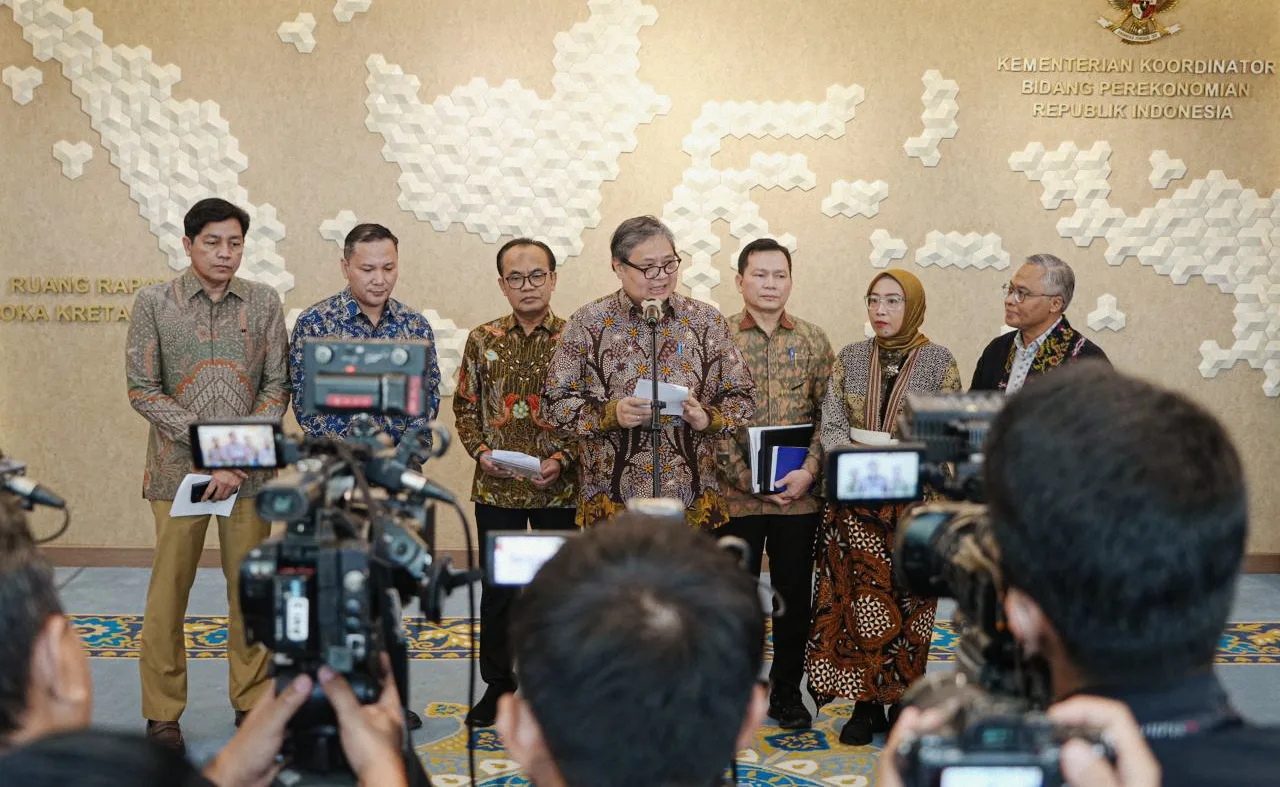
ASIATODAY.ID, JAKARTA — Indonesia reaffirmed its commitment to accelerating the energy transition and green economic development during the Coordination Meeting on the Progress of the Just Energy Transition Partnership (JETP) held on Friday, December 5, 2025.
The meeting followed up on discussions from March 2025 and marked a crucial moment to strengthen national energy-transition policies.
Coordinating Minister Airlangga Hartarto emphasized that energy transition is now an integral part of Indonesia’s long-term development strategy. This aligns with the Asta Cita development agenda, particularly efforts to bolster energy and food security through green economic growth—key elements in achieving the 8% economic growth target by 2029 as the foundation for Indonesia Emas 2045.
“JETP commitments for Indonesia have grown from USD20 billion (2022) to USD21.4 billion (2025), consisting of USD11.4 billion in public financing from the IPG and USD10 billion from GFANZ. This reflects strong international confidence,” Minister Airlangga said.
As of November 2025, Indonesia has successfully mobilized USD3.1 billion through the JETP framework, while an additional USD5.5 billion is currently under negotiation for concrete projects. The United Kingdom also presented two studies under the Just Framework, offering actionable steps to enhance economic resilience and inclusivity in Indonesia’s energy transition.
Minister Airlangga extended appreciation to the Government of Japan for its role through the JETP Secretariat, as well as to all IPG donors for their support in preparing the JETP Progress Report 2025, now in its finalization stage.
The report will serve as the foundation for strengthened implementation of upcoming energy-transition programs under the leadership of Germany and Japan through the JETP Delivery Unit (JDU).
The government also highlighted two priority projects within the energy-transition pipeline expected to deliver significant impact: the Green Energy Corridor Sulawesi (GECS) and the national diesel-replacement program (dedieselisasi), both gaining strong attention from international partners.
These initiatives require close collaboration between the government, global partners, financial institutions, and industry stakeholders.
“This is a major commitment, and its success depends on Indonesia and cross-ministerial coordination. The task force will accelerate JETP 2.0 so that available funding can truly support President Prabowo’s directive to fast-track Indonesia’s NDC,” Airlangga concluded.
The coordination meeting was attended by representatives of the International Partners Group (IPG), including senior diplomats from Germany, Japan, Denmark, the European Union, the United Kingdom, Canada, France, and Italy; senior officials from the Coordinating Ministry for Economic Affairs; representatives from GFANZ, ADB, AFD; the JETP Secretariat; and other relevant ministries and institutions. (AT Network)
Follow Us at Google News and WA Channel