
ASIATODAY.ID, JAKARTA – Millions of people are unable to have the number of children they want, but not because they are rejecting parenthood; economic and social barriers are stopping them. This is the central finding of UNFPA’s 2025 State of World Population report, “The real fertility crisis: The pursuit of reproductive agency in a changing world”.
Drawing on academic research and new data from a UNFPA/YouGov survey spanning 14 countries–together home to over a third of the global population – the report finds that one in five people globally expect to not have the number of children they desire. Key drivers include the prohibitive cost of parenthood, job insecurity, housing, concerns over the state of the world, and the lack of a suitable partner. A toxic blend of economic precarity and sexism play a role in many of these issues, the report shows.
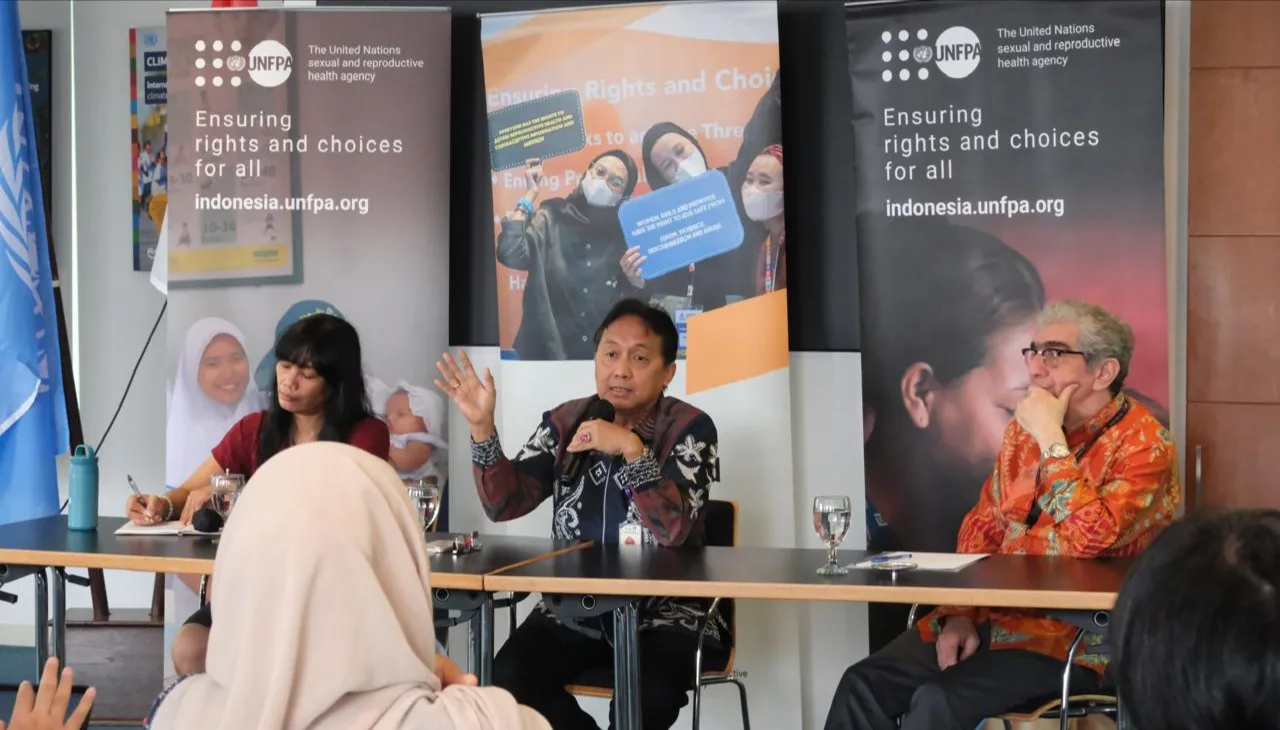
“The real fertility crisis is not that people don’t want to have children, it is that people are unable to create the families they want. This report found that more than 70% respondents in Indonesia want to have 2 children or more,” Hassan Mohtashami, UNFPA Indonesia Representative, said at the SWP 2025 press briefing in Jakarta, July 3, 2025.
“To respond, we need to listen to what individuals need in making their fertility choices, such as parental leave, affordable fertility care, and an enabling environment.”
Dr. Bonivasius Prasetya Ichtiarto, S.Si., M.Eng, the Ministry of Population and Family Development’s Deputy for Population Management affirmed that the Ministry (previously known as BKKBN) is to ensure the development of family quality and population development that focuses on human. The Government has prepared the Grand Design of Population Development (DBPK) for the next 20 years with the Roadmap for Population Development to guide the implementation.
“The SWP report will provide input into our population policies. The Government also has strategies and programmes in optimizing family planning services, mother and child health, women in workforce, and family welfare such as Kemendukbangga’s Quick Wins that include childcare support (Taman Asuh Sayang Anak),” he said.
The data paints a stark picture:
1. Most people want to have two or more children (62% female, 61% male). p.77
In Indonesia, 74% of women and 77% of men want to have 2 children or more.
2. Nearly 20% of people, under age 50, expect to not achieve their desired family size. p. 41
In Indonesia, 17% believe they will have fewer children than they would ideally choose, while 6% believe they will have more.
3. Over 40% of people over 50 didn’t have the number of children they would have chosen.
In Indonesia, 40% had fewer than ideal, 8% had more. 38% achieved the ideal number.
4. Financial limitations are the top reason people aren’t having the number of kids they want. pp. 18-19
In Indonesia, the top 3 reasons cited are financial limitations (39%), housing limitations (22%), and job insecurity/unemployment (20%).
5. 1 in 5 said fears about the future (including wars, pandemics, politics and climate change) would lead to them having fewer children than they desired. p. 19
In Indonesia, 14% cite concerns about political or social situations and 9% cite climate change as barriers to having children.
6. 1 in 3 said they or their partner had experienced an unintended pregnancy. p. 15
Indonesia has the lowest percentage of respondents experiencing unintended pregnancy at less than 20%.
7. 1 in 4 experienced a time when they wanted to have children but felt unable to. p. 15
Indonesia is in the top 5 among 14 countries whose respondents say that they felt unable to have children at their preferred time, at more than 20%.
8. 13% of people have experienced both an unintended pregnancy and a time when they wanted to have children but felt unable to. p. 15
Even though Indonesia is the lowest in unintended pregnancy, the case of preferred time of pregnancy remains a challenge.
9. 14% said they won’t have the number of children they want because they lack a partner or lack a suitable partner. p. 17, 19
In Indonesia, only 4% cite lack of a (suitable) partner as a barrier to having children.
10. 18% had experienced a situation where they were unable to access medical or health services related to contraception or procreation. p. 46
In Indonesia, 17% had experienced a situation where they were unable to access medical or health services related to contraception or procreation.
The report warns against simplistic or coercive responses to declining birth rates – such as baby bonuses or fertility targets – noting that these policies are largely ineffective and can violate human rights.
Instead, UNFPA urges governments to empower people to make reproductive decisions freely, including by investing in affordable housing, decent work, parental leave, and the full range of reproductive health services and reliable information.
UNFPA also calls on societies to address all the ways that gender inequality undermines people’s family choices, including:
– Workplace norms that push women out of paid work
– Lack of paid flexible leave for men and stigma against engaged fathers
– Lack of affordable childcare
– Restrictions in reproductive rights, including contraception and fertility care
– Diverging gender attitudes held by young men and women, contributing to singlehood
A tailored mix of economic, social, and political measures will be needed in each country to help people form the families they want. As policy makers consider how to navigate shifting population dynamics, UNFPA stands ready to support them in understanding the challenges they face, and designing solutions that will ensure rights and choices for all. (AT Network)
Follow Us at Google News and WA Channel