
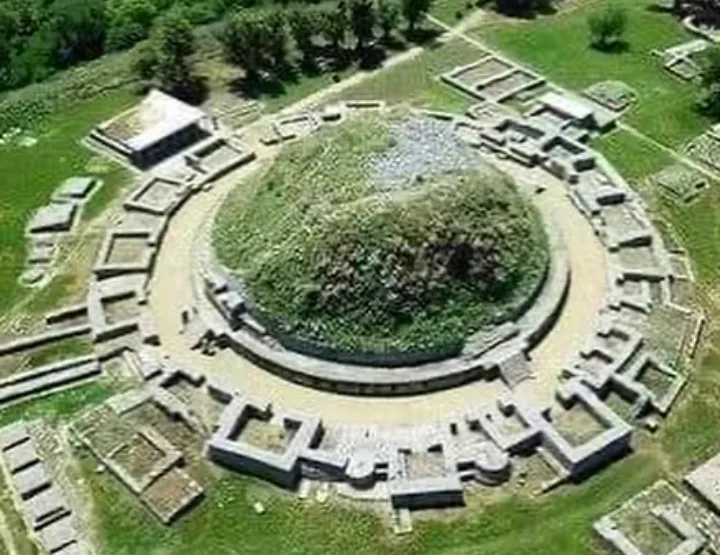
ASIATODAY.ID, ISLAMABAD — Pakistan is facing mounting international pressure after UNESCO warned that reconstruction work at two monuments within the ancient city of Taxila could place the World Heritage Site on the List of World Heritage in Danger unless the alterations are reversed.
The United Nations’ cultural agency has called on Pakistani authorities to undo reconstruction carried out at the historic Mohra Moradu monastery and the ancient city of Sirkap, arguing that the work has compromised the site’s authenticity and historical integrity.
According to Pakistani media reports, UNESCO said the reconstruction could trigger international conservation measures if corrective action is not taken. Placement on the List of World Heritage in Danger is reserved for sites whose outstanding universal value is threatened by deterioration, conflict, or inappropriate development.
During meetings with senior Pakistani officials, UNESCO reportedly cited the case of a former World Heritage Site in Germany that lost its designation after extensive alterations were deemed to have undermined its heritage value—underscoring the agency’s increasingly strict approach to preserving historical authenticity.
The controversy emerged after an unidentified visitor submitted photographs and documentation to Pakistan’s Permanent Delegation to UNESCO in Paris, alleging that restoration work by the Punjab Archaeology Department had replaced sections of the original ancient walls with newly built structures. In several areas, the reconstructed walls were also reportedly raised above their historic height.
UNESCO subsequently dispatched experts to inspect the site and concluded that the reconstruction did not conform to internationally recognized conservation standards.
Known in antiquity as Takshashila, Taxila flourished from the 6th century BC as one of Asia’s earliest centers of learning and a crossroads of Buddhist, Persian, Greek, and Indian civilizations. The archaeological complex, which includes monasteries, stupas, temples, and the remains of successive ancient settlements, was inscribed on UNESCO’s World Heritage List in 1980 for its exceptional cultural and historical significance.
The warning highlights UNESCO’s insistence that preservation should prioritize authenticity over reconstruction. Unless Pakistan complies with the agency’s recommendations, Taxila—one of South Asia’s most significant archaeological treasures—could face heightened international scrutiny and the risk of being placed on the List of World Heritage in Danger, a designation that often signals serious concerns over the future of a heritage site. (RT)
Follow Us at Google News, WA Channel, and LinkedIn