
ASIATODAY.ID, JAKARTA – Indonesia is stepping up efforts to strengthen the governance of the Komodo Biosphere Reserve amid rising tourism pressure and growing ecological challenges.
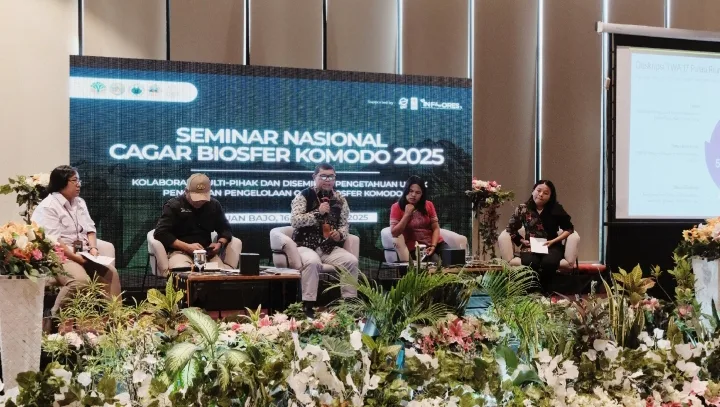
The commitment was reaffirmed during the National Seminar on Strengthening Biosphere Reserve Management in Indonesia, hosted by the Directorate General of Natural Resources and Ecosystem Conservation (KSDAE) of the Ministry of Forestry on December 16, 2025, in Jakarta.
The high-level forum brought together central and local government officials, national park managers, academics, civil society organizations, and international development partners to address challenges, best practices, and future opportunities in managing Indonesia’s biosphere reserves—particularly in priority tourism destinations such as Komodo.
Director General of KSDAE Dr. Satyawan Pudyatmoko emphasized that biosphere reserves are not merely conservation zones, but integrated models of sustainable development that balance biodiversity protection, local economic growth, and the preservation of social and cultural values.
“The complexity of managing biosphere reserves continues to increase, especially in areas that are also designated as national priority tourism destinations like Komodo,” he said.
According to Satyawan, these challenges require strong policy alignment across levels of government, landscape-based management approaches, and the use of scientific data as the foundation for decision-making.
“We cannot work in silos. Cross-sector collaboration, meaningful community participation, and strong scientific support are essential to ensure biosphere reserves function effectively and sustainably,” he added.
UNDP and GEF Promote Landscape-Based Biodiversity Management
As a key development partner, the United Nations Development Programme (UNDP) is supporting these efforts through the IN-FLORES Project, funded by the Global Environment Facility (GEF). The initiative focuses on strengthening biodiversity governance and landscape-based management across Flores Island, including priority areas such as the Komodo Biosphere Reserve and the Wae Wuul–Mbeliling Landscape.
UNDP Indonesia Programme Manager Iwan Kurniawan said the project goes beyond conservation by supporting locally driven and context-specific solutions.
“Through the IN-FLORES Project, UNDP works closely with local stakeholders on human–wildlife conflict mitigation, habitat restoration, and strengthening institutional capacity at the regional level,” he explained.
The initiative aligns with the UNDP Nature Pledge, a global commitment to accelerate concrete actions to halt and reverse biodiversity loss.
Field Findings and Strategic Policy Directions
During the seminar, participants reviewed key findings from the field, including Komodo dragon population monitoring conducted by the East Nusa Tenggara Natural Resources Conservation Agency, studies on tourism destination management through a biosphere reserve approach, and assessments of institutional effectiveness.
The forum produced several strategic follow-up recommendations, including: The development of clear performance indicators for biosphere reserves, The adoption of innovative monitoring technologies, The strengthening of sustainable financing models for long-term conservation.
These measures are considered critical to ensuring that the Komodo Biosphere Reserve remains a global example of how biodiversity conservation, sustainable tourism, and community well-being can coexist.
About the IN-FLORES Project
The Integrated Biodiversity Management in Flores (IN-FLORES) Project is a joint initiative between the Government of Indonesia and UNDP, funded by the Global Environment Facility.
The project aims to enhance landscape-based biodiversity management across Flores Island through human–wildlife conflict mitigation, ecosystem restoration, institutional development, and integrated monitoring systems. (AT Network)
Follow Us at Google News and WA Channel