
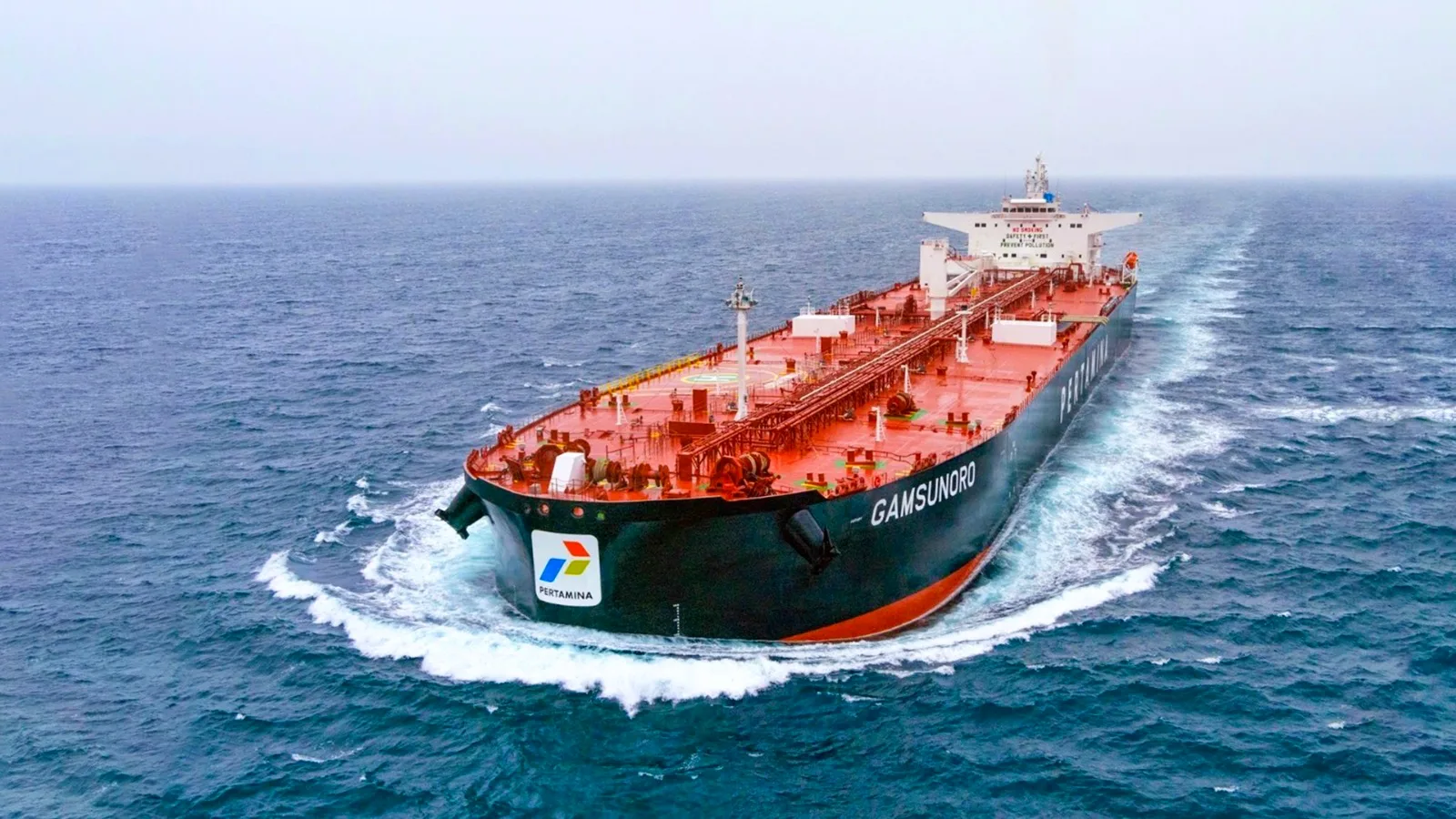
ASIATODAY.ID, JAKARTA — As geopolitical tensions continue to escalate across the Middle East, Indonesia has successfully secured one of its most strategic energy assets.
PT Pertamina International Shipping (PIS), working in close coordination with Indonesia’s Ministry of Foreign Affairs and the Indonesian Embassy in Tehran, safely guided the Gamsunoro tanker through the Strait of Hormuz—the world’s most critical energy shipping corridor—after the vessel had been stranded for months amid the U.S.-Iran conflict.
The successful transit highlights the effectiveness of combining state diplomacy with corporate risk management to safeguard energy supply chains during a period of growing global uncertainty.
The Gamsunoro completed its passage through the Strait of Hormuz on Wednesday, June 24, after a journey of approximately 16 hours. The tanker departed the Arabian Gulf at 01:06 Dubai time, sailing at an average speed of 7.5 knots. It reached the entrance to the Strait of Hormuz at around 1:00 p.m. local time and, four hours later, was confirmed to have safely cleared the strategic waterway.
Muhammad Baron, Vice President of Corporate Communication at PT Pertamina (Persero), said the safety of the crew and the protection of the company’s assets had remained the company’s highest priority since tensions in the region began to intensify.
“From the very beginning of this crisis, Pertamina has placed the safety of our crew and the security of our assets above all else. We have maintained close coordination with Indonesia’s Ministry of Foreign Affairs, our embassies across the region, and other strategic stakeholders. This collaboration ensures that every risk mitigation measure aligns with Indonesia’s diplomatic efforts to safeguard national assets and strategic interests overseas,” Baron said on June 25, 2026.
Meanwhile, Vega Pita, Acting Corporate Secretary of PIS, explained that the decision to move the Gamsunoro was made only after the company completed a comprehensive month-long risk assessment in collaboration with relevant government authorities.
According to Vega, the voyage was approved only after every safety requirement had been fulfilled, including insurance coverage, technical and operational readiness, maritime security measures, and the preparedness of the vessel’s crew.
“We extend our sincere appreciation to Indonesia’s Ministry of Foreign Affairs and the Indonesian Embassy in Tehran for their unwavering support throughout this process. The timing and route for crossing the Strait of Hormuz were determined through rigorous risk assessments, allowing the vessel to safely depart the Arabian Gulf and continue its voyage,” she said.
Throughout the operation, the tanker was monitored around the clock through PIS’s crisis center. Operational teams onshore remained in constant real-time communication with the crew to monitor security developments and ensure every mitigation protocol was executed as planned.
The successful transit represents a significant milestone for PIS in maintaining uninterrupted shipping operations through one of the world’s most strategically important oil and gas corridors. The Strait of Hormuz serves as the primary gateway for energy exports from the Gulf and remains indispensable to the stability of global energy markets.
Meanwhile, another PIS vessel, VLCC Pertamina Pride, is currently preparing for its own transit. The company continues to assess regional security conditions, maritime traffic, navigational risks, and international advisories before authorizing the vessel’s departure.
PIS reaffirmed that it will continue to exercise the highest level of operational prudence to protect its crews, secure corporate assets, and support Indonesia’s energy resilience amid an increasingly volatile global geopolitical landscape. (AT Network)
Follow Us at Google News, WA Channel, and LinkedIn