
ASIATODAY.ID, JAKARTA — Indonesia and Singapore are nearing a landmark agreement on cross-border renewable electricity trade, with negotiations over electricity pricing emerging as the last outstanding issue before the project can move forward.
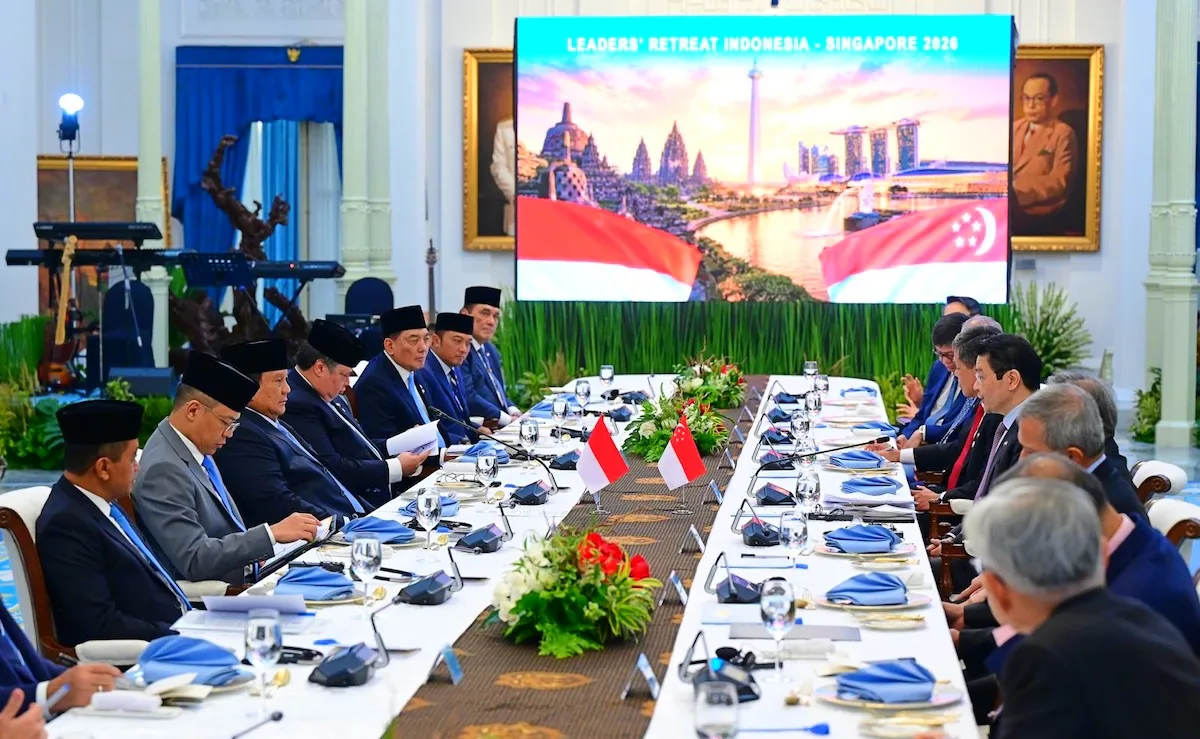
The initiative was one of the key outcomes of Singaporean Prime Minister Lawrence Wong’s state visit to Jakarta on Monday, where the two countries signed 26 bilateral agreements spanning energy, trade, investment, the digital economy, connectivity, cybersecurity, and defense.
Indonesian Minister of Energy and Mineral Resources Bahlil Lahadalia said discussions have made significant progress, with both governments now focused on finalizing a pricing mechanism that delivers fair economic returns for both sides.
“We are still negotiating the electricity price because, under Indonesia’s regulations, pricing is determined by the government. We want a win-win solution that benefits both countries, and I believe we are very close to reaching an agreement,” Bahlil said after the bilateral meeting.
The renewable electricity export plan forms part of a broader clean energy framework established through three memoranda of understanding signed by Indonesia and Singapore last year. The agreements cover renewable electricity exports, the development of green industrial zones in Indonesia, and cooperation on carbon capture and storage (CCS), creating an integrated platform to accelerate the energy transition in both countries.
For Indonesia, the project represents more than an electricity export opportunity. Jakarta aims to leverage the initiative to attract green investment, expand renewable energy capacity, create higher-value industries, and generate new employment while reinforcing its position as a regional clean energy powerhouse.
Singapore, meanwhile, views cross-border electricity imports as a key pillar of its decarbonization strategy, helping diversify energy supplies and reduce carbon emissions as the city-state advances toward its net-zero ambitions.
Among the 26 agreements signed during the leaders’ meeting, 18 were government-to-government accords, while the remaining eight were concluded between private-sector entities, underscoring the expanding strategic partnership between the two neighboring economies.
Once finalized, the electricity export agreement is expected to become a milestone for ASEAN’s regional energy integration, demonstrating how cross-border clean energy trade can strengthen energy security, accelerate decarbonization, and deepen economic cooperation. A mutually agreed pricing framework will be critical to ensuring the partnership delivers long-term value for both nations while advancing Southeast Asia’s transition to a low-carbon economy. (AT Network)
Follow Us at Google News, WA Channel, and LinkedIn