
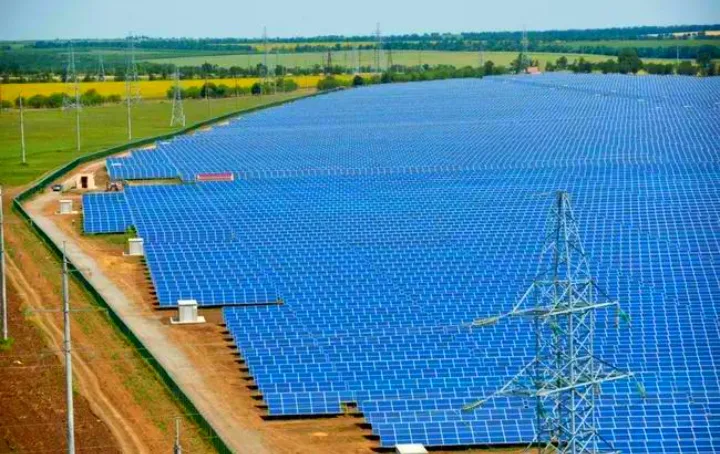
ASIATODAY.ID, WASHINGTON — India and Pakistan are taking major steps to accelerate the clean energy transition after securing more than US$1.27 billion in financing for renewable energy and electricity infrastructure, reinforcing South Asia’s drive toward sustainable economic growth and stronger energy security.
Approved by the World Bank’s Board of Executive Directors, the funding supports two flagship programs aimed at expanding renewable energy capacity, modernizing power transmission systems, creating new employment opportunities, and reducing carbon emissions across the region.
The initiatives come as South Asian economies face rapidly rising electricity demand while pursuing ambitious climate targets under the Paris Agreement and reducing dependence on fossil fuels.
India Expands Rooftop Solar to Millions of Homes
India will receive a financing package totaling US$890 million to accelerate the PM Surya Ghar: Muft Bijli Yojana, the government’s flagship rooftop solar initiative targeting 10 million urban and rural households.
The package includes an US$820 million loan from the International Bank for Reconstruction and Development (IBRD), a US$60 million concessional loan from the Clean Technology Fund, and a US$10 million grant from the IBRD’s Livable Planet Fund.
The program is also expected to unlock approximately US$4.2 billion in private financing, allowing commercial banks to provide collateral-free loans for household rooftop solar installations.
Beyond expanding clean electricity access, the initiative is projected to create around 1.7 million jobs across renewable energy manufacturing, installation, maintenance, and related services, while helping millions of families reduce monthly electricity costs.
India aims to achieve net-zero emissions by 2070 and increase non-fossil-fuel energy sources to 60 percent of its electricity generation by 2035, making residential solar a key pillar of its long-term energy strategy.
Pakistan Modernizes Its National Power Grid
Pakistan, meanwhile, secured US$375.9 million for the Grid Stability Enhancement Project, the first phase of the country’s 10-year Boosting Energy Security through Transmission in Pakistan (BEST-PAK) program.
The project will strengthen Pakistan’s electricity transmission network through advanced grid technologies designed to improve system reliability, reduce power outages, and enable greater integration of renewable energy.
The investment is expected to unlock 640 megawatts of currently constrained wind power, support the integration of nearly 491 megawatts of new private-sector renewable energy projects, and maximize the utilization of 1,840 megawatts of existing wind generation capacity in southern Pakistan.
The project is also expected to avoid approximately 832,500 metric tons of carbon dioxide emissions annually, equivalent to more than 20.8 million tons over its projected 25-year lifespan, while supporting Pakistan’s goal of sourcing 60 percent of its electricity from renewable energy by 2030.
To improve resilience against climate change, all new transmission infrastructure will be designed to withstand flooding and extreme temperatures, ensuring reliable electricity supplies during increasingly frequent heatwaves and monsoon seasons.
A New Chapter for South Asia’s Energy Transition
Together, the two initiatives highlight the accelerating momentum of South Asia’s clean energy transformation. As governments seek to balance economic growth, rising electricity demand, and climate commitments, investments in renewable energy and modern power infrastructure are becoming increasingly central to national development strategies.
With billions of dollars in public and private investment expected to follow, India and Pakistan are positioning themselves to expand clean electricity access, strengthen energy security, stimulate green industries, and create millions of jobs—offering a powerful example of how large-scale energy investment can support both economic development and climate action across the region. (AT Network)
Follow Us at Google News, Instagram, WA Channel, and LinkedIn