
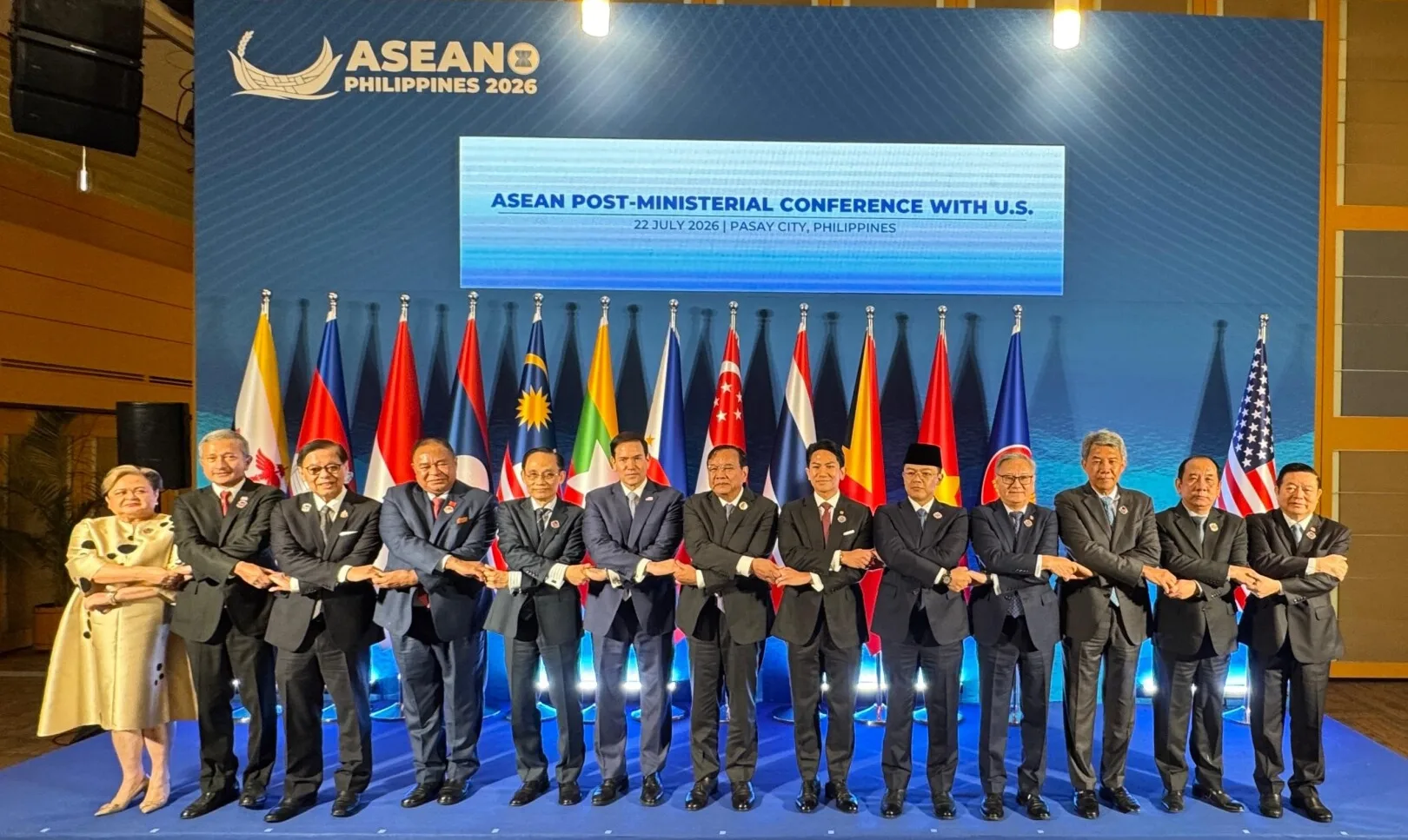
ASIATODAY.ID, MANILA — Amid intensifying geopolitical rivalry, technological competition, and mounting pressure on global supply chains, ASEAN is steadily consolidating its position as a strategic center of gravity in the Indo-Pacific, with major partners increasingly turning to Southeast Asia to strengthen economic cooperation, regional security, and long-term resilience.
The series of Post Ministerial Conferences (PMC), held alongside the 59th ASEAN Foreign Ministers’ Meeting in Manila, demonstrated ASEAN’s growing ability to convene both major powers and trusted regional partners around a shared agenda of stability, connectivity, innovation, and sustainable growth.
Rather than serving merely as annual diplomatic engagements, the meetings highlighted expanding cooperation with the United States, India, South Korea, and New Zealand across trade, digital transformation, artificial intelligence, maritime security, clean energy, resilient supply chains, healthcare, and sustainable development.
Together, these partnerships reinforce ASEAN’s central role in shaping an open, inclusive, and rules-based Indo-Pacific at a time when strategic competition and economic uncertainty are redefining the regional landscape.
United States: Strengthening Economic and Digital Partnerships
The United States remains one of ASEAN’s most important strategic and economic partners as both sides seek to deepen cooperation in trade, investment, digital transformation, and supply chain resilience.
ASEAN–US economic ties continue to expand, with two-way trade reaching US$552.8 billion in 2025 and US foreign direct investment totaling US$28.56 billion, highlighting Washington’s significant role in the region’s economic development.
Beyond traditional trade, cooperation is increasingly focused on emerging challenges, including digital security, cybersecurity, and the need to build trusted and resilient technology ecosystems.
As Southeast Asia accelerates its digital transformation, ASEAN and the United States are seeking closer collaboration to ensure that technological progress is accompanied by security, trust, and inclusive growth.
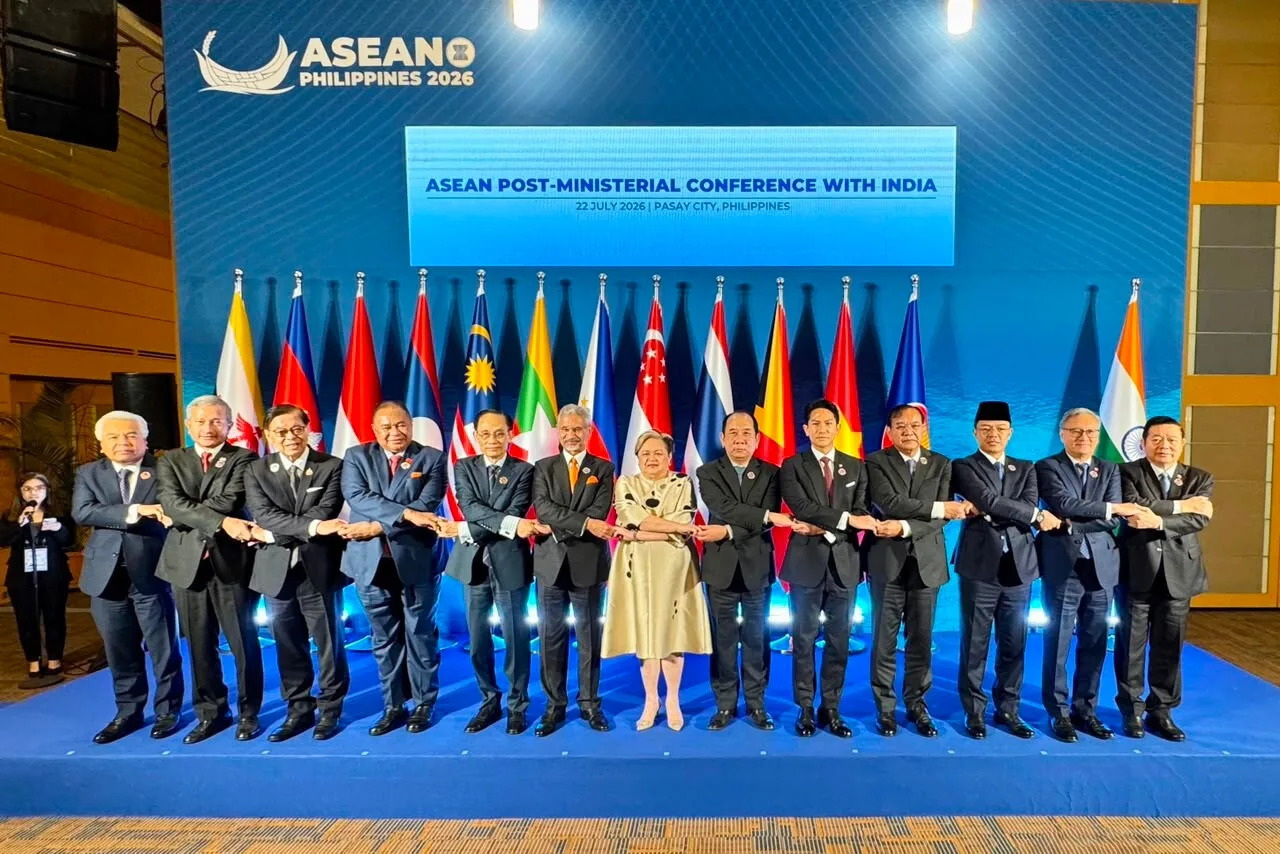
India: Expanding Maritime Cooperation and Indo-Pacific Connectivity
India has emerged as a key partner in strengthening ASEAN’s maritime outlook and regional connectivity.
Through the ASEAN–India Year of Maritime Cooperation, both sides are advancing collaboration in maritime safety, humanitarian assistance and disaster relief, coast guard cooperation, search-and-rescue operations, port connectivity, and the blue economy.
The partnership also extends beyond maritime issues, with ASEAN and India strengthening cooperation in food and energy security, healthcare resilience, pharmaceuticals, vaccines, and pandemic preparedness.
Economic integration remains another priority, with efforts continuing to enhance the ASEAN–India Trade in Goods Agreement (AITIGA) to create a more efficient and mutually beneficial trading environment.
India’s engagement further reinforces ASEAN’s role as a bridge connecting the Indian Ocean and Pacific regions.
South Korea: Positioning ASEAN at the Heart of the AI Era
South Korea is placing innovation and artificial intelligence at the center of its future cooperation with ASEAN.
At the ASEAN–Republic of Korea Ministerial Meeting, Seoul proposed the ASEAN–Korea AI Partnership Initiative, aimed at developing an AI ecosystem, expanding research cooperation, strengthening digital talent, and promoting the responsible use of artificial intelligence.
The initiative reflects South Korea’s broader vision of a future-oriented partnership with ASEAN based on innovation-driven growth, people-centered cooperation, and regional stability.
Beyond AI, ASEAN and South Korea are expanding collaboration in creative industries, combating online scams, maritime security, and emerging industries.
Economic ties are also set to deepen through efforts to upgrade the ASEAN–Korea Free Trade Agreement, including cooperation in digital trade, critical minerals, and future industries.
ASEAN remains South Korea’s largest trading partner, with Korean exports to ASEAN reaching US$122.5 billion in 2025.
New Zealand: Advancing Regional Resilience and Sustainable Growth
New Zealand continues to strengthen its partnership with ASEAN by supporting regional resilience, maritime security, sustainable development, and a rules-based Indo-Pacific.
Under the ASEAN–New Zealand Plan of Action 2026–2030, both sides are expanding cooperation in renewable energy, climate-smart agriculture, sustainable supply chains, regional connectivity, and the blue economy.
The partnership also supports the ASEAN Outlook on the Indo-Pacific (AOIP) through practical initiatives, including clean energy transition, cross-border electricity cooperation through the ASEAN Power Grid, sustainable fisheries, and resilient food systems.
The newly launched ASEAN–New Zealand Vision Fund will provide additional support for initiatives aimed at strengthening long-term regional resilience and sustainable development.
Through this partnership, New Zealand reaffirms its support for ASEAN centrality, international law, and an open and inclusive regional order.
ASEAN’s Moment as a Strategic Hub
The Manila meetings reflect a broader transformation in ASEAN’s international role.
ASEAN is no longer viewed only as a forum for dialogue among Southeast Asian nations. It is increasingly becoming a strategic hub where major economies and regional partners converge to address shared challenges—from geopolitical tensions and maritime security to artificial intelligence, energy transition, digital transformation, and supply chain resilience.
The growing engagement of the United States, India, South Korea, and New Zealand demonstrates the increasing importance of ASEAN as a trusted platform capable of connecting diverse interests while maintaining regional stability.
As ASEAN approaches its 60th anniversary in 2027, its influence will be measured not only by the number of agreements reached or meetings convened, but by its ability to translate partnerships into tangible benefits for businesses, communities, and people across Southeast Asia.
The message from Manila is clear: ASEAN is not merely responding to the changing Indo-Pacific landscape—it is increasingly helping shape it.
By bringing together major powers and trusted partners around cooperation, connectivity, and resilience, ASEAN is strengthening its role as a strategic center of gravity for a more stable, inclusive, and prosperous Indo-Pacific. (Midwan)
Follow Us at Google News, Instagram and LinkedIn