
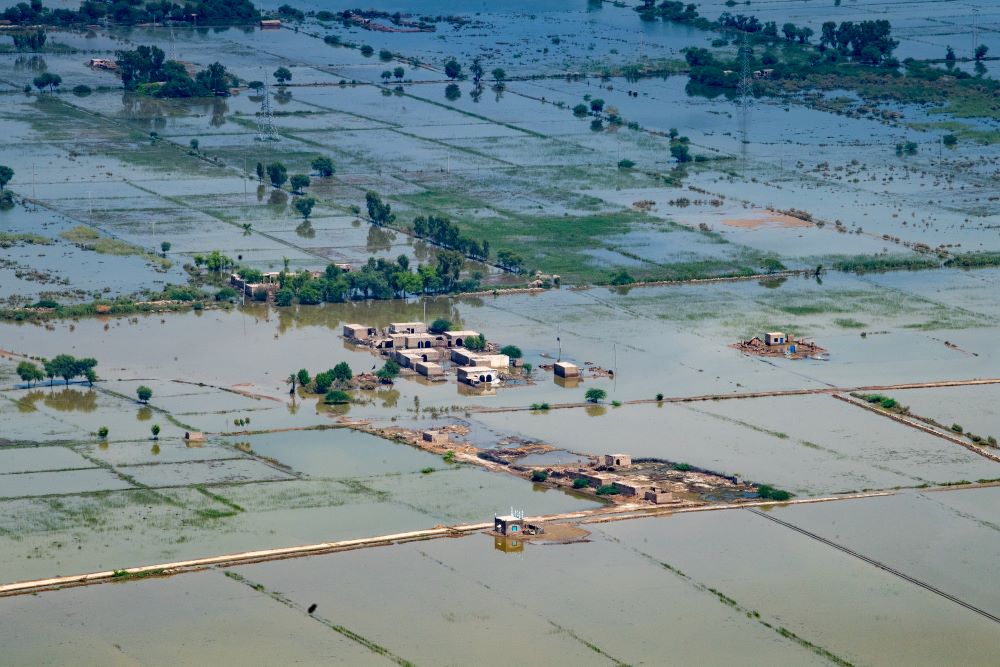
ASIATODAY.ID, JAKARTA – The Asia Pacific region is known as one of the most disaster-prone regions in the world. This region’s vulnerability to natural disasters continues to increase along with climate change and environmental degradation, such as floods, forest fires, landslides and earthquakes. This situation demands the implementation of an integrated and effective risk management strategy.
In line with this, the Asia Pacific Action Plan for Sustainable Development (2018-2030) and the Ministerial Declaration in Jakarta, innovative steps such as mapping disaster-prone points and early warning systems are a top priority to protect lives, livelihoods and minimize losses in various regions. .
This issue was the main topic in a workshop entitled “Strengthening Disaster Resilience in the Asia Pacific Region: Integrated Risk Management through Geospatial Data and Mapping Disaster Prone Areas to Improve Preparedness” which was organized by the Deputy for Development Policy, Indonesia’s National Research and Innovation Agency (BRIN) .
The activity, which took place on Wednesday-Friday, 20–22 November 2024, was attended by representatives of member countries of the Economic and Social Commission for Asia and the Pacific (ESCAP), including Thailand, Uzbekistan, Fiji and Indonesia, as well as a number of related institutions such as the National Agency. Disaster Management (BNPB), DKI Jakarta Provincial Government, Indonesian Space Agency (INASA), Ministry of Public Works, and Meteorology, Climatology and Geophysics Agency (BMKG).
BRIN Deputy for Development Policy, Mego Pinandito, emphasized the importance of innovative approaches in disaster risk management.
“Disaster resilience is a shared priority that requires cross-country cooperation. “Using geospatial data and digital technology, such as artificial intelligence and cloud computing, is key to improving disaster preparedness and response,” said Mego.
This workshop aims to strengthen collaboration between data providers and users in integrating digital tools and strategies for comprehensive disaster risk management.
Discussions covered a variety of topics, including the specific needs of disaster-prone countries for satellite data, mapping of disaster-prone areas, as well as the potential for capacity development through digital innovation.
“Collaboration between Asia Pacific countries and the use of modern technology can create a more effective and efficient approach. “This is not only about saving lives, but also minimizing economic and social losses due to disasters,” added Mego.
This workshop was filled with panel discussion sessions, presentations of experiences from various countries, as well as demonstrations of digital mapping technology for disaster risk management. One of the main topics is the integration of tools based on artificial intelligence and cloud computing to increase the accuracy and efficiency of mapping disaster hotspots.
By involving various stakeholders, this workshop is an important step to strengthen regional resilience to disasters, in line with the global commitment to sustainable development. The results of this workshop are expected to include user needs reports, capacity development plans, as well as a collaborative framework that encourages data exchange and mitigation strategies.
Through this activity, BRIN hopes to encourage the adoption of innovative approaches in disaster mitigation in the Asia Pacific region.
“Better preparedness starts from a shared understanding of vulnerabilities and needs on the ground. “With integrated data and the right technology, we can build a more resilient future,” concluded Mego. (AT Network)
Follow Us at Google News and WA Channel