
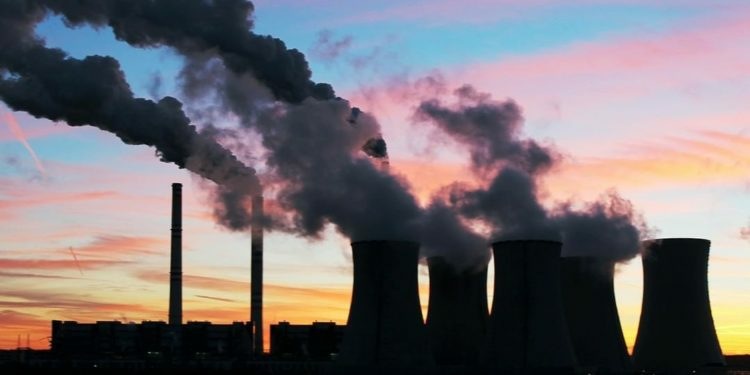
ASIATODAY.ID, JAKARTA – Managing Director of the International Monetary Fund (IMF) Kristalina Georgieva urged countries around the world to shift around $7 trillion in direct and indirect annual subsidies to fossil fuels, part of efforts to fight climate change.
Georgieva said that the total fossil fuel subsidies include $1.3 trillion in direct subsidies from governments, as well as indirect subsidies that include a failure to price carbon emissions. He added that the carbon price should be set at $85 per tonne by 2030.
Setting a carbon price at 25 percent of that price would create a fund of $800 billion that could be used to mitigate climate change. Meanwhile, pricing at 50 percent would raise $1.5 trillion.
“My point is let’s bring resources, bring them from a place that is detrimental to a place that helps,” said Georgieva at the World Economic Forum climate panel in Davos, Switzerland, Saturday, January 20 2024.
He added that the IMF incorporates emissions reduction goals into macroeconomic policy discussions with high-emitting countries and climate adaptation goals with vulnerable countries.
On the same occasion, the President of the World Bank, Ajay Banga, said that the world would not be able to bear the costs of growth with high emissions in the next decade. Therefore, leaders must increase the urgency to find ways to finance clean energy sources and pave the way for private capital to invest.
“We can’t be the ones doing all these projects and putting them on our balance sheet. Our balance sheet is limited,” Banga said.
According to him, the World Bank has taken steps to reduce political risks, with the aim of increasing political risk insurance to $20 billion per year by 2030 from $6-7 billion to date.
Regulatory uncertainty and foreign exchange risks also hinder private investment in the energy transition in many countries, and the World Bank can help absorb some of these risks.
“These countries don’t have hedging markets that are broad enough or deep enough. Institutions like ours have to find ways to come in and help fill that gap,” explained Banga. (ATN)
Check out other news and articles at Google News