
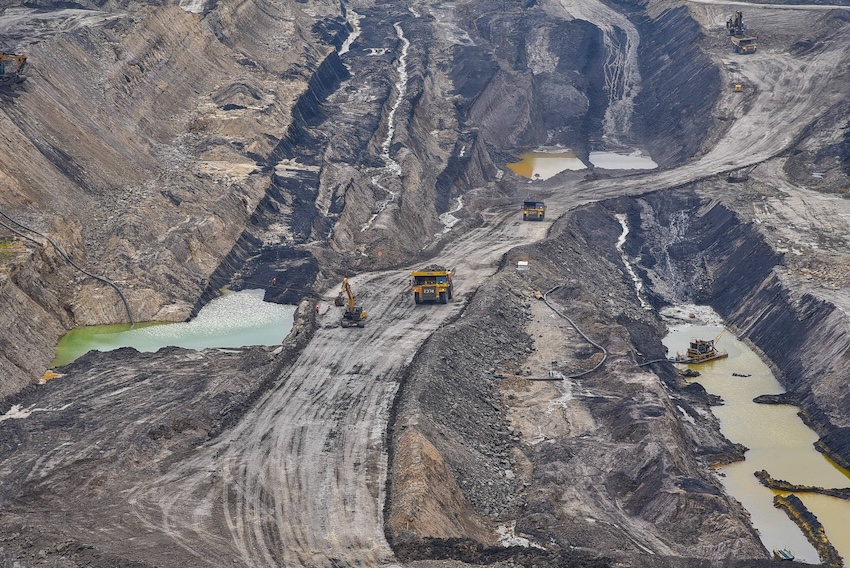
ASIATODAY.ID, JAKARTA – Indonesia is known as one of the countries in Asia that has abundant natural resources, especially coal mines, but strangely the people of that country are still shackled by poverty.
This anomaly in the management of natural resources has become widely highlighted. Management of natural resources should be able to provide prosperity and turn around the economy of the surrounding area, not just have negative impacts due to irresponsible mining activities.
“The results of discussions between the Ministry of Energy and Mineral Resources and the National Development Planning Agency, concluded that there are anomalies in the management of natural resources in a number of regions in Indonesia which are rich in natural resources, in fact the poverty rate is quite high, one of which is South Sumatra Province,” said the Expert Staff. Minister of Energy and Mineral Resources for Strategic Planning, M.Idris. F. Sihite at the Focus Group Discussion event regarding Mining Governance (Coal-Oil and Gas Minerals), its Contribution to State Revenue and Perspectives on Crime in the Mining Sector in the South Sumatra Region, Palembang, on Thursday, July 18 2024.
According to Idris, stopping these natural resource management anomalies requires comprehensive and sustainable efforts from various parties, including the government, business actors, civil society and academics.
“This is our collective homework to overcome this problem, whether natural resource management is in line with the objectives of article 33 of the 1945 Constitution, namely for the maximum welfare of the people,” said Sihite.
Sihite revealed that the anomaly in the management of natural resources in South Sumatra is very surprising because the area has the second largest coal reserve wealth in Indonesia of 9.3 billion tons with coal production in 2023 of 104.68 million tons and generating state revenue of IDR 9,898. trillion (fixed fees of IDR 66.4 billion and royalties of IDR 9.832 trillion) have not been able to reduce the level of poverty in this province.
One of the causes of this anomaly, according to Sihite, is the large number of unlicensed mines in South Sumatra Province that seek instant profits without paying attention to the rules of good and responsible mining.
“South Sumatra Province is one of the largest unlicensed mining locations (PETI) in Indonesia. PETI is a criminal offense in mining in the mineral and coal subsector with specialist lex outside the Criminal Code which contains criminal sanctions in chapters (Article 158 to Article 164 of Law No. 3 2020),” said Sihite.
To the prosecutors who attended the forum, Sihite hoped that prosecutors would reformulate strategies for disclosing PETI cases based on scientific evidence and ‘catch the big fish’.
“All mining commodities have identities such as DNA, so they can be identified using a “scientific evidence” approach, which is based on measurements in the laboratory. Scientific evidence is irrefutable evidence for calculating state losses from illegal mining practices,” explained Sihite.
To calculate the impact of state losses, Sihite said that the Ministry of Energy and Mineral Resources has the ability to reveal standard, measurable and comprehensive data to prove that state losses are actually caused, not just estimates.
Sihite, who also has a prosecutor’s background, also asked prosecutors to change the way cases are disclosed, by reversing the disclosure of cases from downstream and breaking the supply chain from end users to illegal refineries. AML (anti money laundering) and follow the money based disclosure by integrating the functions and authority of the relevant parties.
“Other legal action options are non-criminal, cumulatively or separately, to recover state losses and ‘force’ the perpetrators to comply (especially in mine reclamation cases),” concluded Sihite.
Sihite also reminded that the Ministry of Energy and Mineral Resources currently does not have a special unit in charge of law enforcement in this sector like the Ministry of Environment and Forestry.
Therefore, he emphasized the need to build constructive and sustainable synergy between the Prosecutor’s Law Enforcement Officials (as Investigators, Public Prosecutors and Prosecutors) with the Ministry of Energy and Mineral Resources officials to transform knowledge of technical aspects of mining (Coal Minerals, oil and gas) and principles of good governance in supporting the successful implementation of their respective duties.
“Cooperation between the government, companies, communities and all stakeholders is urgently needed to create sustainable mining management by applying the principles of good mining practice,” he added.
Previously, Secretary of the Directorate General of Minerals and Coal, Siti Sumilah Rita Susilawati, expressed the importance of synergy between various policy stakeholders to ensure that every stage of management of coal and oil and gas minerals is carried out in a transparent and accountable manner.
“Regulations must be enforced consistently and supervision must be carried out strictly. We need to ensure that every business actor complies with applicable regulations and is responsible for the impacts they cause,” said Rita.
The Head of the South Sumatra High Prosecutor’s Office, Yulianto, welcomed the collaboration in holding this forum to increase the capacity and capability of prosecutors in South Sumatra.
“This forum is very important to increase the capacity and capability of prosecutors, so that they understand how to slice and dice which are corruption cases and which are mining cases,” hoped Yulianto. (ATN)
Follow Us at Google News and WA Channel