
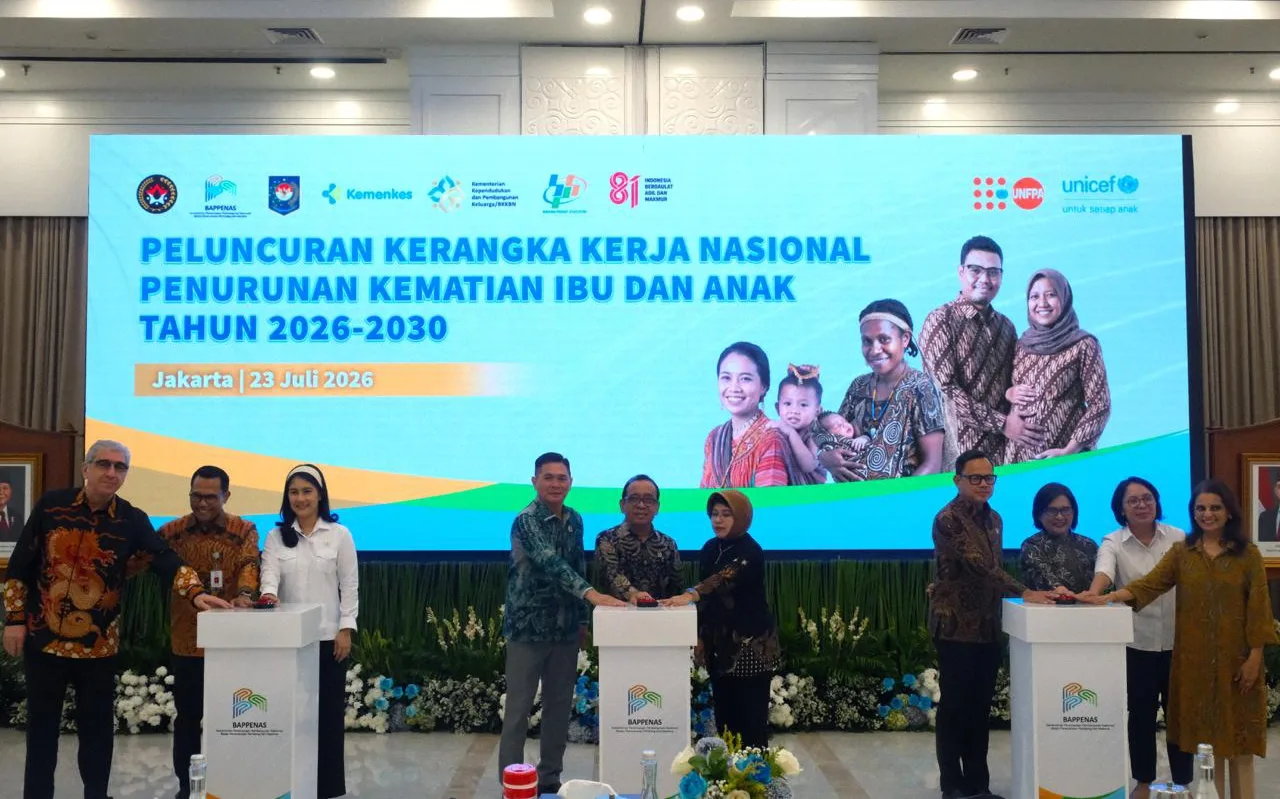
ASIATODAY.ID, JAKARTA — Indonesia has launched a national roadmap to accelerate the reduction of maternal and child mortality, reinforcing its commitment to improving public health and achieving the United Nations Sustainable Development Goals (SDGs) by 2030.
The National Framework for Reducing Maternal and Child Mortality 2026–2030, introduced by the Ministry of National Development Planning (Bappenas), establishes a comprehensive strategy to strengthen healthcare services, improve coordination across government institutions, and address disparities in maternal and newborn care nationwide.
The framework translates priorities under Indonesia’s 2025–2045 National Long-Term Development Plan (RPJPN) and the 2025–2029 National Medium-Term Development Plan (RPJMN) into measurable actions for central and regional governments.
Government data show Indonesia’s maternal mortality ratio declined from 189 deaths per 100,000 live births in 2020 to 144 per 100,000 live births in 2025. However, significant gaps in healthcare access and service quality remain, particularly in eastern Indonesia and remote regions.
Under the new roadmap, the government aims to reduce maternal mortality to 77 deaths per 100,000 live births by 2029, while lowering the infant mortality rate to 9.96 deaths per 1,000 live births.
“Maternal and child mortality is not only a public health indicator but also a key measure of national development,” Bappenas Secretary Teni Widuriyanti said during the launch in Jakarta.
She said improving maternal and child health is a long-term investment in Indonesia’s human capital, helping strengthen productivity, economic competitiveness, and sustainable growth.
The framework outlines national targets, policy priorities, implementation strategies, performance indicators, and coordinated actions involving ministries, local governments, healthcare providers, and development partners.
As part of its implementation, Indonesia will launch pilot projects in 10 priority provinces—West Java, Central Java, East Java, Central Sulawesi, East Nusa Tenggara, North Maluku, Papua, South Papua, Southwest Papua, and West Papua.
Papua will become a key focus through the Project for Improving Maternal and Newborn Health in Papua of Indonesia, a joint initiative between the Indonesian Government, KOICA, and UNICEF to strengthen maternal and neonatal healthcare services in one of the country’s most underserved regions.
The initiative has attracted broad international support from organizations including UNICEF, UNFPA, KOICA, and Australia’s Department of Foreign Affairs and Trade (DFAT) through the KITA SEHAT program, reflecting continued global cooperation in advancing Indonesia’s healthcare system.
Coordinating Minister for Human Development and Culture Pratikno called for stronger collaboration among ministries, local governments, and development partners to ensure interventions reach provinces where maternal and child mortality remains highest.
UNICEF Indonesia Representative Maniza Zaman described the framework as an important milestone in ensuring every mother and child has access to quality healthcare regardless of where they live.
Meanwhile, UNFPA Indonesia Representative Hassan Mohtashami emphasized that no woman should lose her life while giving birth, stressing the importance of quality family planning services, skilled midwives, and emergency obstetric care in preventing avoidable maternal deaths.
Lessons from the pilot provinces are expected to inform future national policies before the framework is expanded across Indonesia.
Beyond improving health outcomes, the government views the initiative as a strategic investment in Indonesia’s future workforce, recognizing that healthier mothers and children are essential to building stronger human capital and sustaining long-term economic growth. (Midwan)
Follow Us at Google News, Instagram and LinkedIn