
ASIATODAY.ID, JAKARTA — Indonesia has officially launched construction of the US$20.9 billion Abadi LNG Project, ending more than two decades of delays for one of Asia’s largest undeveloped natural gas fields. The groundbreaking marks a defining moment in the country’s energy strategy, combining energy security, industrial development, and regional economic transformation in a single strategic investment.
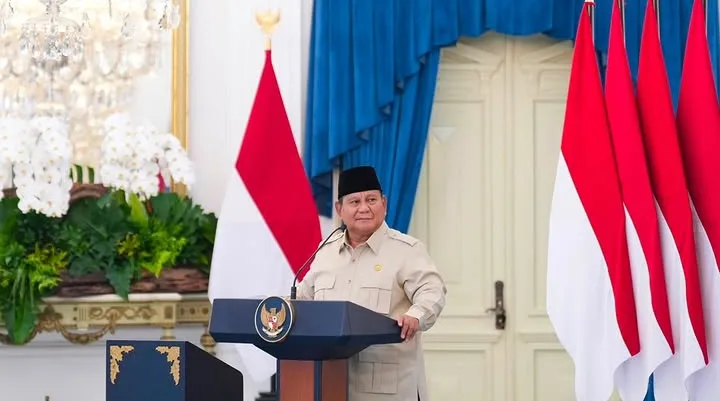
President Prabowo Subianto witnessed Thursday’s groundbreaking ceremony for the National Strategic Project (PSN), formally commencing development of the Abadi gas field in the Masela Block, located in the Arafura Sea off Indonesia’s eastern coast.
The project is expected to become one of Indonesia’s largest liquefied natural gas (LNG) developments, strengthening domestic energy supplies while expanding the country’s export capacity at a time when natural gas continues to play a critical role in Asia’s energy transition.
Energy and Mineral Resources Minister Bahlil Lahadalia described the project as a long-term investment that will deliver substantial economic, fiscal, and social benefits for both the nation and local communities.
According to government estimates, the project is expected to contribute approximately US$137.8 billion to Indonesia’s Gross Domestic Product (GDP) over its operational life. It will also generate significant government revenues, stimulate industrial activity, and accelerate infrastructure development across Maluku Province, particularly the Tanimbar Islands.
To ensure local communities benefit directly, the government has committed to allocating 30 percent of project employment to workers from Maluku and the Tanimbar Islands. During peak construction, the project is expected to employ more than 12,000 workers, according to studies by the University of Indonesia and Pattimura University.
The development will also supply 150 million standard cubic feet per day (MMSCFD) of natural gas to Indonesia’s domestic market, supporting industrial expansion and strengthening national energy resilience.
Speaking during the groundbreaking ceremony, President Prabowo emphasized the project’s historic significance.
“The Indonesian people have waited nearly three decades for this project. Now that construction has begun, it must proceed without delay and be completed as quickly as possible,” he said.
A New Growth Engine for Eastern Indonesia
Beyond its contribution to national energy security, the Abadi LNG Project is expected to reshape the economy of eastern Indonesia.
The government has granted a 10 percent Participating Interest (PI) to a regional state-owned enterprise owned by the Maluku Provincial Government, ensuring that local authorities directly benefit from future revenues generated by the project. Together with oil and gas revenue-sharing funds, the arrangement is expected to strengthen regional finances and support long-term investment in infrastructure, healthcare, education, and public services.
Officials believe the project will also stimulate the growth of local businesses, expand opportunities for small and medium-sized enterprises (SMEs), improve logistics and transportation networks, and encourage technology transfer that will strengthen the region’s industrial capabilities.
Strengthening Indonesia’s Position in Asia’s LNG Market
The launch of the Abadi LNG Project comes as Asian economies continue to seek reliable and lower-emission energy sources to support economic growth and the transition toward cleaner energy systems.
For Indonesia, the project represents more than a major upstream investment. It is a strategic effort to maximize the value of the country’s vast natural gas resources, strengthen long-term energy security, attract global investment, and reinforce Indonesia’s standing as one of the Asia-Pacific region’s most important LNG producers.
After years of regulatory, commercial, and technical challenges, construction of the Abadi LNG Project signals that one of Indonesia’s most ambitious energy developments has finally entered a new phase—one with the potential to reshape the country’s energy landscape and create lasting economic value for generations to come. (AT Network)
Follow Us at Google News, Instagram and LinkedIn