
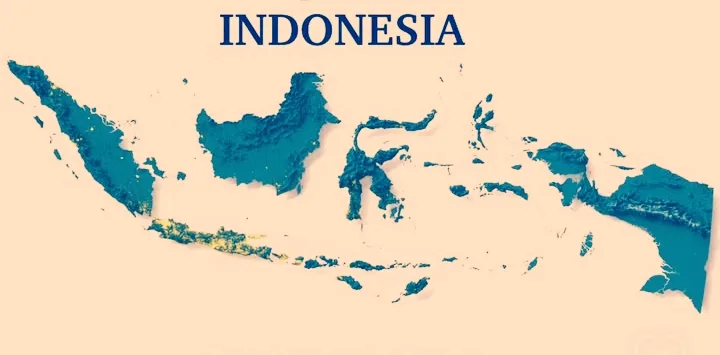
ASIATODAY.ID, JAKARTA – Indonesia is one of the most resource-rich countries in the world. With the largest nickel reserves globally, vast coal deposits, gold, copper, oil and gas, extensive tropical forests, and abundant marine resources, Indonesia should stand alongside the world’s prosperous nations. Yet the reality tells a different story: Indonesia continues to struggle with poverty, inequality, and its status as a developing country.
This contradiction has long defined Indonesia’s development narrative — a nation rich in natural resources, yet poor in public welfare.
Measured by economic size, Indonesia is far from small. With a nominal GDP of approximately US$1.4 trillion, Indonesia is the largest economy in ASEAN and a member of the G20. Its population of more than 280 million people makes it the fourth most populous country in the world.
However, this impressive scale conceals a fundamental weakness: Indonesia’s GDP per capita remains at only around US$5,000–5,300.
This places Indonesia well below advanced economies and behind several ASEAN peers. Globally, Indonesia ranks roughly 110th–120th in GDP per capita, underscoring the reality that national wealth has yet to translate into broad-based individual prosperity.
Rich in Land, Poor in People
Indonesia’s core problem is not a lack of natural resources, but how those resources are governed. For decades, the national economy has relied heavily on:
Exports of raw and semi-processed materials
Dependence on primary commodities
Slow and uneven downstream industrialization
Concentration of resource control among political and corporate elites
As a result, much of the value added from Indonesia’s natural resources is captured abroad, while local communities are left with environmental degradation, land conflicts, and low wages.
This condition is widely described as the resource curse — a paradox in which countries rich in natural resources fail to achieve sustainable prosperity for their populations.
Poverty Data: Growth Without Equity
Indonesia’s economic growth has remained relatively stable at around 5 percent annually. However, according to World Bank international poverty standards, Indonesia has the second-highest poverty rate in ASEAN, after Laos.
This highlights several structural challenges:
Economic growth has not been inclusive
Wealth distribution remains highly unequal
The benefits of resource exploitation do not reach the majority of citizens
Indonesia may appear to grow on paper, but remains fragile at the household level.
Comparisons Within ASEAN
The paradox becomes clearer when Indonesia is compared with its neighbors.
ASEAN GDP per Capita (≈2025):
Singapore: ~US$92,900
Malaysia: ~US$13,100
Thailand: ~US$7,800
Indonesia: ~US$5,000
Vietnam: ~US$4,800
Philippines: ~US$4,400
Singapore possesses almost no natural resources, yet has become a global financial hub. Malaysia and Thailand, with far fewer resources than Indonesia, have successfully developed value-added industries and stronger infrastructure.
Indonesia leads in resource quantity, but lags behind in:
Industrial quality
Economic efficiency
Equitable distribution of welfare
Asia and Global Comparisons
In East Asia, Japan and South Korea rose to global economic prominence despite having minimal natural resources, driven by:
Massive investment in education
Aggressive industrialization
Technological innovation
China, while resource-endowed, did not rely solely on raw exports. It built integrated industrial value chains, transforming itself into a global manufacturing powerhouse.
Indonesia, by contrast, remains trapped in a familiar pattern: exporting raw materials and importing finished goods.
Resource-Rich Countries That Succeeded: Global Lessons
Several countries demonstrate that natural resources can be a blessing rather than a curse.
Norway
Manages oil and gas revenues with strict fiscal discipline, channeling proceeds into the world’s largest sovereign wealth fund to secure future generations.
Canada
Rich in minerals and forests, Canada emphasizes downstream processing, research, and the protection of Indigenous communities.
Australia
Treats natural resources as one pillar of the economy — not the only one — while prioritizing education, innovation, and diversification.
Indonesia’s Core Challenge: Governance, Not Destiny
Indonesia’s failure to fully translate resource wealth into public welfare is not inevitable. It stems from:
Weak governance of natural resources
Inconsistent law enforcement
The dominance of political–economic oligarchies
Insufficient long-term investment in human capital
As long as natural resources are treated merely as objects of extraction, Indonesia will remain statistically rich but socially poor.
A Wealthy Nation Not Yet Economically Sovereign
Indonesia is a rich country that has yet to achieve full economic sovereignty. Its natural wealth has not become a tool for liberation from poverty, but instead a source of inequality and ecological crisis.
Global and ASEAN data reinforce one clear lesson:
Natural wealth does not automatically produce prosperity.
Good governance, industrialization, and investment in people are decisive.
Indonesia faces a critical choice: remain a raw-material exporter, or transform into a sovereign nation that manages its resources for shared prosperity.
History has already shown which path leads to success.
The Way Forward: OECD Accession as an Anchor for Reform
Indonesia’s effort to escape this paradox is increasingly framed through its accession process to the Organisation for Economic Co-operation and Development (OECD). As part of a public communication initiative, the Coordinating Ministry for Economic Affairs, serving as the Secretariat of Indonesia’s National OECD Accession Team, in collaboration with the Master of Management Program at the Faculty of Economics and Business, University of Indonesia, held a Guest Lecture titled Progress and Benefits of Indonesia’s Accession to the OECD at the MM FEB UI Auditorium in Salemba on Friday, December 12, 2025.
Susiwijono Moegiarso, Secretary of the Coordinating Ministry for Economic Affairs and Chair of the National OECD Accession Secretariat, emphasized that the event aimed to explain Indonesia’s accession progress and the strategic benefits of OECD membership as part of national structural reform.
Kiki Verico, Vice Dean of FEB UI, highlighted the strategic role of academia in strengthening public understanding that OECD accession is not merely a diplomatic initiative, but a policy instrument to improve governance through evidence-based and research-driven policymaking.
Indonesia’s Ambassador to Paris, Mohamad Oemar, noted that Indonesia’s accession process has received strong support from the European Union and major economies, reflected in consistent backing from ambassadors and representatives at the OECD in Paris.
OECD and the Path Out of the Middle-Income Trap
As the keynote speaker, Prof. Bambang Brodjonegoro, Ph.D., Dean of the ADB Institute, stressed that only a handful of Asian economies have successfully escaped the Middle-Income Trap (MIT) — namely Japan and the Four Asian Tigers (South Korea, Taiwan, Hong Kong, and Singapore). Within ASEAN, Malaysia is projected to exit the MIT in 2028, Thailand in 2037, while Indonesia is expected to do so only by 2045.
According to Prof. Bambang, OECD accession can serve as a national reform anchor, as OECD standards and best practices provide a clear framework for strengthening regulatory governance, boosting productivity, and ensuring long-term policy consistency.
In the social reform agenda, OECD Director for Education and Skills Andreas Schleicher pointed to the 2022 PISA results, which reveal persistent challenges in Indonesia’s basic competencies, but also significant opportunities for education reform.
He emphasized the alignment of education with labor market needs, teacher capacity building, and adaptation to digitalization and automation.
Gita Kothari, OECD Accession Coordinator, underscored the importance of public communication, noting that the accession process will trigger broad reforms affecting not only the economy, but also education, healthcare, and overall quality of life. OECD accession, she said, offers Indonesia a bridge to global standards that support its ambition to escape the Middle-Income Trap.
The event concluded with remarks from Ferry Ardiyanto, Assistant Deputy for Multilateral Economic Cooperation at the Coordinating Ministry for Economic Affairs, who noted that Indonesia is the first country in Southeast Asia to enter the OECD accession process. Within just one year of receiving its Accession Roadmap, Indonesia has submitted its Initial Memorandum and entered the Technical Review stage.
From Resource Wealth to National Prosperity
Indonesia does not lack natural resources. What it lacks is stronger governance, higher value creation, and sustained reform courage. OECD accession represents a critical opportunity to break the “rich but poor” paradox, escape the Middle-Income Trap, and realize the vision of Indonesia Emas 2045.
The real question is no longer whether Indonesia is rich — but whether it is ready to manage its wealth fairly, sustainably, and for the benefit of all its people. (Newsroom)
Follow Us at Google News and WA Channel