
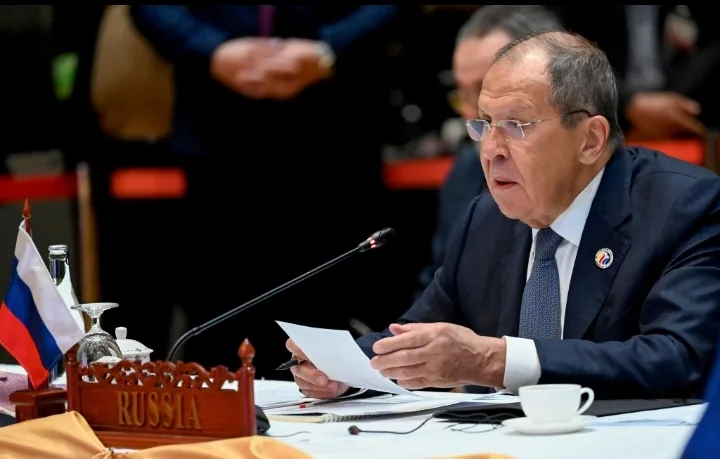
ASIATODAY.ID, JAKARTA — Russian Foreign Minister Sergey Lavrov used the ASEAN diplomatic platform to outline Moscow’s views on rising global tensions, from the Ukraine conflict and Middle East instability to nuclear security challenges, while promoting deeper strategic engagement with Southeast Asia.
Lavrov’s appearance at ASEAN meetings on Wednesday highlighted the growing importance of the region as a diplomatic crossroads amid intensifying competition among major powers.
As the global order undergoes rapid transformation, ASEAN has become a key forum where countries seek dialogue, economic partnerships and diplomatic balance between competing geopolitical interests.
ASEAN at the Center of Global Power Dynamics
During his remarks, Lavrov emphasized Russia’s commitment to strengthening ties with ASEAN members and supporting what Moscow describes as a multipolar international system based on sovereignty, equality and mutual benefit.
He highlighted opportunities for expanded cooperation in strategic sectors, including energy, technology, food security, maritime affairs, space cooperation and financial connectivity.
Lavrov said Russia-ASEAN trade reached around US$22 billion last year, with both sides aiming to significantly increase economic exchanges through deeper cooperation over the coming decade.
Russia has also promoted the use of national currencies and alternative financial mechanisms, arguing that global trade networks need greater resilience amid changing geopolitical conditions.
Ukraine Peace Efforts Remain a Global Challenge
The Ukraine conflict remained one of the central issues addressed by Lavrov.
He said Moscow continues to support diplomatic efforts toward a long-term peace settlement rather than a temporary ceasefire, while arguing that any agreement must address the underlying issues behind the conflict.
Lavrov referred to previous discussions between Russian President Vladimir Putin and US President Donald Trump as a possible foundation for future negotiations and said Moscow is seeking clarity on Washington’s current position.
The war in Ukraine has become one of the defining geopolitical challenges of the decade, affecting international security arrangements, energy markets and global economic stability.
Nuclear Risks Rise Amid Global Uncertainty
Lavrov also warned about growing concerns surrounding nuclear security following recent conflicts in the Middle East.
He argued that military confrontations involving countries with nuclear programs could influence how nations evaluate their own security strategies.
The comments reflect broader international concerns over arms control, nuclear deterrence and the future of non-proliferation efforts at a time when strategic competition among major powers is increasing.
Asia Faces a Complex Security Environment
The Russian foreign minister also addressed security issues in East Asia, including tensions surrounding the Korean Peninsula.
He linked regional military developments to wider strategic competition involving major powers and said countries are increasingly focused on protecting their national security interests.
The situation underscores the complexity of Asia’s security landscape, where issues ranging from military modernization and maritime disputes to technology competition and supply chain resilience are shaping regional relations.
Russia Seeks Deeper ASEAN Partnership
Beyond security issues, Moscow is seeking to expand economic and diplomatic engagement with Southeast Asia.
Lavrov said Russia and ASEAN share common interests in strengthening economic cooperation and maintaining an inclusive regional environment.
For ASEAN, maintaining strategic autonomy remains a key priority as the region manages relations with the United States, China, Russia, India, Japan and Australia.
ASEAN’s Strategic Role in a Changing World
Lavrov’s ASEAN engagement reflects a broader shift in global diplomacy: Southeast Asia is becoming an increasingly important arena where major powers compete for partnerships and influence.
With conflicts continuing in different regions and global alliances evolving, ASEAN faces the challenge of preserving its central role while creating opportunities for economic growth, stability and cooperation.
The region’s ability to maintain dialogue among competing powers may become one of the defining factors shaping the future of the Indo-Pacific and the wider international order. (AT Network)
Follow Us at Google News, Instagram and LinkedIn