
Excessive celebration of the ban on plastic bags in modern retail outlets often becomes a trap of false satisfaction. The ban implemented in these glamorous outlets resembles a “lipstick” policy that has been polished so neatly for the sake of image. This regulatory cosmetics give the aesthetic impression that the planet is being saved, creating a green image of environmental governance in annual reports and social media posts. Unfortunately, this makeup only serves to cover up the much deeper systemic failures.
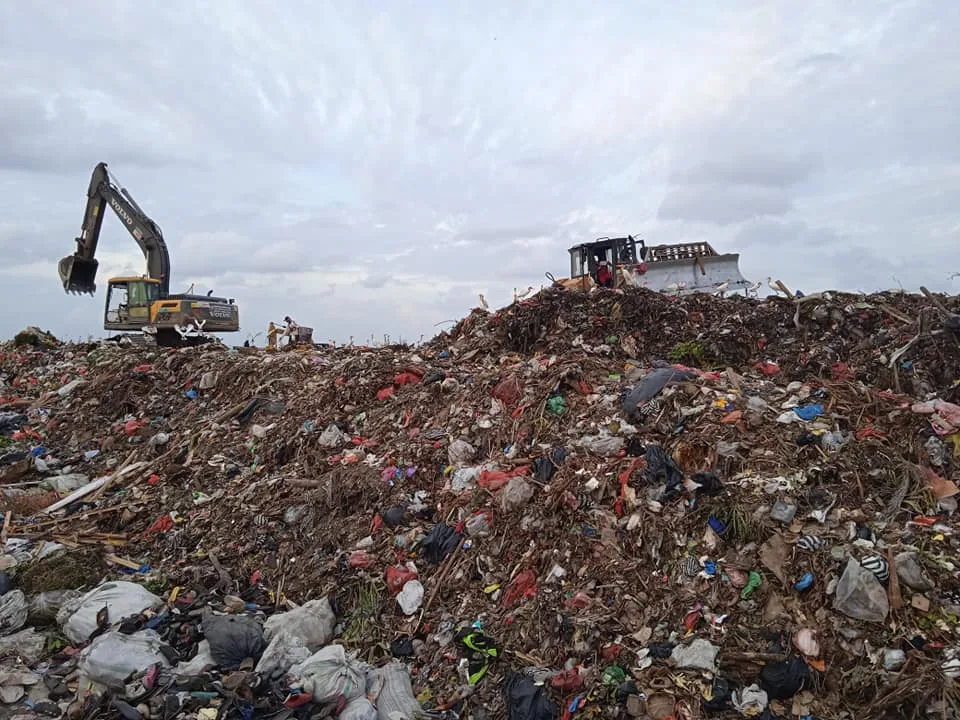
A much larger problem lies hidden behind the friendly smile of cashiers who no longer provide plastic bags. This iceberg phenomenon shows that what is banned at the checkout counter is only a small fragment of the real crisis. Millions of tonnes of other plastic waste, ranging from sachets and online shopping packaging to industrial protective coatings, continue to flow freely without any meaningful barriers. Clean-up efforts are focused only on the front yard, while the kitchen and back yard are filled with mountains of plastic that permanently threaten the ecosystem.
This imbalance in focus is an indication that waste management is suffering from systemic myopia. The priorities of both the government and environmental activists tend to be stuck on the visual aspects downstream, which are relatively easy to monitor and showcase as symbols of success. The downstream face continues to be polished with various prohibitive regulations, while the upstream sector is left to continue producing polymers without any structurally binding accountability. Existing policies ultimately only scratch the surface and fail to address the root of the problem.
According to Chen Liu and Chang Liu in an article entitled “Exploring Plastic-Management Policy in China: Status, Challenges and Policy Insights” published in the journal Sustainability in 2023, regulations often target consumers (bans on plastic bags, waste disposal campaigns) without strong controls on the production and design of plastic products. Saimin Huang and colleagues, in an article titled “Plastic Waste Management Strategies and Their Environmental Aspects: A Scientometric Analysis and Comprehensive Review” published in the International Journal of Environmental Research and Public Health in 2022, stated that many countries still rely on landfills and incineration; recycling is stagnant or low, so the volume of plastic continues to grow.
The solid wall of economic pragmatism is the main obstacle to the penetration of more profound policies. Plastic is not just an environmental issue for the lower middle class and MSME players, but also an irreplaceable instrument of efficiency. Replacing plastic with environmentally friendly materials often results in increased production costs or selling prices that the market cannot bear. The logic of economic survival in meeting daily needs forces choices to fall on what is cheap and practical.
Public hygiene standards are also a factor that often causes waste management narratives to fall short. Plastic has long been positioned as the main “fortress” of cleanliness, namely packaging that ensures products are not contaminated by germs or dust during the distribution process. Pursuing this momentary sense of personal safety actually ignores the far more fatal global health threat posed by microplastics. Waste management formulations have not been able to reconcile public hygiene needs with strict ecological standards.
The major challenge that must be addressed is that current plastic waste management serves more as an ornament than a real solution. The failure to address structural issues upstream is due to policies that are too preoccupied with pragmatism and fear of narrow hygiene standards. This lipstick-only approach to governance is at great risk of fading over time, leaving the environment far more damaged and beyond repair.
The Myth of Hygiene and the Trap of Pragmatism
Plastic has become deeply ingrained in the public consciousness as the primary “fortress” of health protection. The status of polymers as the cheapest food safety standard has created a difficult-to-break dependency, especially after the global health trauma of recent years. The perception that anything wrapped in plastic is more secure from external contamination has transformed this material into a symbol of sterility. This situation means that plastic is no longer merely a choice of material, but has become a psychological necessity for the public in maintaining a sense of security when consuming products.
This plastic-based food safety logic is often paradoxical. The desire to avoid germs in the short term actually triggers the accumulation of long-term health problems due to exposure to microplastics and ecosystem damage. However, the narrative of instant hygiene is much more acceptable to the market than scientific explanations of abstract environmental impacts. Plastic ultimately wins the battle for public opinion because it offers the illusion of cleanliness that is visible and affordable for all economic classes.
The fast-paced and practical lifestyle of society has further strengthened the position of disposable packaging. Modern consumption patterns that favour instant gratification force the manufacturing industry to continue relying on plastic to maintain distribution efficiency. Manufacturers are under pressure to provide products that are easy to carry, easy to open, and easy to dispose of without burdening consumers with packaging return procedures. This pragmatism creates a cycle of interlocking dependency between consumer needs and industrial production strategies.
Single-use plastic packaging is the most efficient solution to the demands of high mobility in urban areas. The flexibility and durability of plastic in protecting products from physical damage during transport make it the darling of the global supply chain. As long as there are no alternatives that can match the technical performance of plastic at a competitive price, the flow of plastic production will continue to surge. People’s choice of plastic is often not based on indifference to the environment, but rather on the limited choices available on the market.
Waste management failures often stem from the inability of systems to offer comparable quality alternatives. Most environmentally friendly alternatives currently on offer are still considered inconvenient or have hygiene standards that are viewed with scepticism by consumers. Waste management that focuses solely on moral campaigns without providing equivalent replacement infrastructure will ultimately amount to nothing more than empty appeals. Ecological transition requires systemic substitution, not merely bans that ignore the basic comfort of users.
The crucial point in this impasse lies in the imbalance between the narrative of sustainability and functional reality. Efforts to reduce plastic will always hit a brick wall as long as the solutions offered actually lower the standard of living for the community. Waste management must begin to move beyond a superficial regulatory approach and start formulating a logistics system that can guarantee safety and practicality without relying on single-use materials. Without synchronisation between hygienic and technical aspects, efforts to break the plastic waste chain will only be a pipe dream that fails the test of time.
Criticism of “Cosmetic” Governance
The selective enforcement of regulations is a clear illustration of how waste management is still discriminatory. Strict rules on plastic restrictions generally only target modern retail stores and large shopping centres that are easy to monitor administratively. Meanwhile, traditional markets and the MSME sector, which are the lifeblood of mass consumption, are allowed to continue operating in the old ways without any innovation in management. This imbalance creates the impression that environmental policies are merely an instrument of middle-class image-building that is not grounded in the reality of national consumption demographics.
The fundamental weakness of the waste management system lies in its absolute dependence on the collect-transport-dispose model. This conventional paradigm merely shifts the crisis from consumers’ doorsteps to final disposal sites whose capacity has already exceeded its limits. Surface-level policy tweaks without addressing the infrastructure for waste sorting at the source are merely a form of “lipstick” that masks the stench of the system’s failure. As long as plastic waste is merely relocated without undergoing certified decomposition or recycling processes, waste management will be considered fundamentally flawed.
Waste management infrastructure at the grassroots level remains a weak point that rarely receives serious intervention. Government programmes often spend more on banner campaigns and normative socialisation than on the procurement of applicable waste management technology at the neighbourhood level. The lack of financial and technological support for the local recycling industry means that plastic waste continues to be viewed as a burden rather than a commodity in the circular economy system. The gap between the narrative of progress and the availability of processing tools in the field further highlights the cosmetic nature of existing policies.
Supervision and law enforcement aspects regarding waste management violations are still very weak and tend to be symbolic. The lack of strict sanctions for waste management violators causes regulations to lose their authority in the eyes of industry players and the public. Policies that are created without strict monitoring instruments will only become piles of paper without operational teeth. Sound management should be based on real-time data and transparent control mechanisms, not merely on claims of success made at the bureaucratic table.
The paradox of waste management is also evident in the low level of integration between environmental policy and upstream industrial policy. The government often demands that the public reduce their use of plastic, but at the same time, new plastic production permits continue to be issued without any clear take-back scheme. This lack of synchronisation shows that environmental policy is still running on its own track, isolated from the mainstream of economic and industrial policy. Without imposing responsibility on producers, the burden of waste management will always fall on local governments and communities with limited resources.
Substantial waste management requires radical changes to the funding structure and operationalisation in the field. Management should no longer be carried out with a project mentality that ends when the budget runs out or positions change. A robust, independent management system is needed, one that is capable of adapting to the dynamics of ever-increasing waste volumes. Merely applying cosmetic policy changes will only delay an environmental crisis that will ultimately be impossible to cover up with any regulatory cosmetics.
Towards Substantial Management (Not Just Cosmetic Changes)
The transformation of waste management requires a shift in focus from simply imposing downstream restrictions to imposing absolute responsibility on the upstream sector. The implementation of the Extended Producer Responsibility (EPR) scheme must be enforced as a key pillar, whereby producers are obliged to take responsibility for the entire life cycle of packaging released onto the market. Substantial management no longer allows the industry to wash its hands after the product is sold, but rather forces the integration of packaging take-back systems into the supply chain. This step will encourage innovation in packaging design that is easier to recycle and reduce the burden of waste processing at the local government level.
The integration of hygiene and ecological standards into new packaging technologies is an absolute requirement for the success of this transition. Research and development of alternative materials must focus on creating materials that offer the same protective performance as plastic but are naturally biodegradable without leaving toxic residues. The government needs to provide tax incentives or financial support for companies investing in affordable green packaging technologies. The availability of alternatives that are functionally and financially competitive will naturally break down the wall of pragmatism that has long shielded the use of single-use plastics.
The development of community-based waste management infrastructure equipped with mechanical technology is an urgent need in every region. Waste management should no longer rely solely on abstract moral education, but must provide real sorting and processing facilities at residents’ doorsteps. Local waste processing facilities will shorten the waste logistics chain and significantly reduce transportation operational costs. This decentralised system allows plastic residues to be managed more precisely and prevents illegal dumping in open areas and riverways.
Waste management literacy needs to be redefined so that it is not merely a campaign to “dispose of waste in its proper place”. The focus of education should be directed towards understanding the separation of materials based on their polymer type in order to increase circular economic value. Public knowledge about proper waste management will create strong social control over the effectiveness of public sanitation services. An ecologically savvy community will demand transparency regarding where their waste is sent and how it is processed.
Regulatory synchronisation between the Ministry of Environment, the Ministry of Industry, and local governments is key to dismantling bureaucratic bottlenecks. Waste management policies must be holistic and cross-sectoral to avoid overlapping or conflicting interests in the field. Legal certainty and consistent enforcement of regulations will send a positive signal to investors to enter the sustainable waste management industry. Strong management is built on a foundation of solid coordination, not on a pile of sectoral documents that operate independently.
The paradigm shift from “disposal” to “circular management” is at the heart of substantive management. This effort requires political courage to allocate a larger budget for strengthening the national logistics system and waste processing technology. Stopping at cosmetic policy changes will only prolong the crisis, while improving the management structure will ensure environmental sustainability for future generations. A truly clean environmental governance can only be achieved through hard work to improve the system, not through temporary cosmetic regulations.
Reliance on cosmetic policies will only delay greater ecological destruction. Plastic waste management must no longer be trapped in the ceremony of banning shopping bags while allowing systemic leaks in the upstream production and processing sectors. The success of environmental transition depends heavily on the courage of authorities to dismantle slow, outdated management structures and replace them with systems that are adaptive to social realities. If policies only address visual aspects, then all efforts made today are merely a way to beautify failure.
The barriers of economic pragmatism and public hygiene standards are real challenges that must be addressed with innovation, not merely moral appeals. The solutions offered must be able to surpass the technical advantages of plastic so that the public has options that are financially rational and safe for their health. Substantial management improvements require major investment in technological infrastructure and the strengthening of binding regulations for all industry players without exception. Firmness in executing the producer responsibility system will be the main indicator of whether a policy has substance or is merely window dressing.
A clean and sustainable environmental governance system will never be achieved as long as regulatory “lipstick” is considered the ultimate achievement. The future of ecosystems requires fundamental changes to the governance system, not merely cosmetic changes to policies that are easily washed away by the daily needs of the community. Plastic waste management must move from mere rhetoric to integrated, transparent and equitable management actions. It is time to remove cosmetic policies and start working to reform systemic structures for the sake of true environmental safety. (***)
Follow Us at Google News and WA Channel