
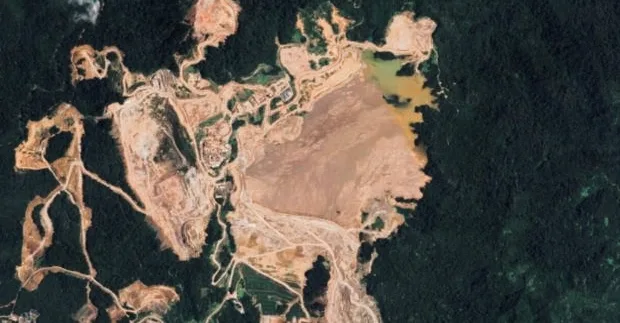
ASIATODAY.ID, JAKARTA – Natural forests across Sumatra are rapidly disappearing, leaving the island vulnerable to environmental disasters.
Analysis by Greenpeace Indonesia and Forest Watch Indonesia (FWI) highlights a surge in deforestation, contributing to deadly floods, landslides, and ecological crises in Aceh, North Sumatra, and West Sumatra.
Data from Indonesia’s National Forest Monitoring System (SIMONTANA) shows that North Sumatra’s natural forest cover has dwindled to approximately 14 million hectares, less than 30 percent of Sumatra’s total 47 million hectares.
“Between 1990 and 2024, large areas of North Sumatra’s natural forests were converted to plantations, dryland agriculture, and timber plantations. Similar trends are seen in Aceh and West Sumatra,” said Sapta Ananda Proklamasi, Senior Researcher, Greenpeace Indonesia in his press statement, quoted Friday, December 5, 2025.
FWI reports that by 2024, Sumatra retained only 12 million hectares of natural forest, just 25 percent of the region’s land area. Over seven years, the island lost 2.1 million hectares of forest, equivalent to 3.6 times the size of Bali.
Critical River Basins Threatened
Most of Sumatra’s river basins are now classified as critical, with natural forest cover below 25 percent. One of the hardest-hit areas is Batang Toru, North Sumatra’s last tropical forest expanse, currently under pressure from industrial permits, including hydropower projects, which threaten the Tapanuli orangutan habitat.
Greenpeace data indicates that between 1990 and 2022, Batang Toru lost 70,000 hectares of forest, or 21 percent of the basin, leaving only 167,000 hectares (49 percent).
“The upstream areas have been converted to dryland agriculture, the downstream to oil palm and pulp industries. Natural forest remains mainly in the midstream region,” Sapta explained.
Annual soil erosion potential reaches 31.6 million tons, with 56 percent originating from highly erodible areas exceeding 180 tons per hectare per year.
Deforestation Rates: Fluctuating but Worrying
Forest Minister Raja Juli Antoni reported that national deforestation declined from 216,216 hectares in 2024 to 166,450 hectares by September 2025, including in the three provinces affected by floods. However, land cover change from forest to non-forest continues in 31 flood-affected river basins.
Aceh: 21,476 hectares of land cover change; 217,301 hectares classified as critical land.
North Sumatra: 9,424 hectares change; 207,482 hectares critical land.
West Sumatra: 1,821 hectares change; 39,816 hectares critical land.
FWI also notes that deforestation in Sumatra sharply increased in 2023–2024, totaling 222,360 hectares, reversing a temporary decline. Deforestation in Aceh, North Sumatra, and West Sumatra rose to 57,150 hectares in two years. Primary drivers include extractive industries, oil palm plantations, mining, and inconsistent land-use permits.
Environmental Crisis Fuels Natural Disasters
The impact of deforestation is visible in recent floods and landslides, which killed 604 people in late November 2025, destroying thousands of homes, bridges, and schools. BNPB data records:
3,500 homes heavily damaged, 4,100 moderately, 20,500 lightly
271 bridges and 282 educational facilities damaged
Mufti Ode, Executive Director of FWI, emphasized: “Deforestation is often reduced to a political issue, debating inside vs. outside forest areas or gross/net definitions. Disasters do not care about definitions. Stopping deforestation requires real action on the ground.”
Government Accountability and Action
Arie Rompas, Head of Greenpeace Indonesia’s Forest Campaign, stressed that the government must overhaul forest and land-use policies to protect ecosystems and communities from climate-related disasters.
Iqbal Damanik, Greenpeace Climate and Energy Campaign Manager, added that extreme rainfall will continue unless deforestation is controlled.
“There can be no more false solutions. National climate policies must prioritize the well-being of all people,” he said.
President Prabowo Subianto urged the protection of forests and rivers to prevent floods and landslides, calling for public participation and environmental education in schools.
Emergency Response
The government dispatched disaster relief to Aceh, North Sumatra, and West Sumatra on November 28, 2025, including 150 tents, 64 rubber boats, generators, communication devices, ready-to-eat meals, medical supplies, and healthcare personnel.
Coordination between central and local governments ensures aid reaches affected communities efficiently. (AT Network)
Follow Us at Google News and WA Channel