
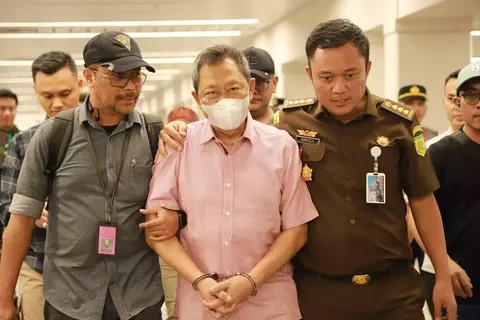
ASIATODAY.ID, JAKARTA – The Corruption Court at the Central Jakarta District Court has sentenced Hendry Lie, the majority shareholder (beneficial owner) of PT Tinindo Inter Nusa (TIN), to 14 years in prison and a fine of IDR 1 billion (approximately USD 60,000) for his involvement in a massive corruption scheme in Indonesia’s tin mining industry, which caused state losses amounting to IDR 300 trillion (approx. USD 18.6 billion).
The verdict, read on Thursday, June 12, 2025 by presiding judge Tony Irfan, confirmed that Hendry Lie was proven guilty of jointly committing corruption in the management and trade of tin commodities within PT Timah’s mining concession areas between 2015 and 2022.
In addition to the prison sentence, the court also ordered Hendry Lie to pay IDR 1.05 trillion (USD 65 million) in restitution or face an additional eight years in prison. The judges stated that Hendry Lie’s actions undermined government efforts to promote clean governance and combat corruption, collusion, and nepotism (KKN).
The court also noted severe environmental destruction as a result of his actions, with significant damage to tin-producing regions due to illegal mining activities. However, as a mitigating factor, the court considered that Hendry Lie had no prior criminal record.
The sentence is lighter than the 18-year prison term sought by the public prosecutor. Both Hendry Lie and the prosecution team have declared they are taking time to consider an appeal, meaning the verdict is not yet legally binding.
Hendry Lie’s Role in the Massive Tin Graft Case
Hendry Lie is identified as a key orchestrator in the illegal tin trade, working with both insiders at PT Timah Tbk and private smelter companies. His involvement included:
1. Directing Subordinates
Lie instructed PT TIN’s General Manager of Operations, Rosalina, and Marketing Officer, Fandy Lingga, to prepare and sign a proposal for cooperation with PT Timah on tin processing equipment, alongside several private smelters.
2. Setting Up Shell Companies
He approved the establishment of shell companies such as CV Bukit Persada Raya, CV Sekawan Makmur Sejati, and CV Semar Jaya Perkasa to collect illegally mined tin ore from PT Timah’s concession area.
3. Receiving Illicit Payments
Through affiliated companies, Lie accepted payments from PT Timah for tin ore that originated from illegal mining operations, including inflated prices with no proper feasibility studies conducted.
4. Authorizing Bribes Under CSR Guise
He also approved payments ranging from USD 500 to 750 per ton to Harvey Moeis, allegedly for “security costs,” which were falsely documented as Corporate Social Responsibility (CSR) expenditures by the smelters involved.
5. Unlawful Cooperation and Pricing Agreements
Lie, along with others, forged rental agreements for smelting equipment with backdated documents and without inclusion in the official Work and Budget Plan (RKAB), in collaboration with PT Timah executives and other smelters.
Environmental and State Losses
This tin corruption scandal highlights not only economic loss but also devastating environmental consequences. The uncontrolled illegal mining operations caused severe ecological degradation, especially in protected and concession areas, exacerbating Indonesia’s ongoing environmental crisis.
The USD18.6 billion tin corruption scandal involving Hendry Lie underscores the deep-rooted governance issues in Indonesia’s natural resource management. Although a verdict has been delivered, this case serves as a critical reminder of the urgent need for transparency, accountability, and robust oversight in the mining sector. (AT Network)
Follow Us at Google News and WA Channel