
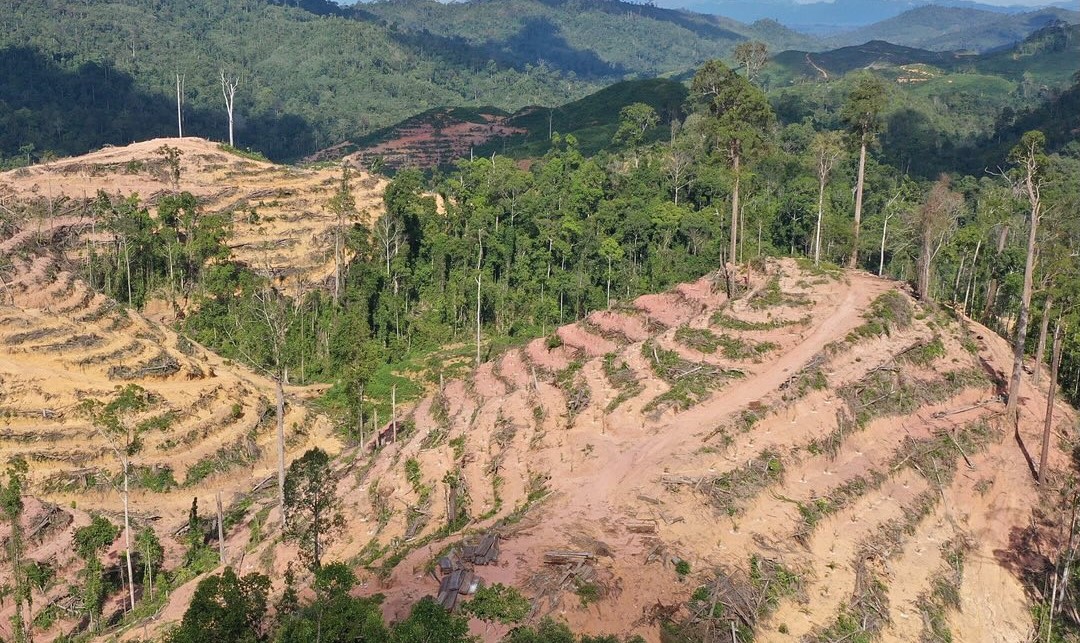
ASIATODAY.ID, JAKARTA – Tropical forest areas in Indonesia and Southeast Asia are now under threat of massive deforestation.
More than 10 million hectares of tropical forests in Indonesia are reportedly threatened by the expansion of wood biomass-based energy, according to a new report released at the ASEAN Summit in Laos.
The report entitled “Unheeded Warnings: Forest Biomass Threats to Tropical Forests in Indonesia and Southeast Asia”, compiled by seven environmental organizations such as Earth Insight and Forest Watch Indonesia, shows the serious impact of demand for wood for energy in this region.
“Policies and subsidies from Indonesia, Japan and South Korea support false climate solutions that could trigger massive deforestation and forest degradation,” said seven civil society organizations in their joint statement, Thursday, October 10, 2024.
The report reveals that more than 10 million hectares of tropical forests, including 127 Important Biodiversity Areas, are at risk of destruction due to high demand for wood pellets for power plants in Japan, South Korea and Indonesia. Around 4.1 million hectares of orangutan habitat is also at risk due to wood chip and co-firing factories.
The report also notes that more than a thousand hectares of primary forest in Indonesia have been cut down to meet wood pellet exports to South Korea and Japan. Field investigations in Gorontalo even found local community opposition to this industry.
Indonesia projects wood biomass use of 19.7 TWh in 2025, most of which comes from co-firing in coal plants. However, this plan is estimated to accelerate deforestation by up to 2.1 million hectares per year.
South Korea and Japan have become the largest consumers of Indonesian wood pellets, with the two countries purchasing more than 99 percent of Indonesia’s exports. Renewable energy subsidies in both countries have encouraged increased wood pellet production in Southeast Asia, which is directly related to their renewable energy policies.
Experts warn that burning wood for energy not only increases carbon emissions but also delays climate recovery.
“Carbon debt payback”—the time it takes for forests to reabsorb emissions—could take up to 115 years, while damage to tropical forests could have long-term impacts.
“Biomass burning is clearly the wrong energy solution,” said Timer Manurung, Executive Director of Auriga Nusantara.
“Deforestation for new plantations and timber exports pose a dual threat to Indonesia.”
Biomass-based energy policies are considered a major threat to Indonesia’s remaining forests and local communities. Environmental activists are calling for an end to subsidies for biomass-based energy and to encourage investment in more sustainable renewable energy such as wind and solar. (AT Network)
Follow Us at Google News and WA Channel