
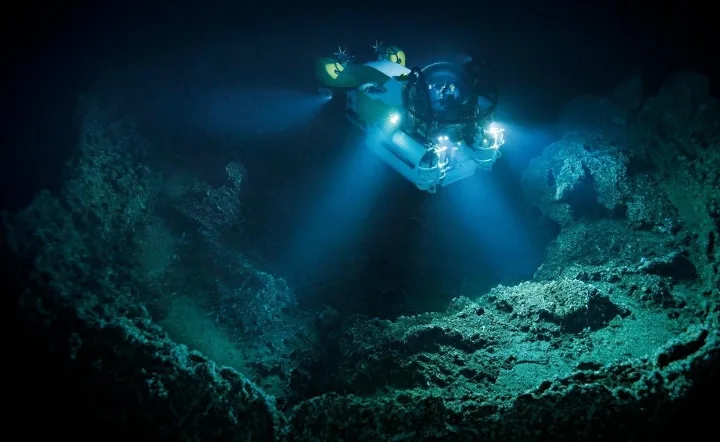
ASIATODAY.ID, JAKARTA — Beneath Southeast Asia’s waters lies one of the world’s richest and least explored ecosystems. Now, countries in the region are moving to build their own scientific capacity to understand, monitor, and protect the deep ocean through a new collaborative research network.
Indonesia is spearheading efforts to establish the Southeast Asian Deep Ocean Observation Network (JELUK), a regional platform designed to strengthen deep-sea research cooperation and reduce dependence on advanced countries in exploring and managing marine resources.
The initiative was introduced at the Deep Ocean Science Forum (#5) themed “Towards the Deep Ocean Mission 2045”, where scientists highlighted the urgent need for Southeast Asia to develop stronger research capabilities and infrastructure.
Head of the Deep Sea Research Center at Indonesia’s National Research and Innovation Agency (BRIN), A’an Johan Wahyudi, said strengthening international research networks is essential to connect global science with regional priorities while preparing future generations of marine researchers.
“Strengthening international research networks is part of a strategy to connect global science with regional action, while developing new generations of researchers through capacity building and marine biodiversity studies,” he said.
Building Southeast Asia’s Own Deep-Sea Knowledge System
BRIN Senior Researcher Yosmina Tapilatu, who presented the JELUK initiative, said Southeast Asia plays a crucial role in global ocean systems due to its vast deep-sea ecosystems and contribution to carbon cycles.
However, she noted that the region’s ability to observe and study deep oceans remains limited, resulting in much of the exploration being dominated by developed countries.
This situation has contributed to the persistence of “parachute science” — research activities led by foreign scientists with limited involvement, knowledge transfer, or capacity building for local researchers.
“JELUK is not merely a research proposal. It is an effort to restore the region’s right to understand, protect, and lead research in its own waters,” Tapilatu said.
She highlighted that several areas closest to deep-sea ecosystems, including eastern Indonesia, Mindanao in the Philippines, and Sabah and Sarawak in Malaysia, still face challenges in research facilities, funding, and scientific manpower.
From Ocean Exploration to Innovation Economy
Through collaboration with the Deep Ocean Observing Strategy (DOOS), Virginia Tech, the Large Marine Vertebrate Institute (LAMAVE) in the Philippines, and Universiti Malaysia Terengganu, JELUK is expected to develop a regionally managed deep-ocean observation system.
The planned 2026–2030 program will focus on researcher training, governance frameworks, infrastructure development, standardized observation methods, and affordable deep-sea monitoring technologies using locally developed components.
The initiative is also expected to strengthen Southeast Asia’s ability to study marine biodiversity, climate dynamics, and sustainable ocean resource management.
Professor of Biochemistry at Virginia Tech Carilion School, Biswraup Mukhopadhyay, emphasized that advanced laboratory facilities are essential to transform deep-sea discoveries into innovations with scientific and economic value.
“Without proper research facilities, samples collected from the field will remain only collections without reaching their full scientific potential,” he said.
He explained that deep-sea research requires an integrated approach involving environmental biology, genetics, molecular biology, biochemistry, and bioinformatics.
Collaborative research involving Indonesian scientists has already identified new enzymes and biological sensors from extreme environments such as hydrothermal vents and volcanic ecosystems. These discoveries have potential applications in biotechnology, including biosensors and industrial catalysts.
Strategic Investment in Southeast Asia’s Ocean Future
Mukhopadhyay encouraged Indonesian research institutions to prioritize integrated laboratory development before expanding large-scale field sampling activities.
With stronger research infrastructure, every marine sample collected can generate wider scientific value, support innovation, and contribute to future industrial applications.
The establishment of JELUK represents a strategic move for Southeast Asia to strengthen its role in global marine science — ensuring that the region’s deep-sea resources are not only explored, but also understood, protected, and managed through regional scientific leadership. (AT Network)
Follow Us at Google News, Instagram, WA Channel, and LinkedIn