
ASIATODAY.ID, BEIJING — China has reaffirmed its rejection of the 2016 South China Sea arbitral ruling, describing the decision as “illegal, invalid, and non-binding” while calling for ongoing negotiations with the Association of Southeast Asian Nations (ASEAN) on a regional Code of Conduct (COC) to remain separate from the decade-old legal dispute.
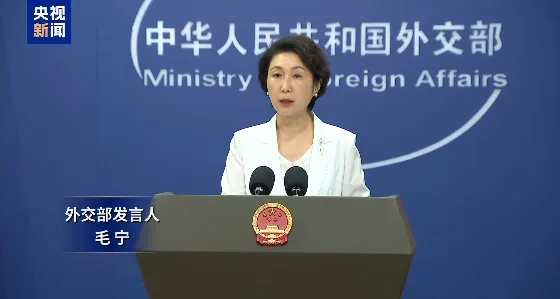
Speaking at a regular press briefing on July 10, Chinese Foreign Ministry spokesperson Mao Ning said Beijing’s position has remained unchanged since the tribunal issued its award.
“The so-called arbitration award is illegal, invalid, and has no binding force. China neither accepts nor recognizes it, and will not accept any claim or action based on the ruling,” Mao said.
She said the proposed Code of Conduct (COC) is an important step toward implementing the Declaration on the Conduct of Parties in the South China Sea (DOC) and reflects a shared commitment between China and ASEAN to safeguard peace, stability, and maritime cooperation in the disputed waters.
According to Mao, China remains committed to accelerating negotiations with ASEAN to conclude the long-awaited Code of Conduct, adding that the Philippines should not use the arbitration ruling to complicate discussions over the regional framework.
International Backing for the Arbitration Ruling
China’s remarks came as the United States, the Philippines, Japan, and 11 other countries issued a joint statement marking the 10th anniversary of the arbitration award.
The countries reaffirmed their commitment to a free, open, peaceful, and rules-based Indo-Pacific, while opposing unilateral actions, coercion, and the use of force that could undermine regional peace and stability.
In July 2016, an arbitral tribunal constituted under the United Nations Convention on the Law of the Sea (UNCLOS) ruled that China’s sweeping “nine-dash line” claim over most of the South China Sea had no legal basis under the convention.
Beijing rejected the decision, arguing that the tribunal lacked jurisdiction and that the ruling has no legal effect on China’s sovereignty claims.
Beijing Criticizes External Involvement
Responding to the joint statement, China’s Foreign Ministry argued that disputes involving territorial sovereignty and maritime boundary delimitation fall outside the scope of compulsory dispute settlement under UNCLOS.
Beijing also accused the Philippines of using the arbitration ruling to expand its maritime claims and said countries outside the region have relied on the decision to justify greater involvement in South China Sea affairs.
In a separate statement, China criticized Japan for supporting the arbitration ruling, accusing Tokyo of interfering in regional affairs and applying double standards in maritime disputes.
ASEAN’s Diplomatic Test
The South China Sea remains one of the world’s most strategically important waterways, carrying roughly one-third of global maritime trade each year. The sea is also subject to overlapping territorial claims involving China, the Philippines, Vietnam, Malaysia, Brunei, and Taiwan, making it one of the Indo-Pacific’s most sensitive security flashpoints.
For ASEAN, completing a substantive and effective Code of Conduct with China remains a central diplomatic objective aimed at reducing tensions, preventing incidents at sea, and strengthening regional confidence.
A decade after the landmark arbitration ruling, however, competing sovereignty claims, differing interpretations of international law, and intensifying strategic rivalry between China and the United States continue to complicate efforts toward a lasting regional framework.
As ASEAN and China continue negotiations on the Code of Conduct, balancing legal differences, strategic competition, and regional stability will remain one of Southeast Asia’s most consequential diplomatic challenges. (AT Network)
Follow Us at Google News, Instagram, WA Channel, and LinkedIn