
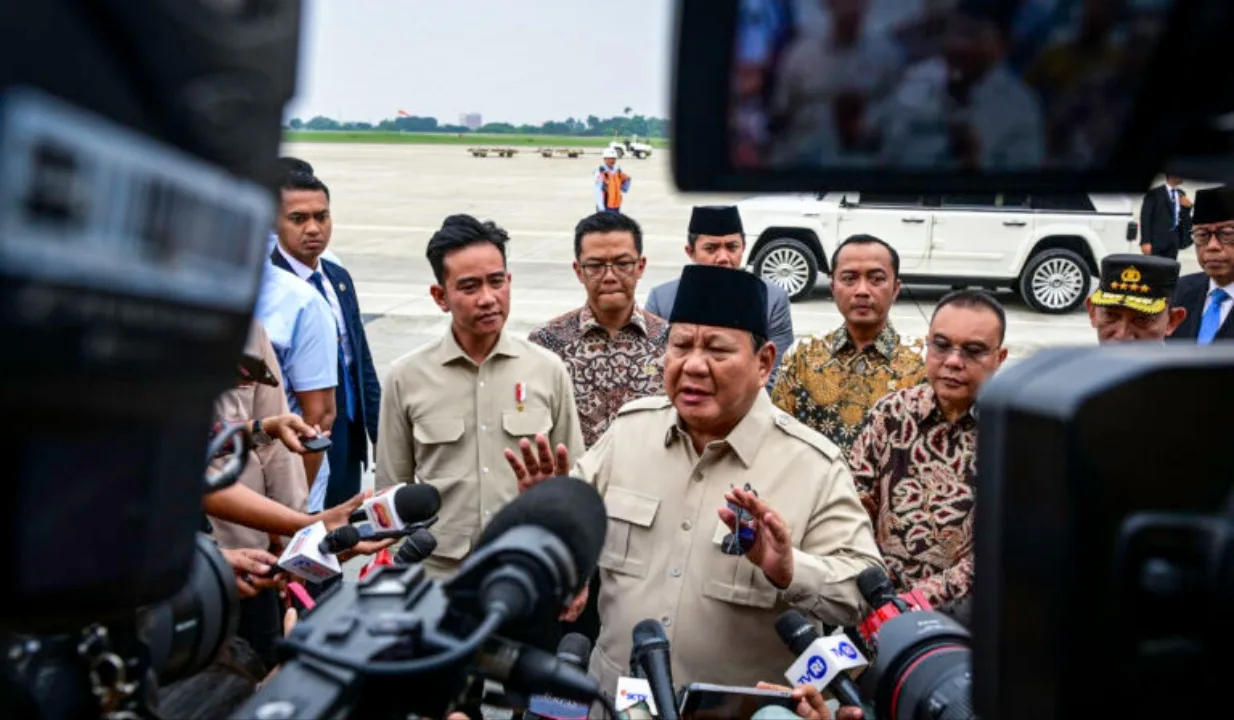
ASIATODAY.ID, JAKARTA — President of the Republic of Indonesia, Prabowo Subianto, announced that the reduction of U.S. import tariffs on Indonesian exports—from 32% down to 19%—is the outcome of direct negotiations between himself and U.S. President Donald Trump. The statement was made at Halim Perdanakusuma Air Force Base in Jakarta on Wednesday, July 16, 2025.
During a press conference, President Prabowo explained that the negotiation process was intense but ultimately reached a mutually beneficial agreement.
“I spoke with President Donald Trump. Thankfully, after a tough negotiation, we reached an agreement. The tariff is now reduced from 32% to 19%. We understand their interests, and they understand ours,” said Prabowo.
President Prabowo emphasized that Indonesia’s national interest remains the highest priority in every negotiation. He acknowledged Trump as a strong negotiator but stressed his own commitment to securing the best outcome for the Indonesian people.
“He’s a tough negotiator, no doubt. But I stood my ground and continued the talks for the sake of our people,” he stated.
Prabowo noted that trade negotiations with the United States would continue, aiming for long-term, sustainable economic cooperation.
“In trade relations, negotiation is a continuous process. We’ll keep working on it,” he said.
He also assured that all decisions were carefully calculated, with a firm focus on protecting Indonesian workers.
“Everything is considered thoroughly. Negotiations were conducted responsibly. My top concern is to protect our workers,” Prabowo added.
President Prabowo also revealed that the potential purchase of Boeing aircraft from the U.S. is part of the broader trade dialogue. He said the move would support the revitalization of Garuda Indonesia, the country’s national airline.
“Garuda is our national flight carrier, born out of our independence struggle. It must stand as a symbol of national pride,” he said.
In addition to aviation, the President highlighted Indonesia’s continued need to import strategic commodities from the U.S., such as fuel, natural gas, wheat, and soybeans.
“We still rely on imports for essential goods like fuel, gas, wheat, and soybeans. These shared needs led us to a common understanding,” he concluded. (AT Network)
Follow Us at Google News and WA Channel