
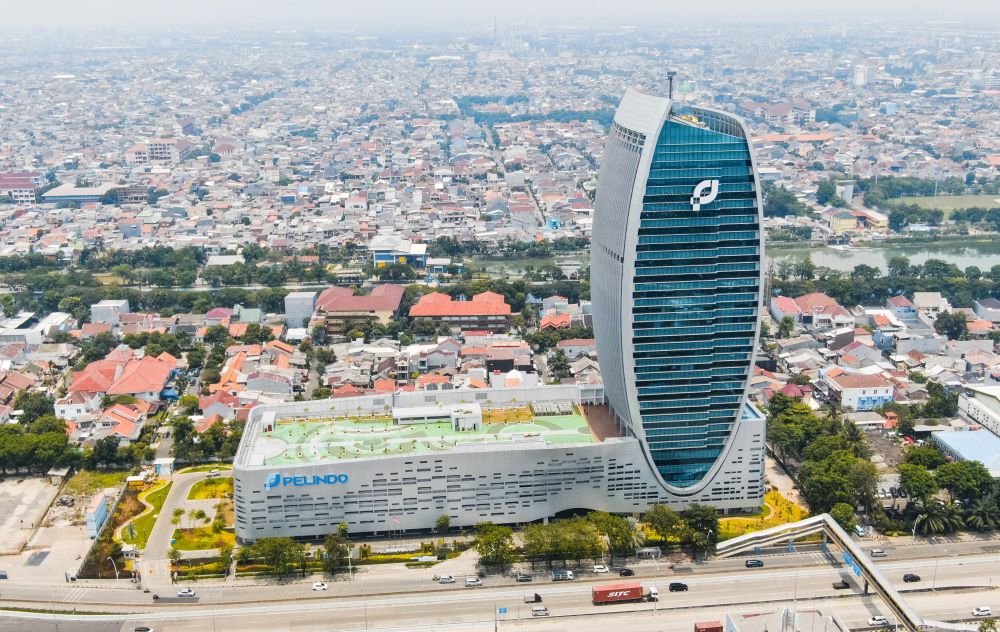
ASIATODAY.ID, JAKARTA – A total of 59 ports in Indonesia owned by PT Pelindo (Persero) are targeted to have implemented automatic gates by the end of 2024.
“With gate automation, payments previously made in cash have changed to cashless,” said Putut Sri Muljanto, Managing Director of PT Pelindo (Persero), in Jakarta, Monday, July 8 2024.
In 2023, Pelindo has implemented automatic gates at 13 ports in Indonesia, following 5 ports that had previously implemented a cashless system, namely Banten, Tanjung Pandan, Sunda Kelapa, Banjarmasin and Gresik, as well as 12 ports, most of which are in Eastern Indonesia.
Ports that will operate automatic gates in 2023 include; Tanjung Pinang Port (Riau Islands) in Regional 1; Pangkal Balam (Bangka-Belitung), Jambi, Panjang (Lampung), and Pontianak (West Kalimantan) in Regional 2. In addition, there are the ports of Celukan Bawang and Benoa in Bali,sheet in West Nusa Tenggara, and Kupang in East Nusa Tenggara in Regional 3.
Putut explained, from July 2024 until the end of the year, Pelindo will operate automatic gates at four ports in Regional 1, three ports in Regional 2, fourteen ports in Regional 3 and eight ports in Regional 4.
“Thus, by the end of 2024, it is targeted that 59 ports will operate automatic gates,” he explained.
The four ports that will operate automatic gates in Regional 1 are Gunung Sitoli, Sibolga, Tanjung Balai Asahan, and Lhokseumawe. The three ports in Regional 2 are Cirebon, Bengkulu and Palembang.
Then 14 ports are in Regional 3, starting from Tanjung Intan Port in Cilacap, Central Java, Tanjung Tembaga in Probolinggo, East Java, Waingapu (Sumba), Maumere (Flores) in East Nusa Tenggara, Bima, Ende-Ippi, Kalabahi, Labuan Bajo, Kotabaru, Batulicin, Sampit, Kalianget, Tegal, and Tanjung Wangi.
“Until the end of the year, automatic gates will also be operated at eight ports in Region 4, namely Manokwari, Jayapura, Biak, Fakfak and Merauke in Papua, Tolitoli and Pantoloan in Central Sulawesi, and Gorontalo,” explained Putut.
According to Putut, the operation of the automatic gate will be carried out in stages by considering vehicle traffic at the port where the autogate system will be implemented.
“We also see the results of evaluations of the implementation of autogate in previous ports which can be used as best practices,” said Putut.
Apart from aiming to standardize port operations, said Putut, automatic gates are also aimed at creating a port that is free from illegal levies. (AT Network)
Follow Us at Google News and WA Channel