
ASIATODAY.ID, JAKARTA – Indonesia’s Ministry of Industry has officially challenged AGC Chemicals Company, a Japanese chemical industry giant, to relocate its regional headquarters from Thailand to Indonesia — a strategic move that would strengthen Indonesia’s position as the chemical and manufacturing hub of Southeast Asia.
“Indonesia offers a vast market, competitive labor force, and a rapidly maturing industrial ecosystem. It is time for Indonesia to become AGC’s regional command center in Southeast Asia,” stated Minister of Industry Agus Gumiwang Kartasasmita after a meeting with AGC Chemicals Company and PT Asahimas Chemical executives in Jakarta on Wednesday, October 22, 2025.
The meeting was attended by Tatsuo Momii, President of AGC Chemicals Company, Yoshihisa Horibe, Executive Officer of the Essential Chemicals General Division, Eddy Sutanto, President Director of PT Asahimas Chemical, and Kazunori Uchigashima, Vice President Director of PT Asahimas Chemical.
Strengthening Investment and Global Confidence
According to Minister Agus, relocating AGC’s regional headquarters to Indonesia would symbolize stronger investor confidence in the country’s industrial climate.
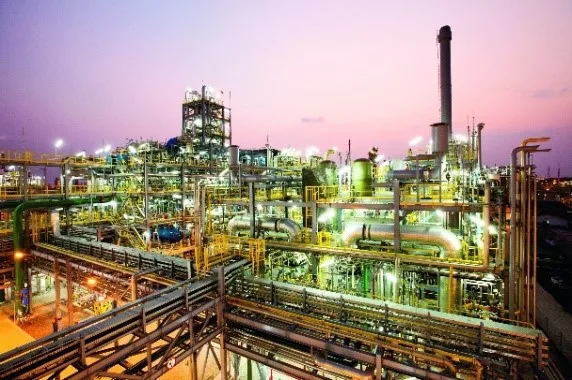
AGC has already invested USD 1.6 billion through PT Asahimas Chemical, which has operated for 36 years in Cilegon, Banten, employing over 3,000 Indonesian workers.
PT Asahimas Chemical produces three main chemical commodities essential to the national manufacturing supply chain:
Polyvinyl Chloride (PVC): 750,000 tons per year
Caustic Soda (NaOH): 679,800 tons per year
Vinyl Chloride Monomer (VCM): 800,000 tons per year
These products supply more than 400 downstream industries, ranging from plastic pipes and automotive components to household goods and construction materials.
“PT Asahimas Chemical plays a vital role in strengthening the national chemical industry structure, particularly in the PVC and chlor-alkali value chains that support key manufacturing sectors,” Agus emphasized.
Revised National Standard to Protect Domestic Industry
During the meeting, the Minister also reaffirmed the government’s commitment to protecting the domestic chemical industry through the revision of the Indonesian National Standard (SNI) 59:2017 on PVC resin.
The revision aims to make SNI an effective non-tariff barrier (NTB) that safeguards domestic producers and ensures consumer safety.
“Our approach focuses on raw material standards, as mercury content in finished products is difficult to detect through laboratory testing. This revision is not merely a technical update but a strategic measure to strengthen the independence of Indonesia’s upstream chemical industry,” explained Agus.
Minister Agus also highlighted two major challenges for Indonesia’s chemical industry — industrial salt supply and natural gas availability.
According to the Ministry of Industry, the chlor-alkali plant (CAP) sector requires 2.3 million tons of industrial salt annually, with up to 90% still imported.
“This is both a challenge and an opportunity. The government is committed to boosting domestic salt industrialization to reduce import dependence and secure raw material supply for the chemical sector,” said Agus.
He further underlined the importance of affordable natural gas for industrial growth.
“The impact of the Special Gas Pricing Policy (HGBT) is five times greater than the total incentives granted. This proves our energy policy effectively enhances industrial competitiveness,” he concluded. (AT Network)
Follow Us at Google News and WA Channel