
ASIATODAY.ID, JAKARTA – Big cities in Asia face big problems in terms of environmental resilience.
This was revealed from the results of Tokio Marine Group and Economist Impact research entitled “The Resilient Cities Index 2023.
The index evaluates the ability of 25 cities around the world to avoid, cope with and recover from long-term shocks and stresses.
By 2050, more than two-thirds of the world’s population will live in cities. Rapid urbanization makes this threat even more urgent, and many cities face growing threats to their urban centers.
This research aims to measure the resilience of communities and cities, identify gaps and challenges, and analyze opportunities and ways forward.
According to this index, various cities in the Asia and Pacific region are more vulnerable to climate change considering geographic factors and the risk of natural disasters, as well as increasingly worsening extreme weather.
In developing countries, this is always exacerbated by weak institutional infrastructure, as well as the large population with lower income levels.
Asian cities perform relatively well in disaster management. Hong Kong, New Delhi, Shanghai, Singapore and Tokyo even scored high in terms of disaster preparedness culture. This report reveals that a culture of disaster preparedness plays a role in successful disaster resilience.
Several cities in Asia also perform well based on important infrastructure aspects. However, there are several weaknesses that still require strategic focus. The cities with the highest scores are Dubai, Shanghai and Singapore.
Cities with capital-rich markets are more likely to build new infrastructure than European cities with limitations due to systems that are decades or centuries old.
According to this aspect, digital infrastructure and transportation are obstacles in increasing the resilience of cities.
However, the resilience of Asian cities is inadequate from an environmental perspective. This indicator is related to flood disasters, heat, air pollution and decarbonization.
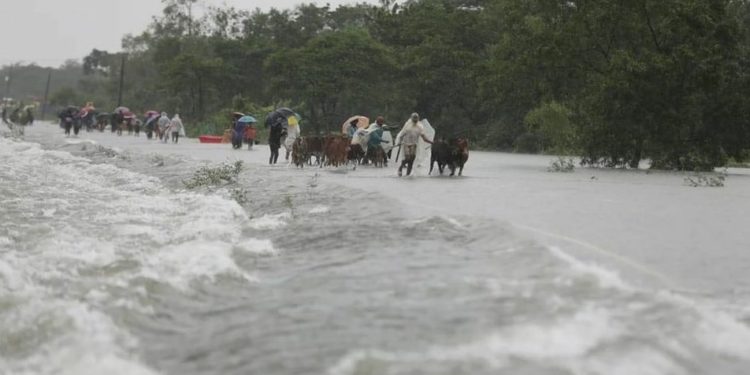
Among developing cities in Asia, Bangkok, Dhaka and Jakarta are less able to handle flood disasters, while New Delhi and Jakarta are highly exposed to heat incidents. This reflects the challenges these cities face amidst increasingly volatile weather conditions due to climate change.
“The Resilient Cities Index highlights the importance of Asia taking environmental change more seriously if it is to mitigate the existing and emerging risks facing global cities and their residents. Extreme weather events, from typhoons and forest fires to floods and heatwaves, are becoming more frequent “The impact is even getting worse. Considering disaster mitigation as an important social issue, Tokio Marine Group is trying to build a comprehensive disaster prevention and mitigation business,” said Max Hirai, CEO, Tokio Marine Asia, in an official statement quoted on Saturday, December 2 2023.
“We have seen firsthand the important role insurance plays in improving market dynamics in developing economies. “By increasing insurance penetration, we help businesses and communities get back on their feet, and develop the ability to recover better,” he added.
Pavlos Spyropoulos, Regional Managing Director – Asia Pacific, Tokio Marine Kiln, added: “We must address cities in Asia that are increasingly vulnerable to natural disasters, and this effort requires public and private cooperation to build city resilience.”
Specialist insurance companies have the ability and expertise to carry out calculations and provide solutions to mitigate complex risks. These services include, for example, supporting the development of digital infrastructure by providing cyber insurance, as well as creating new products that protect and build more resilient supply chains.
The formation of Tokio Marine Resilience will enhance comprehensive disaster prevention and mitigation solutions through planning, development and provision of new services. Through this business, Tokio Marine Group will contribute to building a resilient society that is able to handle natural disasters. (AT Network)
Check out other news and articles at Google News