
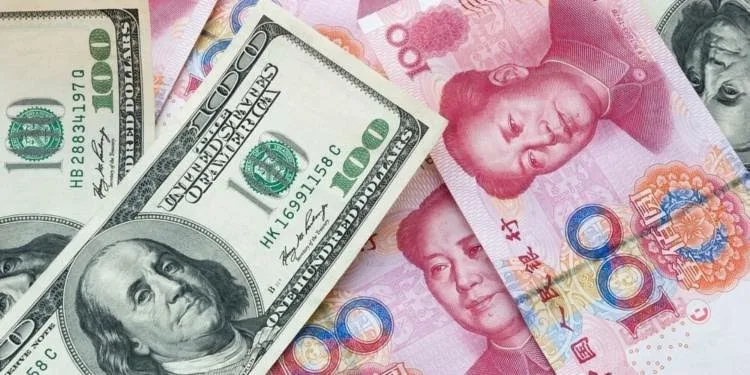
ASIATODAY.ID, WASHINGTON – The Ethiopian government has entered negotiations with China to convert part of its USD 5.38 billion debt into yuan-denominated loans, in a strategic move aimed at easing foreign exchange pressures and strengthening trade relations with Beijing.
According to Eyob Tekalign, Governor of the National Bank of Ethiopia, talks were held last month in Beijing with the Export-Import Bank of China and the People’s Bank of China, focusing on payment systems, trade facilitation, and debt restructuring.
“China is now a very important economic partner for us. A currency swap arrangement makes perfect sense—we’ve made the official request and are working on it,” Eyob told after attending the IMF Annual Meetings in Washington last Friday.
Ethiopia Follows Kenya and Nigeria’s De-Dollarization Path
Ethiopia’s move follows similar steps by other African nations seeking to deepen their financial ties with China.
Kenya recently completed the conversion of three China-financed railway loans from US dollars into yuan, a shift expected to save the country about USD 215 million in annual interest payments, according to its Ministry of Finance.
Nigeria also renewed a 15 billion yuan (USD 2 billion) currency swap deal with the People’s Bank of China last December to facilitate naira–yuan trade settlements.
These actions highlight a growing trend among developing countries to reduce dependency on the US dollar, especially amid intensifying global economic and geopolitical tensions.
Rebuilding After Crisis and Civil War
Ethiopia continues to face economic strain following the COVID-19 pandemic and a devastating two-year civil war in the Tigray region, which ended in 2022.
The country defaulted on its USD 1 billion Eurobond in December 2023 but later reached a restructuring agreement with official creditors under the G20 Common Framework, co-chaired by France and China, securing more than USD 3.5 billion in cash-flow relief.
However, negotiations with private bondholders reportedly remain challenging.
BRICS Pushes Global De-Dollarization
Since officially joining the BRICS economic bloc in January 2024—alongside Brazil, Russia, India, China, South Africa, Egypt, Iran, the United Arab Emirates, and Indonesia—Ethiopia has become a vocal supporter of the alliance’s de-dollarization agenda.
BRICS has consistently promoted the use of local currencies in cross-border trade as part of its strategy to reduce global dependence on the US dollar.
In September, Ethiopian Finance Minister Ahmed Shide confirmed that the country had agreed with China on a currency swap framework to facilitate birr–yuan trade settlements, calling it a key step toward rebuilding the national economy and diversifying global partnerships after years of economic turbulence.
However, the BRICS-led de-dollarization movement has drawn sharp criticism from Washington. Former US President Donald Trump accused the bloc of attempting to undermine American economic influence and threatened new tariffs and sanctions against countries shifting away from the dollar-based system. (AT Network)
Follow Us at Google News and WA Channel