
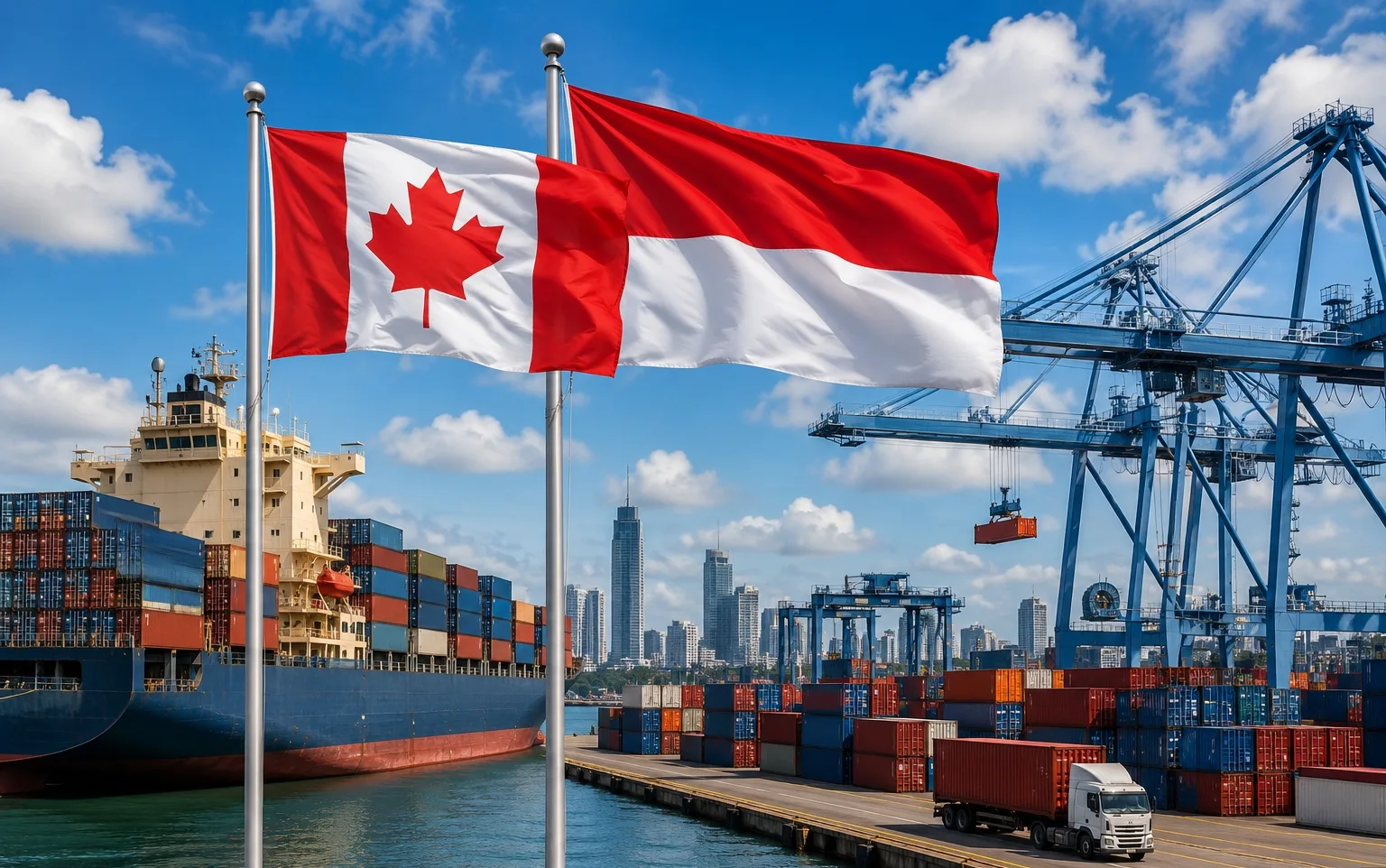
ASIATODAY.ID, JAKARTA — Canada and Indonesia are accelerating efforts to expand bilateral trade in agricultural, fisheries, and livestock products as both countries prepare to implement the Indonesia–Canada Comprehensive Economic Partnership Agreement (ICA-CEPA), with quarantine cooperation emerging as a key pillar for smoother market access and more resilient supply chains.
The renewed momentum was highlighted during a high-level meeting between Indonesian Quarantine Agency (Barantin) Chairman Abdul Kadir Karding and Canadian Ambassador to Indonesia Jess Dutton in Jakarta. Both sides pledged to translate the recently concluded trade agreement into practical measures that facilitate faster, safer, and more predictable cross-border commerce.
“Canada regards Indonesia as one of its most important trading partners in Southeast Asia,” Ambassador Dutton said, reaffirming Ottawa’s commitment to strengthening cooperation on sanitary and phytosanitary (SPS) measures to ensure agricultural products can move more efficiently while maintaining the highest food safety standards.
The meeting followed the substantive conclusion of negotiations on ICA-CEPA, a landmark trade agreement expected to significantly deepen economic ties between the two countries. Under the pact, Canada will provide preferential market access covering 90.55 percent of its 6,573 tariff lines, creating broader export opportunities for Indonesian products.
For Indonesia, the agreement is expected to boost exports of high-value commodities such as coffee, cocoa, fisheries products, tropical agricultural goods, and edible bird’s nests. Canada, meanwhile, will gain improved access for strategic exports including wheat, soybeans, animal feed ingredients, frozen seafood, and other agricultural products supporting Indonesia’s expanding food and manufacturing sectors.
Removing Non-Tariff Barriers
While tariff reductions are expected to drive trade growth, both governments emphasized that addressing non-tariff barriers will be equally critical.
Officials agreed to advance the implementation of a bilateral Memorandum of Understanding on Sanitary and Phytosanitary (SPS) Dialogue, establishing a formal mechanism to resolve technical and quarantine issues before they disrupt commercial trade. The framework is expected to improve regulatory transparency, accelerate risk assessments, and provide greater certainty for exporters and importers in both countries.
Expanding Market Opportunities
Among the priority issues discussed was Indonesia’s proposal to revise Canada’s processing temperature requirements for edible bird’s nest exports. Indonesian authorities believe updated standards would better preserve the product’s natural nutritional value while continuing to satisfy Canada’s stringent food safety requirements.
Indonesia is also processing import permit renewals for nine Canadian agricultural commodities—including apples, berries, potatoes, wheat, soybeans, and onions—while evaluating market access for additional products such as barley and oats once the required technical documentation is completed.
Building a Long-Term Strategic Partnership
Beyond market access, the two countries committed to expanding cooperation in laboratory testing, quarantine capacity, scientific collaboration, and international food safety standards through the Canada–ASEAN Network on Standards for Agriculture and Food Safety Exchange (CANSAFE) and the Codex Alimentarius framework.
Karding said science-based quarantine cooperation would be essential to ensuring that the benefits of ICA-CEPA are fully realized at ports and border checkpoints, enabling agricultural and fisheries products to move more efficiently without compromising biosecurity.
As implementation of ICA-CEPA moves closer, both Canada and Indonesia view stronger quarantine cooperation as a strategic investment in long-term economic resilience. By reducing technical trade barriers, improving regulatory coordination, and safeguarding food safety, the two partners aim to unlock new commercial opportunities while reinforcing supply-chain security across the Indo-Pacific. (AT Network)
Follow Us at Google News, Instagram, WA Channel, and LinkedIn