
ASIATODAY.ID, YUNNAN – The long-simmering armed conflict between Thailand and Cambodia has entered a new phase after China successfully brokered a peace agreement, ending weeks of deadly clashes along the disputed border.
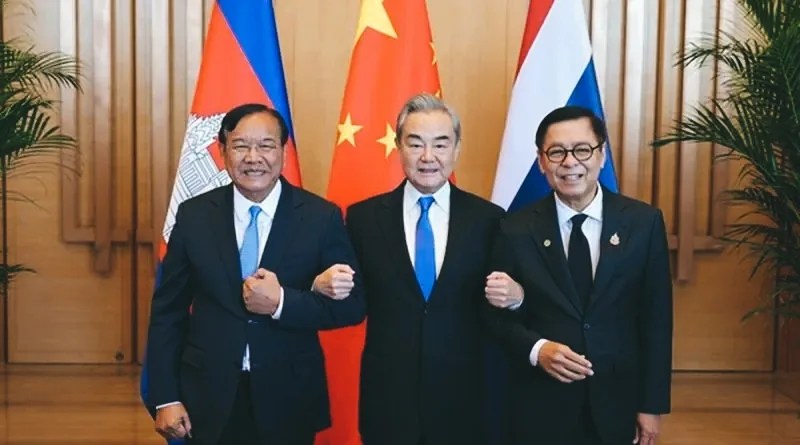
China played a decisive diplomatic role by hosting a trilateral meeting in Yunnan Province on Monday, December 29, 2025, bringing together senior officials from Beijing, Bangkok, and Phnom Penh. The talks resulted in a five-point peace framework aimed at reinforcing the ceasefire and preventing further escalation.
The meeting was chaired by Chinese Foreign Minister Wang Yi, and attended by Cambodian Foreign Minister Prak Sokhonn and Thai Foreign Minister Sihasak Phuangketkeow.
Immediate Ceasefire Becomes Top Priority
All three parties agreed that the most urgent priority is the full and effective implementation of the ceasefire on the ground, particularly by military commanders stationed in sensitive border areas.
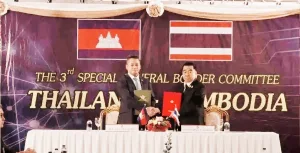
China also reaffirmed its support for the implementation of the Joint Statement adopted at the 3rd General Border Committee (GBC) Special Meeting held on December 27, 2025, which laid the groundwork for de-escalation.
“Stability between Cambodia and Thailand is vital for regional security and ASEAN unity,” Wang Yi said, adding that China stands ready to act as a neutral and constructive facilitator for long-term peace.
Five Key Points of the Thailand–Cambodia Peace Agreement
According to Khmer Times, the peace framework includes the following five commitments:
1. Immediate Ceasefire and Troop Withdrawal
Both sides agreed to halt all military engagements and withdraw troops from contested areas to reduce tensions and prevent renewed clashes.
2. End to Provocative Rhetoric
China urged an end to what it described as “microphone diplomacy.” Thailand and Cambodia committed to refraining from inflammatory public statements that could fuel tensions at the political or military level.
3. Accelerated Humanitarian Assistance
With hundreds of thousands of civilians displaced, both governments pledged to prioritize humanitarian aid delivery and ensure the safety of displaced populations.
4. Reactivation of Border Mechanisms
The Joint Border Commission will be reactivated as a technical and diplomatic channel to resolve border issues without resorting to military force.
5. Long-Term Dialogue for Permanent Resolution
Both countries committed to pursuing a lasting settlement through peaceful negotiations in accordance with international law.
Displaced Civilians Begin Returning Home
The impact of the ceasefire is already visible on the ground. Thousands of displaced residents in Thailand’s northeastern provinces of Surin and Buri Ram have begun returning to their homes after more than two weeks of displacement.
Surin Governor Jumreon Wanhpetch confirmed that most border districts have been cleared for civilian return, with the exception of Phanom Dong Rak District, which remains under security assessment.
Despite improving conditions, the Thai military has urged returning residents to remain vigilant and follow provincial safety protocols until full stability is restored.
China’s Diplomatic Role Draws Global Attention
China’s success in facilitating peace between Thailand and Cambodia has drawn international attention, reinforcing Beijing’s growing influence in regional diplomacy in Southeast Asia.
Amid heightened global geopolitical tensions, analysts view the agreement as a significant step toward preserving ASEAN stability, though the full implementation of the ceasefire remains under close international scrutiny. (AT Network)
Follow Us at Google News and WA Channel