
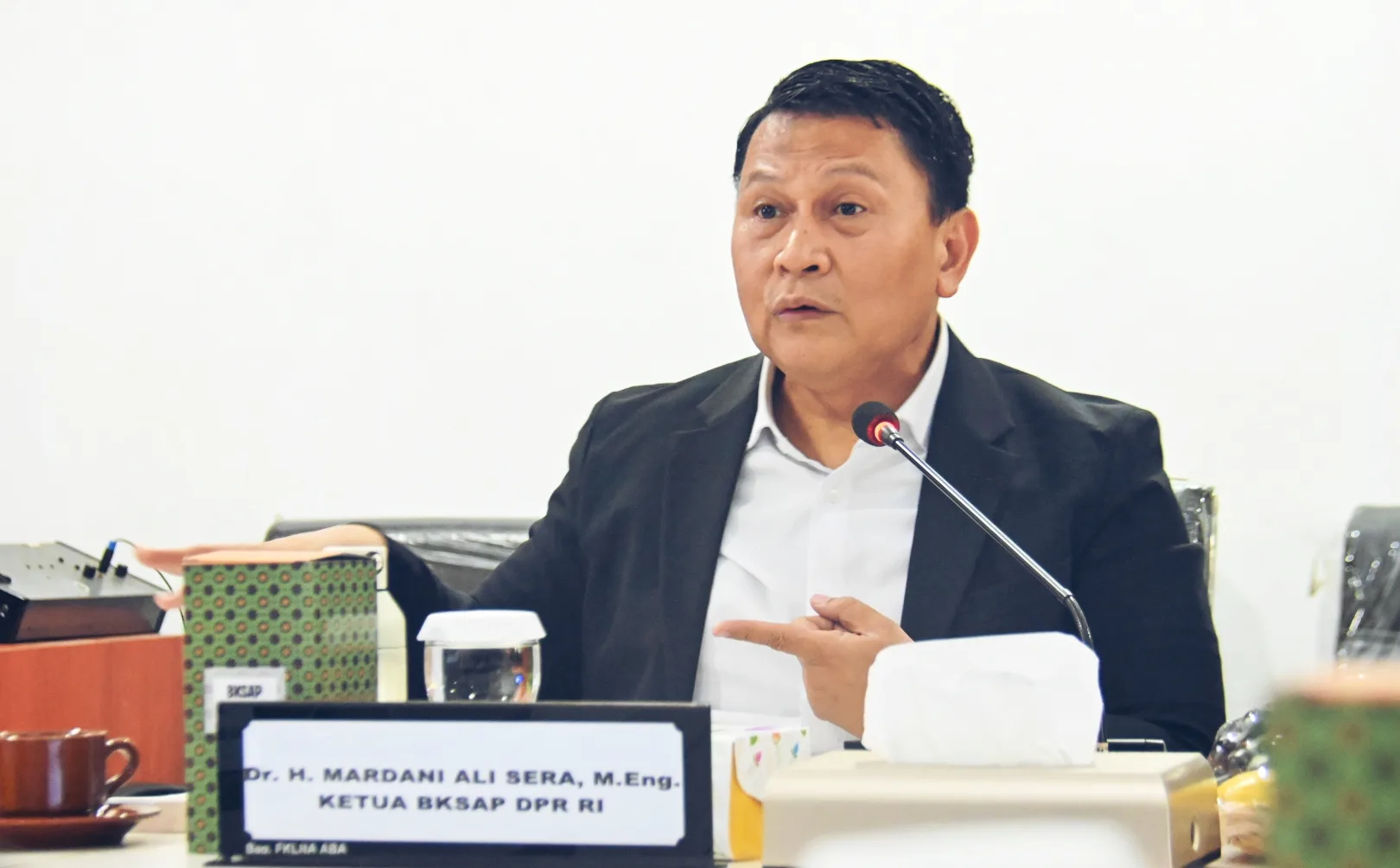
ASIATODAY.ID, SOUTH TANGERANG — The House of Representatives of the Republic of Indonesia (DPR RI) has issued a strong warning to the government not to rush into implementing the Indonesia–European Union Comprehensive Economic Partnership Agreement (IEU-CEPA), which is scheduled to take full effect in January 2027.
Chairman of the Inter-Parliamentary Cooperation Agency (BKSAP) of the DPR, Mardani Ali Sera, said the Parliament is wary of potential hidden agendas from the European Union that could disadvantage domestic sectors if not handled properly.
“IEU-CEPA holds huge promise, but it also carries major risks. We must not let Indonesia become just another market for European products. Parliament will ensure this agreement becomes a blessing, not a disaster,” Mardani asserted during a dialogue with academics at Syarif Hidayatullah State Islamic University (UIN) in South Tangerang, Friday, October 3, 2025.
Mardani emphasized that the EU often imposes strict environmental and trade standards that can make it difficult for developing countries to compete. Therefore, Indonesia must design implementing regulations that firmly protect national interests.
“ASEAN received around USD 200 billion in foreign direct investment, but Indonesia only captured about USD 20 billion — while Singapore took more than half. This shows how much we still need to improve our investment climate,” he explained.
He stressed that Indonesia must avoid falling into the trap of economic liberalization that primarily benefits foreign interests. A total overhaul of the investment ecosystem — including legal certainty, bureaucratic efficiency, and political stability — is essential.
“We can’t discover new islands with old maps. Outdated methods that no longer work must be replaced with new strategies to prevent Indonesia from becoming a victim of global agreements,” Mardani warned.
He also pointed to the EU’s European Deforestation Regulation (EUDR) and child labor policies as possible trade barriers for Indonesian exports. However, he believes Indonesia’s halal and MSME (micro, small, and medium enterprise) sectors could turn those challenges into advantages.
“Our halal and ethical industries can be Indonesia’s new strength in the global market,” he said confidently.
Halal Economy and MSMEs Seen as Indonesia’s Shield Against EU Pressure
Ade Rossi Khoerunnisa, a member of the BKSAP from the Golkar Party, echoed similar concerns, urging Indonesia to leverage the halal economy and Islamic finance as national pillars to withstand external market pressures.
“The IEU-CEPA must strengthen Indonesia’s domestic potential — not open the door for European economic domination,” Ade stressed during the BKSAP visit to UIN Syarif Hidayatullah Jakarta.
She highlighted the growing Muslim population across Eastern and Northern Europe as a golden opportunity for Indonesia to expand exports of halal products, including food, cosmetics, and Muslim fashion.
“We want to ensure this agreement delivers tangible benefits — particularly for sectors with unique strengths such as the halal industry,” Ade said.
Ade also underlined the potential of cooperation in hajj and umrah services as well as halal tourism, which could broaden Indonesia’s export of services.
She urged Islamic universities to take an active role in research, innovation, and policy development to help Indonesia meet European standards without sacrificing its identity.
“This partnership must enhance Indonesia’s competitiveness while upholding Islamic values and local wisdom,” she added.
“IEU-CEPA Could Be Europe’s Economic Trojan Horse,” DPR Warns
Deputy Chairman of BKSAP Bramantyo Suwondo issued an even sharper warning, describing IEU-CEPA as a potential “economic Trojan horse” for European interests in Indonesia.
“We cannot let IEU-CEPA become Europe’s Trojan horse. The benefits of this deal must go to the people, not just big corporations,” Bramantyo declared.
He explained that the BKSAP plays a vital role in second-track diplomacy, ensuring that international trade agreements support the welfare of ordinary Indonesians.
“We want Indonesian MSMEs to be part of the global supply chain. IEU-CEPA must empower small businesses, not sideline them,” he emphasized.
Bramantyo also stressed that the success of IEU-CEPA should not be measured merely by GDP growth, but by how it creates jobs and revitalizes local economies.
“It’s meaningless if the numbers go up but people remain poor. We want growth that is fair, inclusive, and sustainable,” he said firmly.
The DPR, through the BKSAP, pledged to closely monitor the finalization and implementation of IEU-CEPA through bilateral and regional forums to safeguard Indonesia’s economic sovereignty.
“Parliamentary diplomacy is our concrete way of ensuring that Indonesia’s international cooperation always serves the people,” Bramantyo concluded. (AT Network)
Follow Us at Google News and WA Channel