
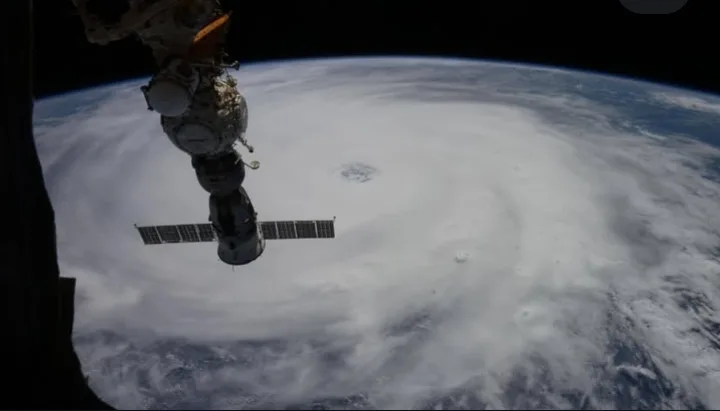
ASIATODAY.ID, MACAO — As typhoons grow more intense, more frequent, and increasingly unpredictable across the Asia–Pacific, the ESCAP/WMO Typhoon Committee issued a stark warning during its 20th Integrated Workshop and High-Level Forum held on 2–5 December 2025.
The message was unmistakable: the region is entering a dangerous new era of climate-driven superstorms, and without stronger regional cooperation, millions of lives could be in jeopardy.
Over four days, Macao became a hub of scientific expertise and disaster-risk dialogue. Delegates from ESCAP, the World Meteorological Organization (WMO), the Typhoon Committee Secretariat, and experts in meteorology, hydrology, disaster management, and climate science gathered to assess escalating threats and outline collective solutions.
With the theme “Closing Gaps and Creating Opportunities Together: Developing the Typhoon Committee’s Future Strategy,” the forum focused on improving forecasting accuracy, strengthening early warning systems, and enhancing regional disaster preparedness.
The outcomes will shape the Typhoon Committee Strategic Plan 2027–2031, a roadmap that will guide Asia-Pacific typhoon resilience efforts for the next five years.
“The Asia-Pacific region faces the world’s most intense and frequent typhoons. Record-breaking rainfall, storm surges, and flooding displace millions and cause billions in economic losses,” said WMO Secretary-General Celeste Saulo.
She emphasized that the Committee’s future strategy must be grounded in integration, inclusion, and innovation.
The High-Level Forum’s Joint Statement reaffirmed the region’s commitment to more open data sharing, stronger collaborative research, and expanded joint training that turns scientific advances into effective community protection.
Innovation at the Frontline: AI Forecasting, Satellite Advances, and 3D Radar
Running in parallel, the Integrated Workshop adopted the theme “Shaping the Future: Applying Innovation to Actions Addressing Typhoon Challenges and Opportunities.”
Experts showcased cutting-edge technologies now redefining disaster response across the region:
AI-powered prediction models
High-resolution numerical weather modelling
Advanced satellite storm monitoring
Airborne reconnaissance operations
Radar-based 3D wind retrieval systems
A regional AI data-exchange platform enabling collaborative forecasting
“Innovation is not only about technology—it is also about partnerships, governance, and empowering communities,” Saulo noted.
Macao underscored its commitment to enhancing technical cooperation and helping neighbouring Members strengthen preparedness and resilience.
Typhoon Season 2025: One of the Most Intense and Destructive in Recent History
The 2025 season underscored just how rapidly climate risks are escalating:
26 typhoons formed in the Western North Pacific and South China Sea (well above the long-term average of 23.3)
10 typhoons made landfall in China
9.4 million people affected
3.5 million evacuated
Only 10 fatalities, demonstrating the effectiveness of early warnings and coordinated response
Super Typhoon Ragasa stood out as the year’s most powerful storm, peaking at 125 knots. It set a historic record in Hong Kong as the farthest cyclone ever to trigger Hurricane Signal No. 10.
Ragasa caused widespread structural damage, severe coastal flooding, hurricane-force winds, and the cancellation of more than 700 flights.
Despite this destruction, no deaths occurred, underscoring the power of timely forecasts and swift early action.
A Clear Warning: The Future Depends on Regional Unity
From integrated multi-hazard early warning systems to AI-enabled forecasting networks, the region’s success stories prove that collective action is the strongest defence against the intensifying typhoon crisis.
Additional best practices are available in China’s early warning case studies. (AT Network)
Follow Us at Google News and WA Channel