
ASIATODAY.ID, MALANG — Indonesia is facing a profound contradiction in its food and nutrition policy. Despite its vast agricultural resources and long-standing ambition for food self-sufficiency, around 80 percent of the country’s milk raw materials are still imported.
This dependency highlights a structural failure in Indonesia’s dairy and food security strategy, with long-term implications for national nutrition and economic sovereignty.
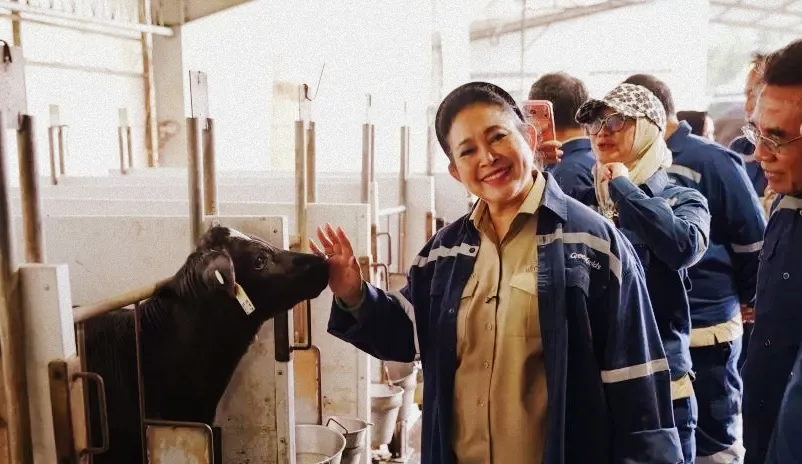
The issue was brought into sharp focus during a working visit by Indonesia’s House of Representatives Commission IV to PT Greenfields Indonesia’s dairy facilities in Malang, East Java, on Thursday, December 11, 2025.
Lawmakers warned that chronic reliance on imported dairy inputs has weakened domestic production capacity and exposed Indonesia to global supply shocks.
Commission IV Chair Siti Hediati Hariyadi (Titiek Soeharto) stressed that Indonesia’s food security agenda has been narrowly defined for decades, prioritizing rice and corn while overlooking milk as a strategic source of protein and public nutrition.
“Approximately 80 percent of Indonesia’s dairy raw materials are still imported. This level of dependency is extremely risky, especially after the Foot-and-Mouth Disease (FMD) outbreak significantly reduced the domestic dairy cattle population,” she said.
Import Dependency: A Structural Problem, Not a Temporary Shortage
Data from government agencies and industry sources indicate that domestic fresh milk production meets only about 20–25 percent of national demand. The remaining supply is covered largely by imports of milk powder and dairy ingredients, primarily from Australia, New Zealand, the United States, and the European Union.
According to Indonesia’s Central Statistics Agency (BPS), the country has hundreds of thousands of dairy cattle, concentrated mainly in East Java, West Java, and Central Java.
However, productivity remains low, averaging 10–12 liters per cow per day, far below the 25–30 liters achieved in major dairy-producing countries.
This productivity gap is driven by persistent structural challenges: poor genetic stock, high feed costs, limited land availability, outdated farming technology, and weak price incentives for smallholder farmers.
A Lopsided Dairy Industry
Deputy Chair of Commission IV Panggah Susanto pointed out that Indonesia’s dairy industry has developed unevenly. PT Greenfields Indonesia, one of the country’s largest producers operating since 1997, currently supplies only around 14 percent of national milk demand.
“The majority of milk consumed in Indonesia still comes from imported milk powder, not fresh domestic milk. Yet locally produced fresh milk has higher nutritional value and delivers direct economic benefits to Indonesian dairy farmers,” he said.
This pattern reflects an industrial model that prioritizes imported inputs over strengthening domestic supply chains, leaving small-scale dairy farmers marginalized and limiting long-term sector growth.
Nutrition and Food Security at Risk
Data from the FAO and WHO show that Indonesia’s per capita milk consumption remains well below regional and global averages. Heavy reliance on imports makes domestic prices highly vulnerable to global market volatility, which ultimately affects access to nutritious food for low-income households.
Recent global crises—from geopolitical conflicts to climate-related disruptions—have reinforced a critical lesson: dependence on imported strategic food commodities is a national security risk, not merely an economic concern.
A Policy Environment Favoring Imports
Commission IV lawmakers argue that government policy has been more accommodating to imports than to domestic dairy farmers. Farm-gate milk prices remain relatively stagnant, while production costs continue to rise. Without strong state intervention, many small-scale dairy operations struggle to survive, let alone expand.
The Parliament has called for a comprehensive review of dairy regulations, including import policies, investment incentives, and pricing mechanisms for fresh milk. Without decisive political action, lawmakers warn, meaningful dairy self-sufficiency will remain elusive.
Self-Sufficiency or Political Rhetoric?
Commission IV has pledged to intensify oversight and push the government to develop a realistic, measurable, and farmer-centered dairy self-sufficiency roadmap.
Without structural reform and political courage, milk self-sufficiency risks becoming another recurring policy slogan. Indonesia may continue to embody a troubling paradox: a nation with vast agricultural potential that remains dependent on imported milk—placing national nutrition and food sovereignty on fragile ground. (AT Network)
Follow Us at Google News and WA Channel