
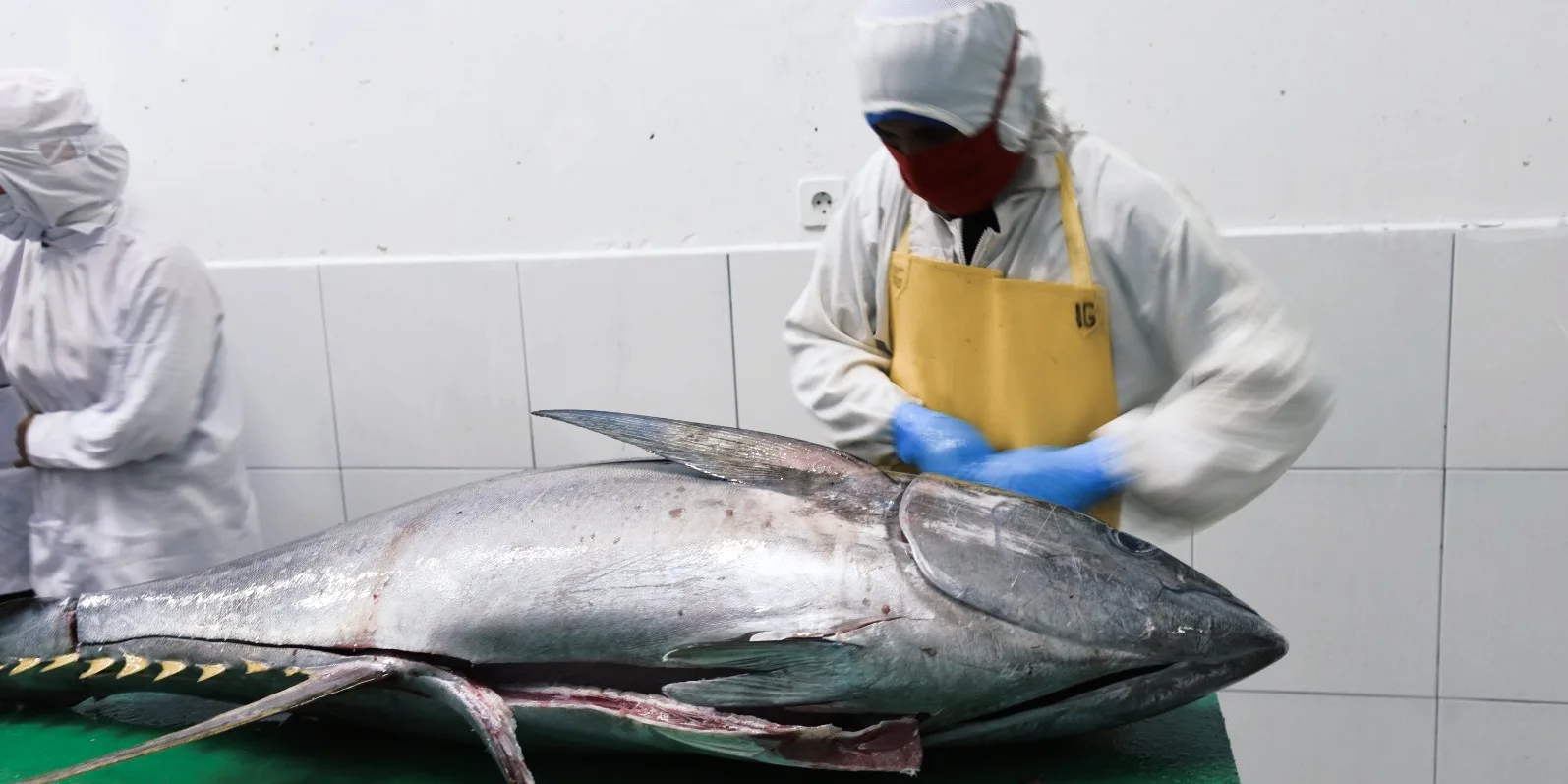
ASIATODAY.ID, JAKARTA – Indonesia has secured a major boost for its fisheries exports following amendments to the Indonesia-Japan Economic Partnership Agreement (IJEPA), which grant zero import tariffs for Indonesian processed tuna, skipjack, and bonito products entering the Japanese market.
The Ministry of Marine Affairs and Fisheries (KKP) confirmed it is ready to facilitate fish processing units (FPUs) seeking to benefit from the 0% tariff scheme, a move expected to significantly enhance Indonesia’s competitiveness in Japan.
“Fortunately, the revised IJEPA accommodates Indonesia’s interests, including the elimination of tariffs on four categories of processed tuna and skipjack products,” said Machmud, Acting Director General for Competitiveness of Marine and Fisheries Products, in a written statement quoted on Monday, January 19, 2026.
Zero Tariffs, Stronger Market Position
Prior to the IJEPA revision, Indonesian canned and non-canned processed tuna exports to Japan were subject to import duties of 9.6%. Despite this, Indonesia currently ranks as the third-largest exporter of processed tuna to Japan, with export values reaching USD 30.28 million.
Indonesia has also recorded a compound annual growth rate (CAGR) of 13.82%, outperforming major competitors such as Thailand (12.12%) and the Philippines (6.31%).
“With zero tariffs in place, Indonesian tuna and skipjack products will become far more competitive. We are confident Indonesia can rise to become Japan’s top supplier,” Machmud emphasized.
Procedure to Obtain Zero-Tariff Status
KKP is finalizing a Ministerial Circular related to the ratification of the revised IJEPA, which will outline procedures for obtaining zero-tariff registration numbers for processed tuna and skipjack products under Japan’s HS codes 1604.14.091 and 1604.14.099.
“Export-oriented FPUs producing goods listed under the IJEPA protocol must be officially registered with the Ministry,” Machmud explained.
Meanwhile, Erwin Dwiyana, Director of Marketing at the Directorate General of Product Competitiveness (PDS), detailed the registration process.
Applicants must submit required documentation, including business licenses, Business Identification Numbers (NIB), standard certificates, Processing Feasibility Certificates (SKP), HACCP certification, standard operating procedures for raw material sorting, traceability documents, and integrity pacts.
Applications will undergo verification and inspection—either onsite or online—by the Directorate General.
Once approved, KKP will notify Japan’s Ministry of Agriculture, Forestry and Fisheries (MAFF) through a diplomatic note listing eligible FPUs authorized to use IJEPA preferential tariffs.
For the initial phase, applications for IJEPA registration numbers may be submitted to [email protected] no later than January 26, 2026.
Tuna Remains a Key Export Commodity
The revised IJEPA protocol was officially signed on August 8, 2024, by the Indonesian Minister of Trade and Japan’s Minister for Foreign Affairs. Tuna and skipjack currently rank as Indonesia’s second-largest fisheries export commodity, accounting for 17% of total market share.
Previously, Indonesia’s Minister of Marine Affairs and Fisheries Sakti Wahyu Trenggono expressed confidence that national tuna production could significantly expand exports to Japan, Singapore, and other key markets.
He also stressed the importance of cold storage infrastructure to preserve quality, enhance competitiveness, and support broader export expansion. (AT Network)
Follow Us at Google News and WA Channel