
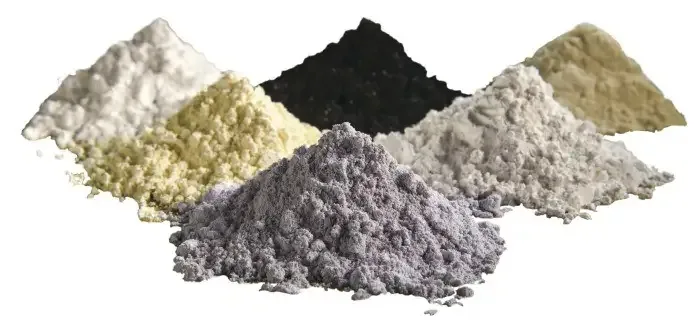
ASIATODAY.ID, JAKARTA — Indonesia is stepping up its ambition to become a major player in the global rare earth industry as competition intensifies among nations seeking secure supplies of critical minerals essential for clean energy technologies, electric vehicles, semiconductors, and defense systems.
The move was underscored by a strategic collaboration initiative between Indonesia’s National Research and Innovation Agency (BRIN) and Malaysia’s Universiti Teknologi Petronas (UTP), aimed at advancing more efficient and environmentally sustainable rare earth processing technologies.
The partnership was discussed during a technical visit and strategic meeting at BRIN’s Pilot Plant Plutho facility in Jakarta. The facility serves as a key bridge between laboratory-scale research and industrial-scale deployment of rare earth processing technologies.
BRIN is targeting the commercialization of Indonesia’s rare earth industry by 2028 through the development of advanced monazite processing technologies. Monazite, a mineral rich in rare earth elements, is considered a strategic resource for high-tech manufacturing and the global energy transition.
Kurnia Setiawan Widana, a researcher at BRIN, said the agency’s primary focus is separating radioactive elements such as uranium and thorium from monazite to produce Mixed Rare Earth (MRE), a critical intermediate product for downstream industrial applications.
“Our main objective is to produce non-radioactive rare earth materials that can support high-value manufacturing industries,” Kurnia said quoted on June 25.
The Pilot Plant Plutho facility, operational since 2017, is currently undergoing upgrades and process improvements to enhance efficiency and prepare for the demonstration phase before commercial-scale operations begin.
Indonesia possesses significant monazite resources, particularly as a byproduct of tin mining activities in Bangka Belitung. However, much of the value generated from these minerals has historically been captured abroad due to limited domestic processing capabilities.
According to BRIN researcher Riesna Prassanti, the facility can process up to 50 kilograms of monazite per batch using a hydrometallurgical process based on sodium hydroxide. Through a series of decomposition, filtration, and precipitation stages, the process produces rare earth hydroxides free from radioactive contaminants.
The material is then further refined at BRIN’s facility in Yogyakarta, where individual rare earth elements such as lanthanum, cerium, and neodymium are separated and purified to levels of up to 99 percent.
UTP, meanwhile, is exploring opportunities to integrate greener separation technologies into the process. The Malaysian university is developing membrane-based and physical separation methods that could significantly reduce chemical consumption during mineral extraction.
The collaboration combines BRIN’s expertise in hydrometallurgy with UTP’s environmentally friendly innovations, potentially accelerating the development of a regional rare earth ecosystem in Southeast Asia.
The initiative comes as governments worldwide intensify efforts to secure critical mineral supply chains amid growing geopolitical competition and rising demand driven by the global energy transition.
For Indonesia, the project forms part of a broader strategy to move beyond its traditional role as a supplier of raw materials and establish itself as a producer of high-value strategic materials.
If commercialization targets are achieved by 2028, Indonesia could emerge as one of Southeast Asia’s leading rare earth processing hubs, strengthening its position in the increasingly competitive global market for critical minerals. (AT Network)
Follow Us at Google News, WA Channel, and LinkedIn