
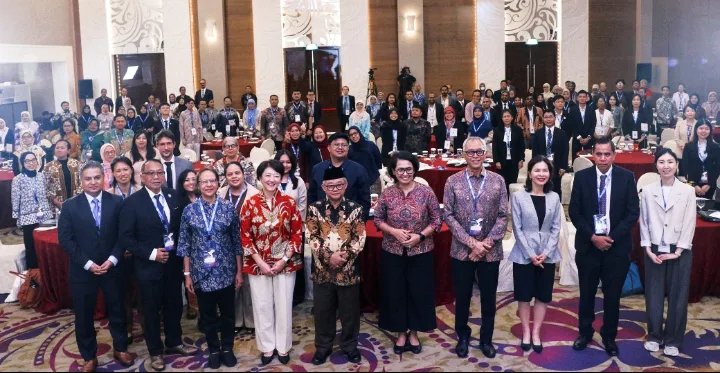
ASIATODAY.ID, JAKARTA – For the first time, governments, educators, and civil societies from across Southeast Asia will come together on 24–25 September to advance peace through education.
Convened by UNESCO and the Indonesian National Commission for UNESCO, and supported by KOICA, the Regional Meeting on Education for Sustainable Peace marks a historic step for the region, charting a new course for preventing conflict and sustain lasting peace.
The meeting comes at a time when hate speech, polarization, and violent conflict are intensifying worldwide. Southeast Asia, a region shaped by complex histories of conflict and reconciliation, and home to extraordinary cultural and political diversity, is pivotal to global peace and stability. With both urgent challenges and unique opportunities, the region is now working collectively to harness education as a tool for resilience.
Guided by the 2023 UNESCO Recommendation on Education for Peace, Human Rights and Sustainable Development, the event underscores education’s role as a long-term investment to counter discrimination, transform conflicts, and reshape the legacies of violence.
“Education is one of the most powerful means to build resilience, foster respect for diversity, and lay the foundations for lasting peace. This meeting is an opportunity to transform shared aspirations into concrete regional action,” said Ms. Maki Katsuno-Hayashikawa, Director, UNESCO Regional Office in Jakarta, September 24, 2025.
“Quality education can nurture literacy across cultures and religions, helping the younger generation to see differences not as a threat but as a gift. When children learn about other people’s beliefs and traditions, hatred fades, stereotypes disappear, and bridges of emphaty begin to grow, ” H.E. Prof. Abdul Mu’ti, Minister of Primary and Secondary Education.
Over two days, participants will explore strategies to transform education systems to address the root causes of conflict, share case studies, and examine education’s role in post-conflict recovery, and highlight the role of young people, educators, and civil society in countering hate speech and sustaining peace through education, including in the digital world.
“By strengthening collaboration among governments, youth, civil society, and international partners, Southeast Asia can chart a path toward more peaceful, just, and inclusive societies,” noted Dr. Ananto Kusuma Seta, Executive Chair of the Indonesian National Commission for UNESCO.
By putting together diverse perspectives under one roof, the meeting aims to strengthen trust and partnerships across Southeast Asia, culminating in a regional Plan of Action to advance peace through education. Setting out concrete recommendations to foster peace education in the region. (AT Network)
Follow Us at Google News and WA Channel