
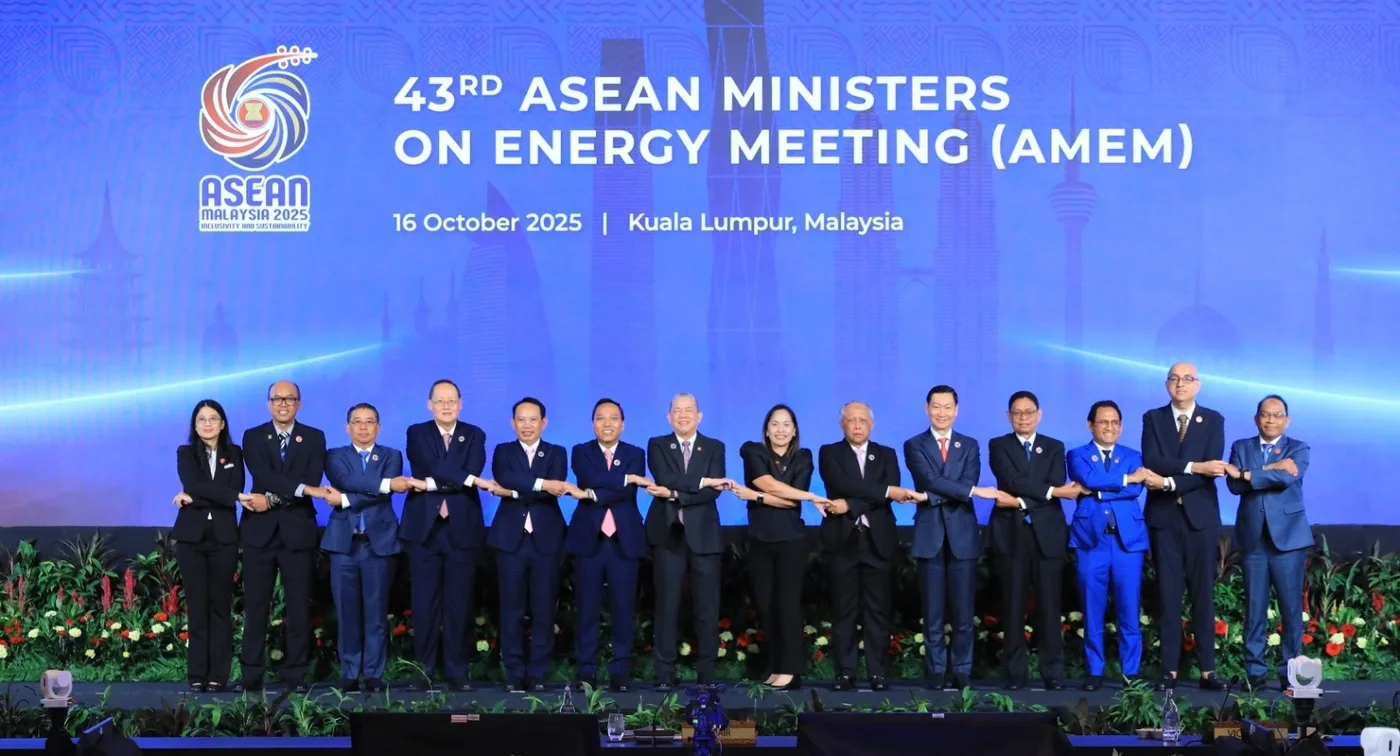
ASIATODAY.ID, KUALA LUMPUR — Indonesia is gearing up to take a leading role as the energy hub of Southeast Asia, as regional electricity demand continues to surge in the coming years. The country has reaffirmed its strong commitment to advancing the ASEAN Power Grid (APG) — a strategic initiative aimed at strengthening cross-border electricity connectivity among ASEAN member states.
According to Deputy Minister of Energy and Mineral Resources (ESDM) Yuliot, Indonesia is ready to become a pivotal link in the region’s integrated power system.
“With the integration of power grids across ASEAN, we can see that this is feasible because regional energy demand will continue to rise significantly. Indonesia must be ready to serve as the central energy hub for ASEAN,” Yuliot said after attending the 43rd ASEAN Ministers on Energy Meeting (AMEM) and associated meetings in Kuala Lumpur, Malaysia, on Thursday.
Strengthening Cross-Border Electricity Cooperation
Indonesia has already begun developing interconnected power systems with neighboring countries, including Malaysia. The country currently imports around 200 megawatts (MW) of electricity from Malaysia to supply parts of Kalimantan Island, located near the border.
“This cooperation is ongoing, and we are now facilitating the renewal of related permits,” Yuliot explained, emphasizing Indonesia’s commitment to deepening regional energy partnerships.
Massive Investment and Infrastructure Expansion
To support the ASEAN Power Grid initiative, Indonesia has mapped out a long-term plan through its Electricity Supply Business Plan (RUPTL), which includes the construction of 48,000 circuit kilometers (ckm) of transmission networks over the next decade. These networks will be crucial to meet both national electricity demands and regional power integration goals.
The Indonesian government also sees vast investment opportunities worth IDR 600 trillion (approximately USD 36 billion) to develop the national grid and enhance ASEAN interconnection.
“The total investment needed is around 600 trillion rupiah. This will not only come from the government but also from the private sector. We are opening broad opportunities for private investment in both the national and ASEAN grids,” Yuliot said.
Ensuring a Just and Inclusive Energy Transition
During Indonesia’s intervention at the 43rd AMEM, Yuliot underlined that the energy transition in Southeast Asia must be carried out fairly, inclusively, and systematically, taking into account the varying national circumstances of each ASEAN member state.
He stressed that cross-sectoral collaboration—linking energy, economic, and environmental priorities—will be essential to ensure policies are consistent with the ASEAN Community Vision 2045.
“Indonesia continues to promote an energy transition that prioritizes energy security, affordability, and sustainability, ensuring that no member state is left behind,” he added.
Under Malaysia’s chairmanship, the 43rd ASEAN Ministers on Energy Meeting achieved several milestones as part of the Priority Economic Deliverables for 2025, including the endorsement of an updated Memorandum of Understanding (MoU) on the ASEAN Power Grid. The MoU aims to accelerate regional energy connectivity and strengthen the resilience of the ASEAN power network. (AT Network)
Follow Us at Google News and WA Channel