
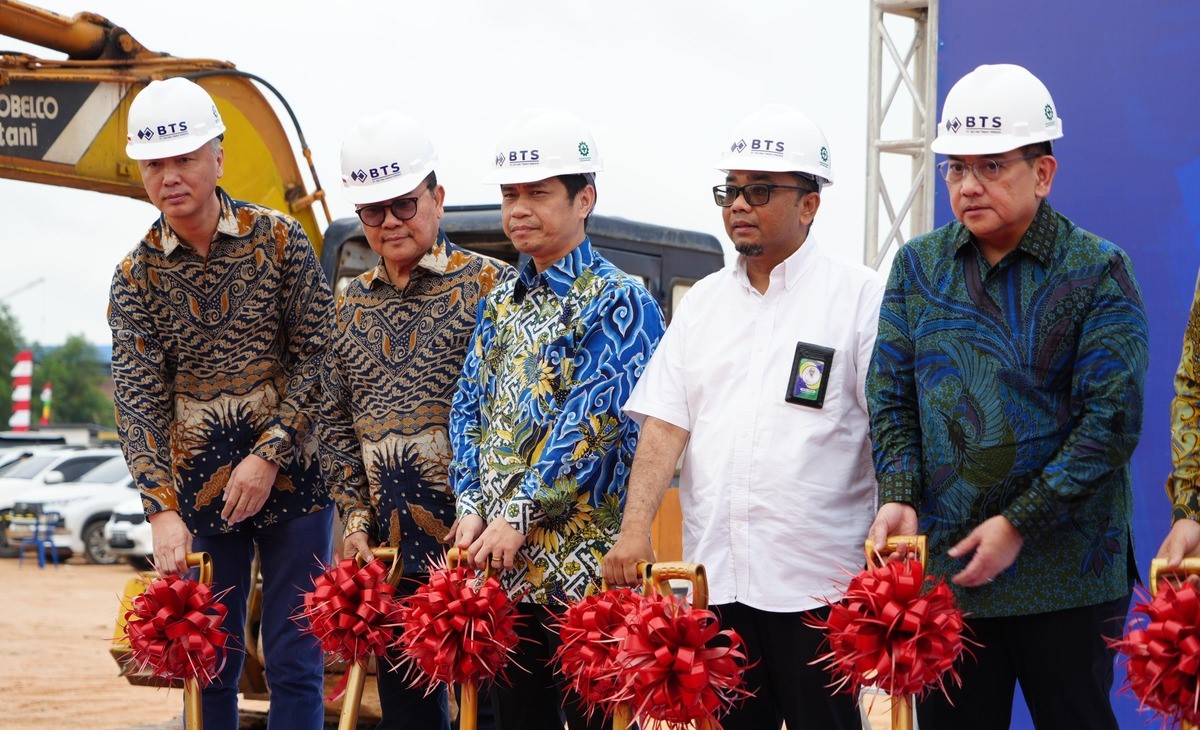
ASIATODAY.ID, BATAM – PT Batam Timah Sinergi (BTS) invested IDR 1.2 trillion to build a tin metal factory to produce various value-added derivative products.
Groundbreaking for factory construction was carried out in Batam, Friday, January 24 2025, marking a step forward for Batam in developing the downstream mining industry. Supported by PT Prima Dredge Teams, this company will utilize land with an area of around 6 hectares in Sagulung District – Batam City to produce Tin Chemical products. A number of products that will be produced include Tetrachloride, Dimethyl Tin Dichloride (DMT), and Methyl Tin Mercaptide (MTM). The total production capacity of this factory is estimated to reach 16,000 metric tons per year, making it the second largest producer in the world after China.
“The downstreaming of tin is expected to increase the country’s foreign exchange. Data shows that downstream industries have the potential to double the value of exports compared to exports of raw materials. “With an investment of IDR 1.2 trillion in the construction of this downstream factory, the Government is optimistic that Indonesia can become the largest downstream tin production center in the world,” said Deputy for Commerce and Digital Economy Coordination at the Ministry of Economic Affairs Ali Murtopo Simbolon at the groundbreaking of the tin chemical downstream factory. PT Batam Timah Sinergi and inauguration of the PT Tri Charislink Indonesia tin downstream (tin solder) factory in Batam, Friday, January 24.
As one of the largest tin producers in the world, downstream tin in Indonesia can not only increase the added value of commodities but also strengthen the competitiveness of Indonesian products in the global market.
“In recent years, Indonesia has continued to show its dominance as one of the main players in world tin exports. In 2024 the export value of tin, namely unalloyed tin and small rods and rods for soldering, will reach US$1.44 billion. “Indonesia succeeded in exporting to various main destination countries such as China amounting to US$284.28 million, India amounting to US$245.36 million, and South Korea amounting to US$158.26 million,” said Ali.
Ali said that Indonesia has very abundant resource reserves. It is recorded that around 800 thousand tons or 17% of global tin reserves are in Indonesia. Based on data from the United States Geological Survey, Indonesia produces more than 70 thousand tons of tin every year, of which 32% of tin production is produced by PT. Timah Tbk and the remaining 68% are produced by approximately 35 private business entities.
Currently, almost 95% of national tin production is exported and has not been utilized optimally domestically. Tin can improve Indonesia’s bargaining position in high-value investments, especially at this time for semiconductors and the Government is turning downstream tin into capital to strengthen Indonesia’s position in the semiconductor ecosystem.
In terms of investment, Indonesia is a country with the title of being investment worthy with quite strong competitiveness. Indonesia’s ranking in the IMD Global Competitiveness Index has increased to 27th from previously 34. Based on ratings from rating agencies, Indonesia’s Sovereign Credit Rating (SCR) is one level above Investment Grade. This shows investor confidence that Indonesia’s solid economic conditions will continue.
For this reason, the government appreciates PT Cipta Persada Mulia and its subsidiaries, PT Batam Timah Sinergi, and PT Tri Charislink Indoasia, for their commitment and concrete steps that have been taken in realizing tin downstreaming. The government also invites other industry players to support the national downstream agenda in order to strengthen national economic sovereignty.
Deputy Ali further said that the groundbreaking had the potential to create around 1,500 new jobs and would encourage local economic growth and make a positive contribution to regional income.
“I hope this tin factory can be a catalyst for the transformation of the national tin industry. “Let’s work together to create a more advanced and independent Indonesia through sustainable and highly competitive management of natural resources,” concluded Ali. (AT Network)
Follow Us at Google News and WA Channel