
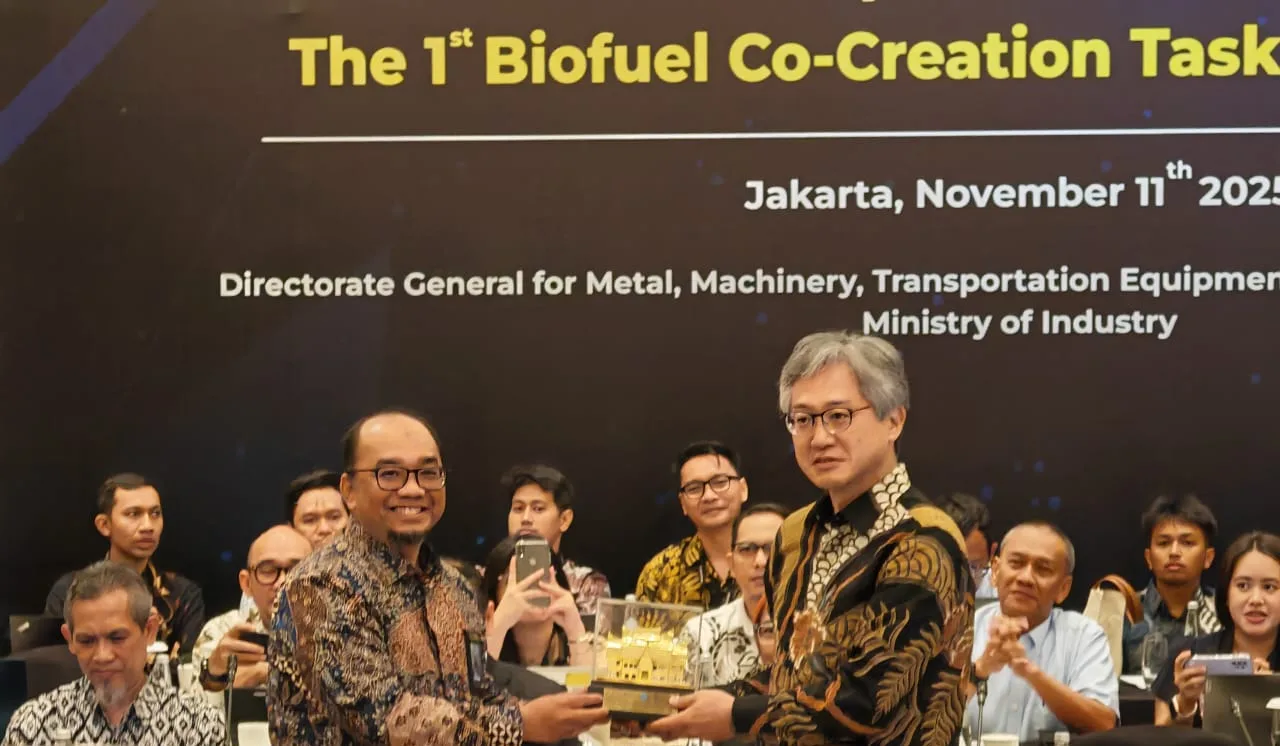
ASIATODAY.ID, JAKARTA – Japan has reaffirmed its commitment to positioning Indonesia as a strategic hub for the low-carbon automotive industry in Asia. This partnership underscores both countries’ shared vision of advancing sustainable industrial transformation and accelerating the global transition toward clean energy.
The commitment was highlighted during The 6th Indonesia–Japan Automobile Dialogue and The 1st Biofuel Co-Creation Task Force Meeting, held in Jakarta on November 11, 2025. The forums served as key platforms for both nations to strengthen collaboration on next-generation automotive technologies — including vehicle electrification and biofuel development.
Indonesia’s Minister of Industry Agus Gumiwang Kartasasmita expressed appreciation for the strong cooperation between the Ministry of Industry (Kemenperin) and Japan’s Ministry of Economy, Trade and Industry (METI) in supporting the shift toward low-carbon mobility.
“This dialogue reflects the deep commitment of both nations to accelerate the transition to low-carbon mobility through a multiple pathways approach, which includes the advancement of electric vehicles and biofuel technologies,” said Minister Agus.
Director General of Metal, Machinery, Transportation Equipment, and Electronics Industries (ILMATE) Setia Diarta reaffirmed Indonesia’s strong commitment to achieving Net Zero Emission by 2060 through the Low Carbon Emission Vehicle (LCEV) program.
“The LCEV program covers a comprehensive range of technologies, including flexible engines compatible with biofuels. We expect these initiatives to generate tangible benefits across the entire supply chain — from upstream to downstream — supporting sustainable industrial growth,” he stated.
Director General of New and Renewable Energy and Energy Conservation (EBTKE) at the Ministry of Energy and Mineral Resources (ESDM), Eniya Listiani Dewi, highlighted the importance of cross-sector collaboration in accelerating the adoption of clean energy.
“The government is implementing a range of biofuel programs such as biodiesel, bioethanol, bioavtur (SAF), and green diesel or HVO. We target the nationwide implementation of E10 by 2028, which requires full stakeholder collaboration,” she explained.
Rachmat Kaimuddin, Deputy for Basic Infrastructure Coordination at the Coordinating Ministry for Economic Affairs, emphasized the need to maintain a balance between energy security, economic growth, and environmental sustainability.
“Currently, 20–30% of Indonesia’s energy supply is imported, primarily oil for the transportation sector. With our 8% economic growth target by 2030, we must ensure long-term fiscal and energy resilience,” he noted.
From Japan’s side, Tanaka Kazushige, Director General of the Manufacturing Industries Bureau at METI, underlined Indonesia’s crucial role as a production and export base for the automotive industry in Asia.
“We believe the combination of Indonesia’s rich bioenergy resources and Japan’s advanced technology will create a brighter and greener future for the automotive sector. This cooperation involves not only governments but also private industries,” Tanaka said.
The dialogue also marked the strengthening of the Biofuel Co-Creation Task Force, involving METI, the Japan Automobile Manufacturers Association (JAMA), and Indonesia’s Ministry of Energy and Mineral Resources (ESDM). The task force focuses on the testing and standardization of E10 and B50 fuels, as well as ethanol and hydrotreated vegetable oil (HVO) production plans targeted for 2027.
Representatives Edi Wibowo from ESDM and Lies Aisyah from LEMIGAS presented Indonesia’s progress in national biofuel programs, including the implementation of B40 and preparations for B50 testing, supported by the Cilacap and Plaju Green Refinery projects.
Industrial participation was also strong, with PT Kilang Pertamina Internasional showcasing its Pertamina Renewable Diesel (HVO) product, while the Indonesian Spirits and Ethanol Producers Association (APSENDO) highlighted the potential of molasses as a key raw material for domestic bioethanol production.
The event was attended by representatives from multiple ministries, institutions, and industry associations, including the Coordinating Ministry for Economic Affairs, Ministry of Transportation, BRIN, BPDPKS, Pertamina, GAIKINDO, AISI, GIAMM, and the Bandung Institute of Technology (ITB).
Through these dialogues, Indonesia and Japan reaffirmed their shared vision to strengthen strategic cooperation in building a sustainable, low-carbon automotive ecosystem, enhance regional industrial competitiveness, and accelerate progress toward carbon neutrality in Asia. (AT Network)
Follow Us at Google News and WA Channel