
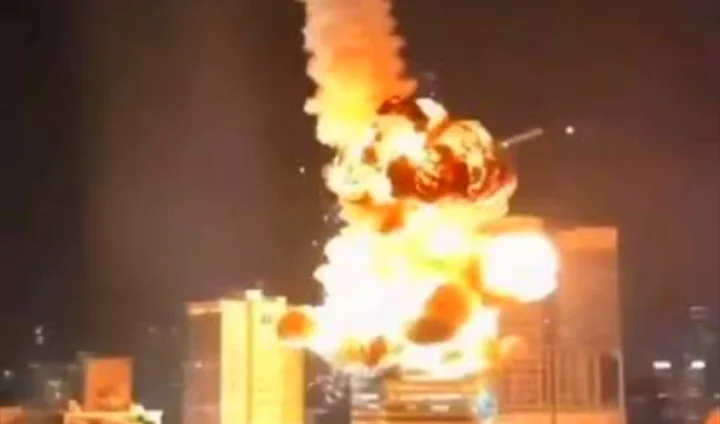
ASIATODAY.ID, TEHRAN – The Middle East conflict has entered its fifth consecutive day, with escalating military exchanges raising fears of a broader regional war.
Strikes carried out by the United States and Israel against Iranian targets have been met with waves of Iranian missile and drone attacks across multiple countries in the region.
According to reports monitored by the United Nations on March 4, 2026, the confrontation is severely disrupting airspace, transportation networks, and civilian life. What began as targeted military operations now threatens to spiral into a wider geopolitical crisis.
Explosions and plumes of smoke have been reported over Tehran, while heightened military alerts extend across neighboring states. The conflict directly involves Iran, Israel, and the United States, but its ripple effects are being felt across the Gulf and beyond.
Growing Risk of a Regional War
Humanitarian agencies warn of civilian casualties and damage to critical infrastructure. Airspace closures and security restrictions have disrupted commercial aviation and trade routes, compounding economic uncertainty and driving volatility in global energy markets.
The UN Secretary-General has called for maximum restraint and urgent de-escalation. However, retaliatory strikes continue, underscoring the fragility of the situation.
Escalation Timeline
Since the third day of hostilities:
– Coordinated US-Israeli strikes reportedly targeted strategic Iranian facilities.
– Iran launched medium-range missiles and drones toward multiple regional locations.
– Air defense systems across several countries were activated at full capacity.
– Shipping lanes and regional logistics corridors experienced disruptions.
With tensions mounting by the hour, the international community is closely watching whether diplomatic efforts can contain the crisis — or whether the Middle East is heading toward a far more destructive chapter. (AT Network)
Follow Us at Google News and WA Channel