
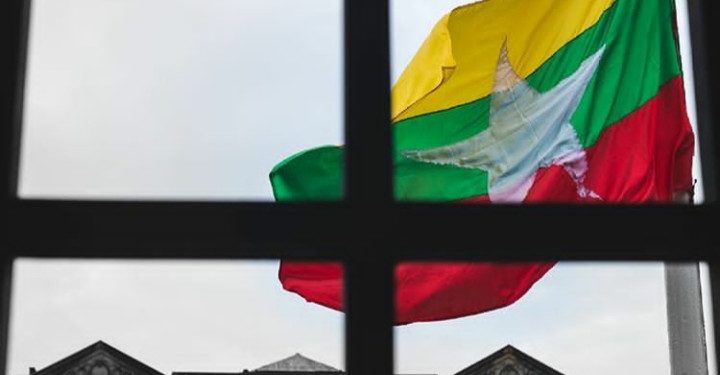
ASIATODAY.ID, YANGON — The world is watching Myanmar descend deeper into chaos as the country stands at a historic crossroads — between impunity and justice, between silence and humanity.
Amid escalating military airstrikes, civilian massacres, and growing evidence of war crimes, millions of people are trapped in one of the worst humanitarian crises in Asia.
Nicholas Koumjian, Head of the Independent Investigative Mechanism for Myanmar (IIMM), told the UN General Assembly’s Third Committee that the frequency and gravity of international crimes in Myanmar have sharply escalated this year.
“We have strong evidence that detainees have been tortured, sexually assaulted, and summarily executed,” Koumjian said on October 29, 2025.
“We have identified both perpetrators and their commanding officers.”
He noted that the military junta has increasingly relied on air and drone strikes, indiscriminately targeting schools, hospitals, and places of worship.
In Rakhine State, the military’s brutal retaliation against the ethnic Arakan Army has left civilians starving, displaced, and without humanitarian aid.
“We are gathering evidence of drone attacks on civilians, rape, torture, and deliberate obstruction of humanitarian assistance,” Koumjian added.
An Invisible Humanitarian Catastrophe
UN Special Rapporteur on Human Rights in Myanmar, Tom Andrews, described the situation as a humanitarian catastrophe of historic proportions.
Currently, over 22 million people require humanitarian aid, while 16.7 million face acute food insecurity. The March 2025 earthquakes in central Myanmar displaced more than 200,000 people, destroyed 157,000 buildings, and caused an estimated USD 11 billion in losses.
Instead of aiding survivors, the military junta blocked relief efforts, intimidated humanitarian workers, looted medical supplies, and forcibly conscripted youth into the army.
“The junta turned a natural disaster into a man-made catastrophe,” Andrews said.
In just the first eight months of 2025, 169 attacks targeted health facilities and workers, while in Rakhine State, over half of households can no longer meet basic needs.
“This crisis is worsening every day,” Andrews warned. “It’s not only a national tragedy — it’s a regional and global concern.”
Justice Under Threat
Koumjian also warned that a severe funding shortfall could cripple accountability efforts, forcing the IIMM to lose up to one-third of its staff, including specialists on gender-based crimes and child rights violations.
“Pursuing justice for Myanmar sends a vital message,” he said. “The international community cannot stand idle while civilians are slaughtered and international law is ignored.”
‘Time Is Slipping Away’ — The Call for Global Action
UN Secretary-General’s Special Envoy for Myanmar, Julie Bishop, echoed those concerns, warning that “time is slipping away.” She described a deeply disturbing pattern of indiscriminate attacks on civilians and cautioned that the junta’s planned elections could fuel even greater instability and bloodshed.
“Those who support these sham elections must consider the consequences,” Bishop said. “No election should cost human lives.”
She urged ASEAN and the international community to intensify diplomatic pressure, suspend political recognition of the junta, and support a clear path toward international accountability.
A Flicker of Hope Amid the Darkness
The Independent Investigative Mechanism for Myanmar (IIMM) and the UN Special Rapporteur on Human Rights remain the last sources of hope for millions of victims across the country.
The IIMM’s mandate is to collect and preserve evidence of international crimes for future prosecutions, while the Special Rapporteur ensures continued international scrutiny and pressure on the junta.
Though independent from the UN system, both mechanisms symbolize that justice, while distant, has not been extinguished.
The World Must Not Remain Silent
Myanmar stands on the edge — between justice and annihilation, between humanity and indifference.
Each airstrike on a school, each act of torture, each starving child is a call for the world to act before silence becomes complicity.
If the world continues to look away, Myanmar will not just be a failed state — it will be the gravestone of humanity’s conscience. (UN News Network)
Follow Us at Google News and WA Channel