
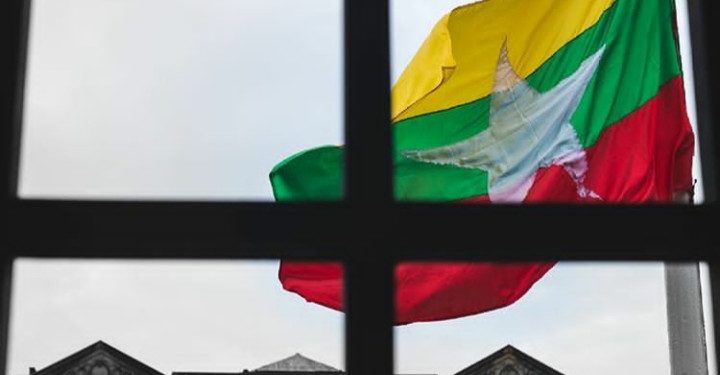
ASIATODAY.ID, THE HAGUE – More than one-third of Myanmar’s population is now in urgent need of humanitarian assistance as violence, economic collapse, and systematic abuses continue unabated five years after the military coup.
Humanitarian access has been repeatedly obstructed, including in conflict-ravaged Rakhine State, where desperately needed aid for starving communities has been deliberately blocked. Entire regions remain cut off as civilians bear the brunt of the crisis.
The country’s economy has been devastated. According to the United Nations, Myanmar has lost nearly US$100 billion since the military seized power, with gross domestic product (GDP) not expected to return to pre-pandemic levels for years.
“The military’s usurpation of power has been accompanied by disastrous mismanagement of the country’s economy,” said UN High Commissioner for Human Rights Volker Türk.
Across the country, the humanitarian emergency is visible in sprawling camps for internally displaced persons (IDPs), including in Kayah (Karenni) State, where families live in precarious conditions amid ongoing insecurity.
Crimes Against Civilians Under Investigation
At the same time, international accountability mechanisms warn that grave crimes against civilians continue without pause.
Nicholas Koumjian, head of the Independent Investigative Mechanism for Myanmar (IIMM), said investigators have documented widespread atrocities since the military takeover, amounting to crimes against humanity and war crimes.
“The military has carried out air strikes, indiscriminately or deliberately attacking civilians in their homes, hospitals, and schools,” Koumjian said, adding that many detainees have been subjected to brutal torture.
The IIMM is also examining an increasing number of allegations involving abuses committed by opposition armed groups, underscoring the complex and deeply violent nature of the conflict.
Rohingya Voices Reach the World Court
Amid the bleak outlook, a rare opening for accountability has emerged on the global stage.
Rohingya survivors have testified before the International Court of Justice (ICJ) in The Hague in the landmark genocide case brought by The Gambia against Myanmar, marking a historic moment for victims of one of the world’s most documented campaigns of ethnic violence.
UN Special Rapporteur on Myanmar Tom Andrews praised the survivors’ courage, saying their testimony allows:
“The light of truth to shine through the darkness of the most horrific of crimes.”
He stressed that justice is not an abstract concept, but one built on the bravery of individuals willing to speak truth to power.
The case is being heard publicly at the Peace Palace in The Hague, as judges consider arguments related to allegations of genocide against the Rohingya people.
Calls for Unity and a Return to Civilian Rule
UN Secretary-General António Guterres reiterated that any viable path back to civilian governance must begin with an immediate cessation of violence, genuine inclusive dialogue, and the swift release of all arbitrarily detained leaders, including President Win Myint and State Counsellor Aung San Suu Kyi.
“Regional and international unity and sustained engagement are needed,” the UN said, “to support a Myanmar-led solution that addresses the root causes of conflict, ensures accountability, and responds to urgent humanitarian and development needs.”
The Secretary-General’s Special Envoy on Myanmar, Julie Bishop, continues to engage with all stakeholders in close coordination with ASEAN and regional partners, seeking common ground toward a durable political resolution and sustainable peace.
For millions of Myanmar’s civilians, however, the cost of delay continues to be measured in lives lost, livelihoods destroyed, and justice denied. (AT Network)
Follow Us at Google News and WA Channel