
ASIATODAY.ID, JAKARTA – Indonesia is once again proving it lives on the Pacific Ring of Fire. While the international community, through the World Meteorological Organization (WMO), warns that volcanic threats remain seriously underestimated, the Indonesian Ministry of Energy and Mineral Resources (ESDM) shows that preparedness is non-negotiable.
This was demonstrated by the successful operation of the National ESDM Post for the 2025/2026 Holiday Season, officially closed on Monday, January 5, at the BPH Migas building in Jakarta.
From mid-December 2025, this command post stood at the forefront of safeguarding national energy supply amid increased volcanic activity, earthquakes, and landslides.
Inspector General of ESDM Yudhiawan, representing the Minister of Energy, emphasized that rapid, data-driven mitigation is key.
“All geological hazards—volcanoes, landslides, and earthquakes—have been successfully mitigated. National energy supply remained stable throughout the holiday period,” he stated on Tuesday, January 6, 2026.
Volcanoes Threaten the World—Indonesia Leads the Front
ESDM data shows Indonesia is currently monitoring more than 20 active volcanoes:
– 1 volcano at Alert Level IV (Awareness): Mount Lewotobi Laki-Laki, East Nusa Tenggara (raised on January 1, 2026)
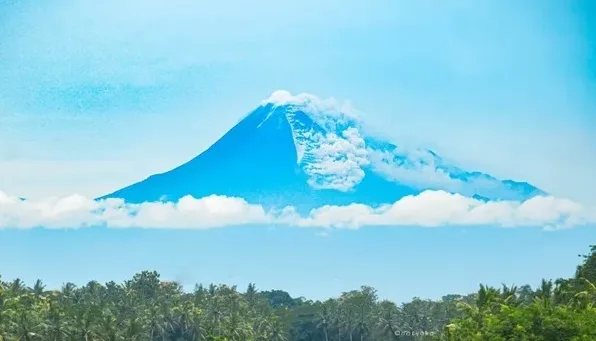
– 2 volcanoes at Alert Level III : Mount Merapi and Mount Semeru
– 24 volcanoes at Alert Level II
Despite rising activity, strategic energy facilities remained fully operational, thanks to rapid coordination between the Geological Agency, energy operators, and local governments.
This stands in contrast with warnings from the WMO in Geneva. The organization stressed that volcanic eruptions are not just local events. They can: Ground international air travel, Disrupt global food systems, Overwhelm public health services, Damage critical infrastructure, Even affect global climate by injecting sulfur dioxide into the stratosphere.
82 Landslides and Dozens of Earthquakes, Energy Flow Uninterrupted
During the alert period, geological monitoring reported: 82 landslides across 17 provinces, 10 earthquakes above Magnitude 5.0, 46 earthquakes felt by communities.
The most notable was the damaging earthquake in Agam, West Sumatra, on December 28, 2025. Thanks to rapid response and inter-agency coordination, no tsunami occurred, and energy infrastructure was secured.
National ESDM Post Chair Erika Retnowati highlighted that risk-mapping-based mitigation proved effective.
“All earthquakes, volcanoes, and landslides did not disrupt fuel, gas, or electricity distribution,” she said.
WMO Warns: The World Still Has Volcanic ‘Blind Spots’
Unlike Indonesia’s proactive measures, WMO warns that globally:
– Many volcanoes remain poorly monitored
– Developing countries and small island states lack instrumentation and funding
– Volcanic early warning systems lag behind those for extreme weather events
WMO and the International Association of Volcanology and Chemistry of the Earth’s Interior (IAVCEI) call for integrating volcanology into the four pillars of the Early Warnings for All initiative:
– Risk Knowledge – including AI-assisted hazard modeling
– Monitoring & Forecasting – multi-parameter networks
– Warning Dissemination – inclusive, multi-channel alerting
– Preparedness & Response – community-based protocols
Without these, millions living near active volcanoes remain at risk.
Indonesia Sets a Global Example
The ESDM Post’s success shows that investing in geological hazard mitigation is not a cost—it’s national economic protection. Collaboration with BMKG, BNPB, TNI, and Polri allowed disaster information to translate into field action within minutes—even seconds.
“Like a bundle of sticks, we are strong because we are united,” Yudhiawan said.
As the world recognizes volcanic threats are underestimated, Indonesia sends a clear message: living under the shadow of volcanoes requires constant vigilance.
Looking ahead, ESDM reaffirms its commitment to further strengthen geological hazard mitigation, ensuring energy supply remains uninterrupted and communities are protected—even when the Earth rumbles. (AT Network)
Follow Us at Google News and WA Channel