
ASIATODAY.ID, JAKARTA — Indonesia’s mining industry is beginning to stall—one operation after another. Not because of a global downturn or collapsing commodity prices, but due to abruptly changing, layered, and poorly executed regulations governing the Work Plan and Budget (RKAB).
The irony is stark: this paralysis is unfolding precisely as the government proclaims its ambition to push economic growth to 8 percent—a target achievable only through massive investment and stable output from strategic sectors.
Vale Becomes the Clearest Casualty
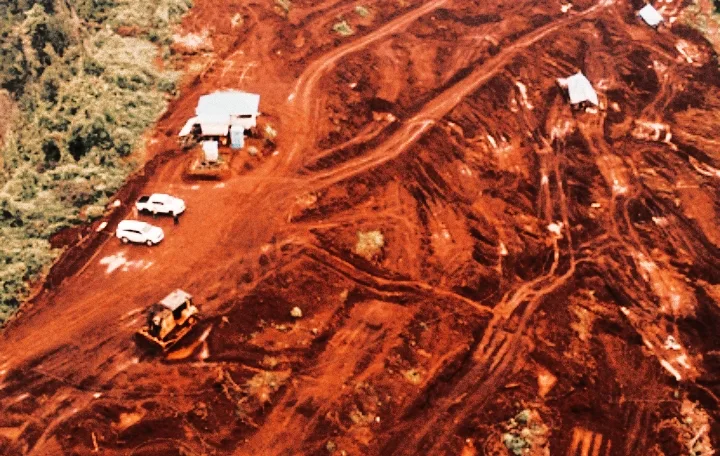
PT Vale Indonesia Tbk (INCO) is the most visible example. The MIND ID subsidiary was forced to halt all mining operations in Sulawesi after failing to secure approval for its 2026 RKAB. Without this document, production is legally prohibited.
“Under these conditions, the Company is legally not permitted to conduct mining operations,” said Vale Indonesia Corporate Secretary Anggun Kara Nataya in a disclosure to the Indonesia Stock Exchange, on Friday, January 2, 2026.
Rules Changed, Operations Frozen
The root of the problem lies in a major overhaul of the RKAB framework at the Ministry of Energy and Mineral Resources (ESDM). The validity period was cut from three years to just one, ostensibly to manage supply–demand balance and stabilize global commodity prices.
But this structural shift was implemented without a proper transition. Bureaucratic capacity was unprepared, evaluation systems were misaligned, and approvals became bottlenecked. As a result, companies entered 2026 in regulatory limbo: old permits expired, new ones not yet issued.
Director General of Minerals and Coal Tri Winarno acknowledged that RKAB evaluations for several companies remain incomplete. The government offered temporary relief via a Minerba Directorate circular, allowing production of up to 25 percent capacity until March 31, 2026.
The problem: the relaxation is not universal. Vale cannot benefit because it does not have a still-valid three-year RKAB.
“Vale had to apply for an extension, so in 2026 there is nothing—the RKAB is empty,” Tri said.
The consequence: a complete operational shutdown.
One-Year RKAB and the Collapse of Business Certainty
According to Bisman Bakhtiar, Executive Director of the Center for Energy and Mining Law Studies (Pushep), the 2026 RKAB gridlock is far more than an administrative issue. National production controls—especially for strategic commodities like nickel—have turned RKAB evaluation into a complex and politically charged process.
“In the short term, this risks delaying expansion and cutting output,” Bisman warned.
More dangerously, regulatory uncertainty erodes business certainty, the single most critical factor in investment decisions.
Industry voices echo the concern. Gita Mahyarani, Acting Executive Director of the Indonesian Coal Mining Association (APBI), stressed that RKAB approvals underpin every aspect of mining business planning—investment, production, workforce planning, and sales contracts.
Capital-intensive, long-cycle mining projects cannot survive on one-year permits that are perpetually late or subject to sudden change.
The 8% Growth Ambition: Macro Targets, Micro Failures
Here lies the core policy contradiction. The government openly declares its ambition to achieve 8 percent economic growth in the coming years—a goal that demands surging investment, aggressive industrialization, and value-added exports.
Mining and mineral downstreaming are positioned as the main engines of this growth. Nickel, copper, coal, and other strategic minerals form the backbone of battery supply chains, energy systems, and advanced manufacturing.
Yet when these very sectors are trapped by regulatory paralysis, the 8 percent target shifts from ambition to illusion.
Without RKAB certainty: investment stalls, production falters, exports are jeopardized, and state revenues come under pressure.
The ripple effects spread downstream—into processing industries, derivative manufacturing, and employment.
One-Year RKAB: A Long-Term Investment Killer
Jerome Baudelet, CEO of Eramet Indonesia, has publicly voiced concern over the one-year RKAB regime. Three-year approvals, he argues, provide the certainty required for long-term mine development. Annual RKABs keep business plans under constant threat.
“There is always concern that approval in the following year will not align with the original plan,” he said.
In the context of multi-billion-dollar investments, such uncertainty is a clear red flag.
Rising Administrative Burdens, Shrinking Output
RKAB delays are also driven by tighter verification requirements. Ali Ahmudi Achyak, Executive Director of CESS, points to national production restructuring and stricter compliance checks—taxes, environmental obligations, and realization of previous RKABs.
Starting in 2026, tax clearance becomes mandatory. Integration between the Coretax system and Minerba One adds another administrative layer. While intended to strengthen governance, the simultaneous and rushed rollout significantly increases the risk of permit congestion.
From Mining Permits to National Growth
Some companies survive on the 25 percent production relaxation. Vale’s case, however, illustrates the extreme consequences of policy changes that outpace the state’s own implementation capacity. RKABs, designed as control instruments, have turned into bureaucratic shackles.
If this pattern continues, the 8 percent growth target will collide head-on with ground realities.
Without regulatory certainty, investment will not flow.
Without investment, production stagnates. Without production, growth becomes mere rhetoric.
One mine after another falls silent. And if regulation is not urgently fixed, what collapses will not only be Indonesia’s mining industry—but the very foundation of its national economic ambition. (AT Network)
Follow Us at Google News and WA Channel